
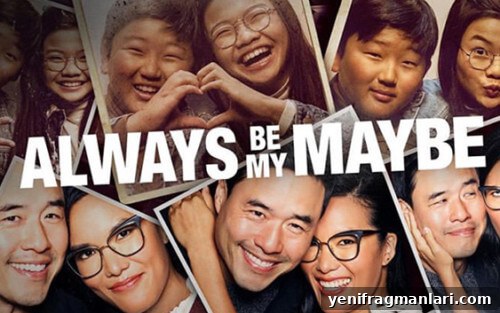

Always Be My Maybe (2019)
Director: Nahnatchka Khan
Screenwriters: Michael Golamco, Randall Park, Ali Wong
Starring: Ali Wong, Randall Park, James Saito, Michelle Buteau, Vivian Bang, Keanu Reeves, Susan Park, Daniel Dae Kim, Karan Soni, Charlyne Yi, Lyrics Born, Casey Wilson
Always Be My Maybe fits squarely within Netflix’s recent wave of rom-coms that are culturally relevant, contemporary and refreshingly personal. Written by and starring real-life friends Ali Wong and Randall Park, and directed by Nahnatchka Khan, the film offers a warm, often funny look at Asian-American life while following a familiar romantic-comedy structure. It may not reinvent the genre, but it delivers a comforting, character-driven narrative that highlights chemistry, cultural specificity, and a standout cameo that has become a talking point in its own right.
The film follows Sasha (Ali Wong) and Marcus (Randall Park), childhood friends whose brief romance ends in silence and distance. Fast-forward 16 years: Sasha is a successful chef returning to San Francisco to open another restaurant, and Marcus has remained in their hometown managing a small business and confronting his own stalled ambitions. The story explores what happens when past affection collides with present realities, and whether two people who once fit together can find common ground again after years of different life choices.
What gives the movie its heart is the genuine rapport between Wong and Park. Their performances are buoyed by lived-in familiarity; they inhabit their roles with warmth and humor, and their chemistry makes the predictable beats feel earned. The screenplay leans on rom-com conventions — missed opportunities, awkward reunited encounters, and the inevitable reconciliation — but the film softens those tropes with cultural detail and honest character moments that elevate the material beyond mere formula.
Comedy in Always Be My Maybe is hit-or-miss at times, but when it works, it lands well. The film balances broader jokes with quieter, character-based humor drawn from the leads’ personalities and their families. The supporting cast adds texture, giving the film a lived-in community feel that anchors the protagonists’ journey. The narrative occasionally leans on convenient plot developments, yet the sincerity of the performances encourages forgiveness; by the end, there is a real emotional connection between the characters that pays off.
A notable element of the movie is a brilliantly timed cameo that quickly became a viral moment. Without spoiling it, the scene blends self-aware celebrity humor with surprising vulnerability, adding an unforgettable laugh and a burst of publicity that helped the film find an audience. That cameo exemplifies how strategic casting and a willingness to poke fun at stardom can amplify a modest romantic comedy into a cultural moment.
In comparison to other Netflix rom-coms of the era, Always Be My Maybe may not reach the critical heights of titles like Set It Up or To All the Boys I’ve Loved Before, but it occupies its own space by centering Asian-American experiences without making identity the only story. It offers representation alongside universal themes of regret, growth and the difficulties of reconnecting with someone from your past. The film’s strength lies in its balanced focus on both leads, avoiding the tendency to privilege one perspective over the other.
For viewers seeking a comforting, contemporary rom-com with sharp moments of humor and heartfelt performances, Always Be My Maybe is an easy recommendation. It’s a satisfying watch at home—perfect for a relaxed evening—and while it’s not essential cinema, it’s a welcome example of mainstream romantic comedy evolving to include more diverse voices and stories.
Rating: 10/24