
The idea that there are only a handful of fundamental story patterns—the so-called “Seven Stories”—remains a powerful force in art and storytelling. Contemporary films often draw on ancient myths and archetypes, and nowhere is this more evident than in cinematic portrayals of Jesus Christ. The narrative of the Chosen One—God made human who sacrifices himself for humanity—resonates across genres and eras. From franchises that borrow elements of the messianic archetype to filmmakers who aim to depict the life of Christ directly, cinema has long wrestled with how to bring this central religious story to the screen.
Since the earliest days of film, with works like The Life and Passion of Jesus Christ (1905) and From the Manger to the Cross (1912), actors have taken on the iconic role of Jesus. Playing Christ on screen is to film what Hamlet is to theatre: a rare and demanding opportunity for an actor to prove his craft. For several performers, that challenge has produced portrayals that move beyond mere performance and have become cultural touchstones in their own right.
Devotion to images of Christ can sometimes be criticized as idolatry, but popular culture shows how quickly actors portraying Jesus can become visual stand-ins for the figure they represent. Robert Powell’s photos from the 1977 miniseries Jesus of Nazareth have been used as devotional images in churches far from their origin. Other actors’ faces—sometimes mistaken for Jesus by admirers—take on symbolic lives of their own. When a portrayal resonates, an actor’s image can become synonymous with the figure of Christ for generations of viewers.
For believers, a convincing depiction of Jesus offers a chance to imagine looking into the eyes of the Savior. But what makes a screen portrayal truly great? Is it strict adherence to the Gospel texts, as in Pier Paolo Pasolini’s The Gospel According to St Matthew (1964)? Is it imaginative musical retelling like Jesus Christ Superstar (1973)? Or is it an introspective and provocative reimagining such as Martin Scorsese’s The Last Temptation of Christ (1988)? Below are five cinematic portrayals of Christ that stand out for their artistry, emotional power, and lasting impact.
To qualify for inclusion here, each film required a theatrical or cinematic release; notable television miniseries and TV movies were therefore excluded.
1. The Passion of the Christ (2004) — Jim Caviezel

Mel Gibson’s The Passion of the Christ became a cultural phenomenon: independently financed after failing to attract major studio backing, it emerged as one of the most profitable R-rated films in history. Much of that impact rests on Jim Caviezel’s raw, committed performance. Despite heavy prosthetics and the use of ancient languages, Caviezel’s portrayal—haunted, pained and quiet—has become for many viewers the defining contemporary image of Jesus.
Caviezel’s performance communicates theological depth through physicality and silence. Scenes like the brutal scourging capture both physical agony and deep psychological torment: Jesus’ trembling collapse, his fleeting glance at his mother, and the attempt to shield her from his suffering are portrayed with heartbreaking clarity. His agony in the Garden of Gethsemane, the exhaustion under the weight of the cross, and his pleas for forgiveness while nailed to the cross together create a visceral retelling of Christ’s final hours that many viewers find profoundly affecting.
2. Jesus Christ Superstar (1973) — Ted Neeley

The rock opera adaptation of Andrew Lloyd Webber and Tim Rice’s stage musical is often misunderstood, but its choice of form proves uniquely effective. Told largely from Judas Iscariot’s perspective, the film explores doubts, fame, and human frailty alongside the public triumphs and private sorrows of Jesus. Ted Neeley’s performance captures a charismatic, sorrowful Jesus: someone who attracts hungry crowds yet bears deep weariness from the demands of his mission.
Neeley’s timbre and stage presence convey both leadership and vulnerability. He convincingly embodies the magnetism that draws followers and the loneliness that haunts someone carrying the knowledge of impending suffering. Songs like “Hosanna” reveal how public adoration can sting when it glosses over the real cost of his mission. In scenes such as the Temple confrontation, Neeley’s Jesus is pushed to the edge by crowds and critics, creating an image of a compassionate yet exhausted figure whose sorrow compels empathy.
3. The Miracle Maker (1999) — Ralph Fiennes (voice)

Religious films for children often face criticism for oversimplifying or proselytizing, yet The Miracle Maker rises above those pitfalls to deliver a thoughtful animated telling of the Gospels. Told through the perspective of a young girl named Tamar, the film balances tenderness with theological seriousness. Ralph Fiennes’s warm, grounded vocal performance gives Jesus an accessible humanity that appeals to both children and adults.
Presenting miracles, parables, and personal encounters with a gentle clarity, the film reinforces the dual nature of Christ—human and divine—in ways that feel natural and emotionally honest. Fiennes’ voice conveys compassion, authority, and moments of doubt and anguish, allowing viewers to connect with Jesus as a comforting figure who also carries the weight of divine purpose. The Miracle Maker demonstrates that animation can deepen understanding of spiritual themes without condescension.
4. The Last Temptation of Christ (1988) — Willem Dafoe

Martin Scorsese’s adaptation of Nikos Kazantzakis’s novel remains one of the most divisive and daring cinematic treatments of Jesus. It departs from Gospel literalism to explore the inner conflict of a man who is both human and divine. Willem Dafoe’s Jesus begins as a flawed, impulsive, and sometimes unlikeable figure who slowly discovers a destiny beyond his understanding.
Dafoe’s performance highlights both the terror and the responsibility that would accompany sudden divine powers. His portrayal of miracles—such as raising Lazarus—is infused with bewilderment and fear as much as with authority, making the supernatural feel both awe-inspiring and terrifying. The film’s exploration of temptation, doubt, and ultimate choice gives Dafoe’s Jesus a deeply human arc; his decision to accept the path of suffering becomes all the more moving because it follows genuine struggle.
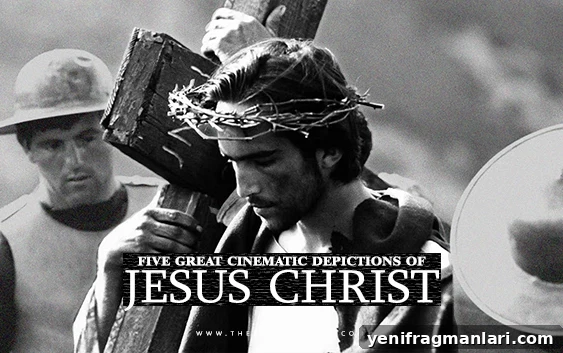
5. The Gospel According to St Matthew (1964) — Enrique Irazoqui

Pier Paolo Pasolini’s austere black-and-white adaptation stands out for its fidelity to scripture and its neorealist aesthetic. Using mostly non-professional actors and direct passages from the Gospel of Matthew, Pasolini crafts a raw and authoritative portrait of Jesus. Enrique Irazoqui, a young university student cast in the lead, delivers a striking performance that combines righteous anger with deep compassion.
Pasolini’s Jesus is revolutionary—fiery in his denunciation of hypocrisy and deeply attuned to the suffering of the poor and marginalized. Filmed without artifice, the movie emphasizes the political and ethical radicalism of Christ’s message: the Beatitudes, the denunciation of the self-righteous, and the demand for internal transformation all emerge with startling clarity. Irazoqui’s untrained intensity gives Pasolini’s film a credibility and immediacy that many more polished productions lack.
Cinema has offered many distinct portraits of Jesus, each illuminating different aspects of his life and message—from the painfully physical sufferer to the sorrowful leader, the compassionate friend, the wrestling human, and the revolutionary prophet. Which cinematic depiction resonates most with you? Share your thoughts and continue exploring these films to better understand how art interprets one of history’s most influential figures.