
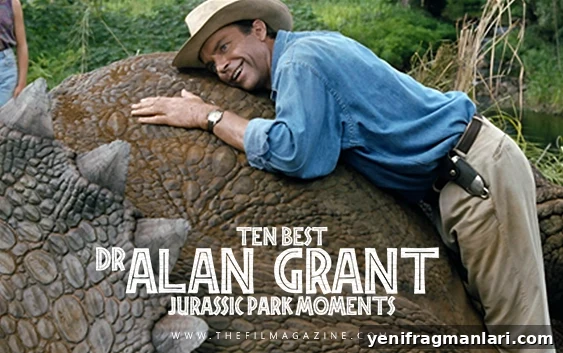
In 1993, Jurassic Park thundered into cinemas and quickly became a modern classic. Its visual effects set a new standard, the screenplay and direction were exemplary, and the ensemble cast delivered memorable performances. With supporting actors like Richard Attenborough, Wayne Knight and Samuel L. Jackson, the film had both gravitas and charisma. At the center of the story stood three characters who became cultural touchstones: Dr Ellie Sattler (Laura Dern), a passionate botanist and feminist icon; Dr Ian Malcolm (Jeff Goldblum), the witty chaos theorist who inspired countless GIFs; and Dr Alan Grant (Sam Neill), the gruff but devoted paleontologist—no one delivers a better “disappointed dad” than Alan Grant.
It was inevitable that Jurassic Park would grow into a franchise: the original Jurassic Park trilogy and the later Jurassic World trilogy expanded the universe and introduced new characters while returning to the themes that made the first film so enduring.
Across the franchise, directors from Steven Spielberg to Colin Trevorrow crafted a world where dinosaurs are not only resurrected but often unnervingly clever—sometimes outsmarting the humans who try to contain them. The films mix pulse-pounding action with moments of wonder, awkward parenthood and the recurring image of sunglasses being dramatically removed. Dr Alan Grant appears in three films: Jurassic Park (1993), Jurassic Park III (2001), and Jurassic World Dominion (2022). In this movie list, we celebrate the ten best Alan Grant moments—the scenes that reveal his bravery, vulnerability and love for the prehistoric creatures he studies.
10. Billy
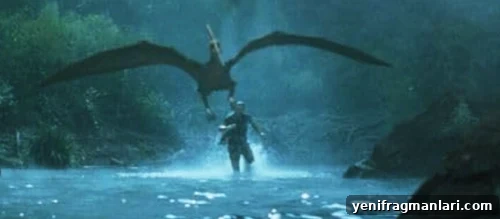
Jurassic Park III
While Jurassic Park III is often seen as the weakest entry in the series, it still contains a crucial reminder of who Alan Grant is. When Billy (Alessandro Nivola), Grant’s impulsive former student, is attacked by pteranodons, Alan charges toward danger alongside Paul (William H. Macy). Grant routinely warns against tampering with nature, but when a human life is at stake he abandons caution and acts on instinct. That willingness to risk himself, even after preaching restraint, is why his character resonates.
9. “I got ya.”
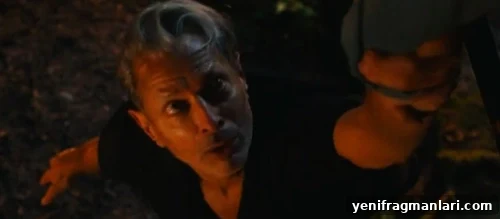
Jurassic World Dominion
In Jurassic World Dominion, the original ensemble reunites to face a global threat. Alan and Ian Malcolm’s rivalry has matured into a complicated friendship. One small, quiet moment—Grant reaching out and saying, “I got ya,” as Malcolm dangles perilously close to a giganotosaurus—captures how much their relationship has evolved. It’s a tender, human beat amid the spectacle.
8. The Talking Velociraptor
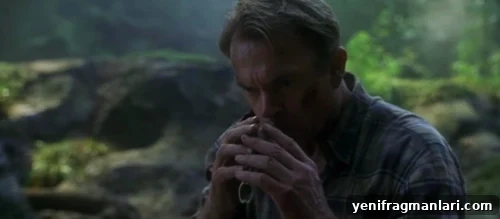
Jurassic Park III
Cornered with an angry pack of velociraptors, Grant finds a way to defuse a lethal situation. After Amanda (Téa Leoni) returns stolen eggs to their mother, Alan imitates raptor calls—an amusing yet believable homage to his lifelong study of these animals. It echoes earlier moments in the series where Grant’s deep knowledge of dinosaur behavior becomes a lifeline.
7. He Jumps Out of the Car
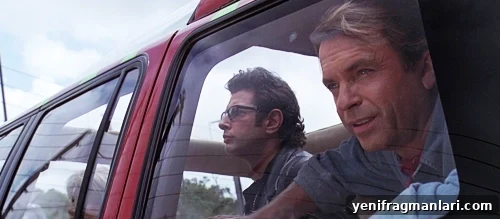
Jurassic Park
Chaos theory is a recurring theme in Jurassic Park, and Alan’s sudden, impulsive step out of the tour vehicle—during Ian Malcolm’s speech about unpredictability—signals that even the most grounded characters can act erratically under pressure. That moment foreshadows how quickly control unravels and reinforces the film’s central warning about human hubris.
6. Taking On the Velociraptor
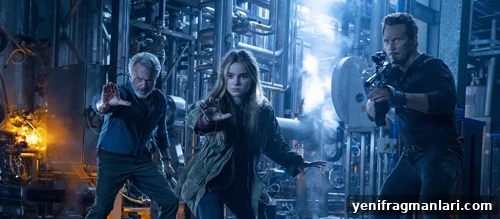
Jurassic World Dominion
In the latest film, Grant shares the stage with new-generation heroes. When Owen Grady entrusts him with helping to manage a young velociraptor, Alan initially reaches for a wrench—an instinctive, self-preserving move. But when Owen says, “Grant, we’re triangulating,” Grant’s face shifts and he follows the new leader’s cue. It’s a quiet passing of the torch and a reminder that Grant can still adapt.
5. “They’re moving in herds.”
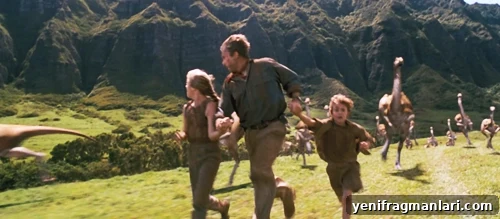
Jurassic Park
During the gallimimus stampede, Grant’s scientific curiosity shines through the danger. As the birds rush past, he marvels that they move in herds, confirming longstanding theories about herd behavior. That moment of pure academic joy amid imminent peril highlights Grant’s childlike wonder and underscores the film’s affectionate portrayal of prehistoric life.
4. The Fence
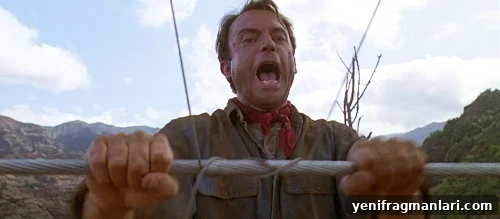
Jurassic Park
As Grant warms to the children, he teases them at the electrified perimeter fence by pretending to be shocked. The joke lightens the mood and serves as clever foreshadowing: the park’s safety measures are fragile, and the false security only deepens the eventual terror. The scene balances humor with tension, showcasing the film’s skill at mixing tones.
3. Facing the T-Rex
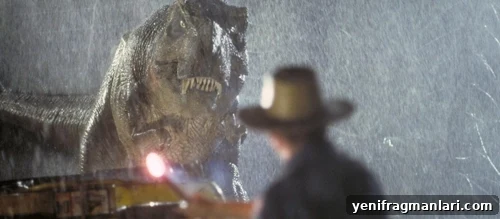
Jurassic Park
One of Grant’s most heroic acts occurs when he distracts a tyrannosaurus to protect the children abandoned in a disabled jeep. Using a flare and complete composure, he draws the beast’s attention away from the kids. The sequence is tense and dramatic—Grant’s calm competence under pressure is on full display and cements his role as the group’s protector.
2. Hugging the Triceratops
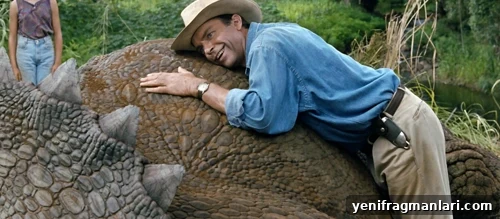
Jurassic Park
When the group discovers a sick triceratops, Grant’s delight outweighs his frustration with the park rangers’ ignorance about the animals’ diets. His wide smile as he listens to the creature’s breathing reveals the pure love that drives his career. This intimate, tender moment—where expertise meets childlike awe—remains one of the franchise’s most human beats.
1. “You are alive when they start to eat you.”
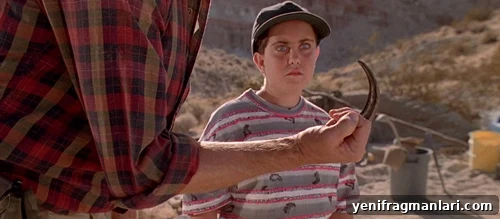
Jurassic Park
Our introduction to Dr Alan Grant immediately establishes his expertise and wry personality. When a skeptic in the crowd dismissively calls velociraptors “more like a 6ft turkey,” Grant picks up a fossilized raptor claw and calmly explains, in chilling detail, what a raptor would do to an unwary human. The exchange is educational, unnerving and sets the tone for the films that follow: humans are vulnerable in a world recreated by people who thought they could control it.
Over three films—and most powerfully within the original 102 minutes of Jurassic Park—Dr Alan Grant became a cinematic icon. His bluntness, combined with moments of awe and compassion, made him instantly relatable and deeply memorable. He is a character who grows without losing his core: a scientist whose curiosity and courage define him.
Which Alan Grant moments stand out to you? Are there underappreciated scenes you think deserve more attention? Share your thoughts and the moments that made you love this grumpy, lovable paleontologist.