The idyllic image of northwest Los Angeles as the cinematic La-La Land—America’s emblem of glamour, celebrity and filmmaking—remains a powerful myth. For decades it has been portrayed as the ultimate mecca for those chasing the American Dream. Yet the cynical edge of the 21st century has prompted a serious reassessment: how much of that old Hollywood magic truly survives in an industry increasingly driven by corporate interests and market data?
Even industry veterans acknowledge the change. Robert Redford has noted that “Hollywood is not the same as when I first entered the business,” and that frank admission reflects a broader, deflating reality about contemporary Tinseltown.
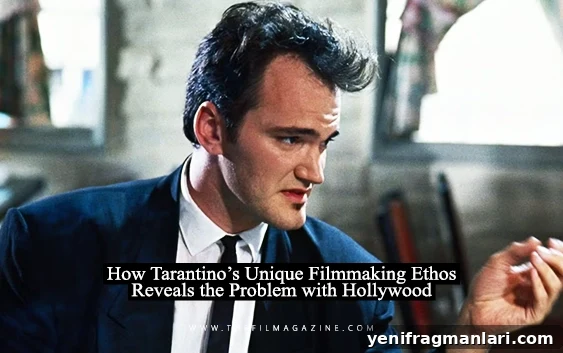
What was once the creative playground of auteurs like Billy Wilder, Alfred Hitchcock and John Ford has, in recent decades, shifted toward formulaic, committee-led productions. Algorithms and profit forecasts often dictate projects more than individual artistic vision. While franchise filmmaking gets much of the blame, it is useful to consider alternative models that prioritize craft and restraint. One such model is embodied in the singular career of Quentin Tarantino.
Tarantino’s influence on modern filmmakers is undeniable. His signature hallmarks—ensemble casts mixing icons and newcomers, stylized violence, densely layered references to film history, and vivid, highly specific characters—have left a lasting mark on the imaginations of a new generation of directors and writers. These elements combine to create films that feel both referential and original, steeped in genre knowledge yet driven by distinctive, personal energy.
One particularly notable feature of Tarantino’s approach, and a discipline rarely observed industry-wide, is his self-imposed rule: he plans to stop directing after ten films. That deliberate cap—an insistence on quality over quantity—is a lesson Hollywood could benefit from embracing.
Before the disruptions of the 2020 COVID-19 pandemic, American film production was on an upward trajectory, with growing volume and rising commercial ambition. While the pandemic was a catastrophe for the creative industries, it briefly interrupted an accelerating trend toward mass-produced entertainment. In 2018 alone, 872 films were released in North America—roughly 200 of those were sequels, adaptations, or franchise installments built on pre-existing intellectual property.
The industry’s repeated reliance on past box-office formulas instead of nurturing new, diverse voices has fostered a creative inertia. That year, 2018, was widely regarded as underwhelming for mainstream cinema: a symptom of a system that values quantity, treats directors as employees, and places decisive creative power in corporate boardrooms.
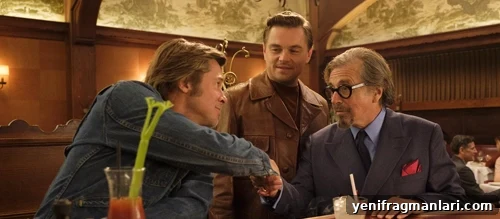
Against that backdrop, Tarantino’s 2019 film Once Upon a Time… in Hollywood stood out precisely because it felt handcrafted and artistically driven—even when critics debated its achievements. The film’s presence highlighted how rare organically creative mainstream movies had become. Tarantino’s career, rich with references and affection for cinema’s past, also exposes a central problem: the scarcity of fresh, mainstream auteurs willing to risk commercial safety for artistic integrity.
Tarantino’s imagined nostalgia for cinema’s golden moments isn’t merely sentimental. It informs a filmmaking philosophy that resists succumbing entirely to market pressure. He is far from an isolated purist; his films have brought both critical acclaim and box-office success. But the discipline behind his choices—rigorous attention to craft, a strong personal voice, and restraint imposed by a finite output—helps explain why his films continue to resonate.

Tarantino’s commitment to a ten-film career cap has added mystique to his work and offers a rare example of creative self-regulation in modern cinema. Whether or not the specific details of his final project prove accurate, the principle itself matters: treating creativity as a limited, carefully managed craft rather than an endlessly exploitable resource.
Recent signs suggest that franchise culture’s dominance may be reaching a saturation point. The long experiment of large-scale adaptations and extended cinematic universes shows diminishing returns in innovation and, increasingly, in audience enthusiasm. If the industry is to renew its cultural and economic vitality, it must create room for narrative-led films guided by authentic creative voices—filmmakers who prioritize craft over corporate calculus.
Adopting something like the “10-film rule” could curb career complacency and prevent the decline that often afflicts long-running creative personalities. While it may be unrealistic to expect an industry built on commercial imperatives to fully embrace such discipline, even partial adoption—greater emphasis on originality, risk-taking, and protecting a director’s artistic vision—would be a meaningful step.
It would be wrong to cast Tarantino as the sole savior of cinema. The years after the pandemic have also given rise to a vibrant independent scene, with companies and filmmakers producing acclaimed, original work outside the studio system. Still, Tarantino’s example—his devotion to cinematic history, his insistence on craft, and his conscious limitation of output—offers a valuable model. Emerging filmmakers and studios alike could benefit from learning how restraint, focus, and respect for a medium’s traditions can revive and sustain creative vibrancy.
Written by Evan Meikle
Recommended for you: Where to Start with Quentin Tarantino
Support Evan Meikle on social platforms
Instagram: @evanmeikle
The Mancunion: /evanmeikle