
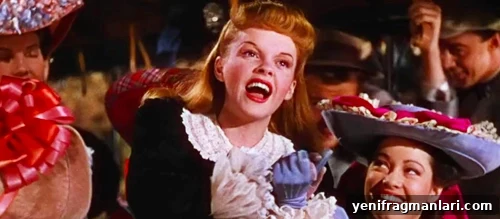
Meet Me in St. Louis (1944)
Director: Vincente Minnelli
Screenwriter: Irving Brecher, Fred F. Finklehoffe
Starring: Judy Garland, Margaret O’Brien, Mary Astor, Lucille Bremer, Joan Carroll, Leon Ames, Tom Drake, Marjorie Main, Harry Davenport
Few performers reshaped the movie musical the way Judy Garland did. Her performance in 1939’s The Wizard of Oz introduced a new approach to film musicals: songs that express a character’s inner life rather than being strictly diegetic performances inside the plot. That shift allowed musicals to become self-contained worlds, full of theatrical production design and vivid color. In the years that followed, Hollywood produced many films intended to buoy morale and offer escapism during wartime. Among them, MGM’s musicals stood out for transporting audiences away from daily worries and into luminous, emotionally resonant fantasy.
Vincente Minnelli’s 1944 classic Meet Me in St. Louis is an exemplar of that era. Richly photographed in Technicolor and anchored by Judy Garland’s warm, expressive presence, the film balances whimsy and genuine tenderness. It introduced standards such as “The Trolley Song,” “The Boy Next Door,” and the deeply poignant “Have Yourself a Merry Little Christmas.” The film earned several Academy Award nominations and a Juvenile Academy Award for Margaret O’Brien, and it was among the highest grossing pictures of 1944. Decades after its release, it remains one of the defining American movie musicals.
Adapted from a series of short stories by Sally Benson originally published in a prominent magazine, Meet Me in St. Louis traces a year in the life of the Smith family in the months leading up to the 1904 World’s Fair. The film is structured around the seasons, each segment revealing facets of family life. At the center is Esther (Judy Garland), the second eldest daughter, who develops a sweet, awkward romance with the boy next door, John Truitt (Tom Drake). Rose (Lucille Bremer), the eldest daughter, is stylish and self-assured; she remains hesitant about romance even as friends and family press her to settle down. Grandpa (Harry Davenport) provides warm comic relief with his gentle eccentricities, while the household maid Katie (Marjorie Main) offers sharp-tongued commentary. The youngest daughters, Agnes (Joan Carroll) and Tootie (Margaret O’Brien), add lively mischief and emotional stakes, especially when the family is shaken by the father Alonzo’s (Leon Ames) announcement that they will move to New York after Christmas for his work.
The film’s charm comes from the family dynamics and the effortless interplay among characters. The screenplay by Fred Finklehoffe and Irving Brecher is witty and finely observed, full of memorable lines and truthful, character-driven humor. Dialogue flows naturally, and the actors deliver with warmth and conviction rather than broad caricature. Scenes brim with small details that reveal affection and history among family members, making the eventual upheaval all the more affecting. The film’s emotional center is not a single melodramatic event but the accumulation of small, lived-in moments.
Minnelli’s background in stage direction and design shaped every frame. He stages scenes with theatrical precision, especially large-group sequences that require fluid movement and coordinated entrances and exits. The Smith house itself becomes a character: richly furnished and warmly lit, layered with lace, velvet, patterned wallpaper and dark wood—settings that Technicolor renders with a glowing intensity. Minnelli frequently frames Garland through windows and doorways, creating intimate, painterly compositions that emphasize both the actress and the domestic world she inhabits. The director’s eye for costume and set detail enhances the film’s period authenticity while keeping it visually sumptuous.

Musical sequences in Meet Me in St. Louis privilege performance and emotional clarity. Minnelli often holds long takes on an entire body rather than cutting rapidly, allowing performers to inhabit the moment fully. This restraint amplifies Judy Garland’s voice and presence; in numbers like “The Boy Next Door” and “Have Yourself a Merry Little Christmas,” the camera and the staging give space for emotional nuance rather than spectacle. Other highlights, such as the wistful “Over the Banister,” blend period melody and poetic lyricism, showcasing Garland’s capacity for both romantic allure and heartfelt vulnerability. This film marked Garland’s transition from ingenue roles into leading-lady territory, expanding her public image and artistic range.
Though the film reflects certain nostalgic and patriotic attitudes typical of its time, it resists pure idealization. Rather than pushing an aspirational fantasy of perfection, it rests in the honest emotional wants of its characters—family, belonging and love. Alonzo’s arc, in particular, moves from practical concern to a deeper recognition of what home truly means, and the film’s final affirmation—home is where the heart is—remains quietly moving and universal.
Score: 24/24
Rating: 5 out of 5.
Recommended reading: There’s no place like St. Louis at Christmas — a reflection on the film’s seasonal resonance and its lasting place in holiday film traditions.