
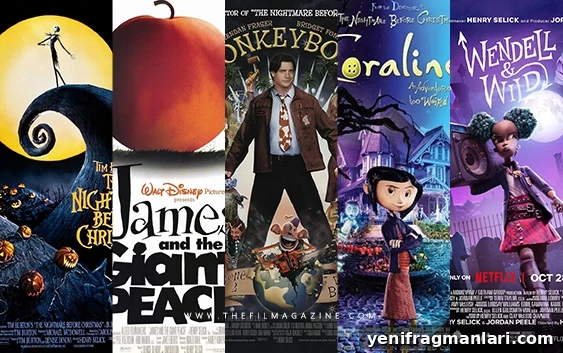
Born in New Jersey in 1952, director and animator Henry Selick is celebrated not for the number of films he has made but for the consistent quality of his craft. While some filmmakers measure success by output, Selick’s medium—stop‑motion animation—is famously slow and meticulous, which explains why he has released a relatively small but remarkable body of work over his long career.
Selick began his career at Disney alongside peers such as Brad Bird and Tim Burton. Since then he has collaborated with studios and creators across the animation world, including Pixar, Laika and even Wes Anderson on various projects, some of which never reached audiences. His connections and experience cross many influential corners of contemporary animation.
A great admirer of Ray Harryhausen, Selick values the distinctive look and tactile feel of stop‑motion above glossy computer graphics. He embraces the subtle imperfections that reveal the human hand behind every frame—each puppet, set and movement crafted painstakingly by artisans. For that reason, he has declined opportunities to direct projects that studios insisted be converted into CG, choosing instead to protect his artistic vision and the integrity of the medium he loves.
Each film in Selick’s catalogue offers something interesting and reflects his commitment to handcrafted storytelling. Some of these works have risen above mere curiosity to become essential examples of modern stop‑motion. Below is a carefully considered ranking of Henry Selick’s feature films.
5. Monkeybone (2001)
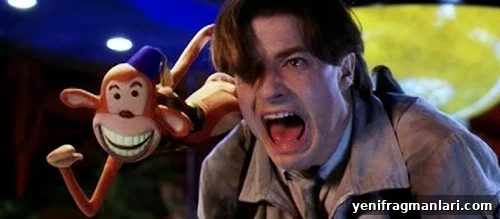
Even the film that ultimately convinced Selick to walk away from live‑action filmmaking remains an intriguing, if flawed, effort. Monkeybone follows cartoonist Stu Miley (played by Brendan Fraser), who falls into a coma after sudden fame and finds himself trapped in a nightmarish realm called Down Town. His anarchic creation, Monkeybone (voiced by John Turturro), takes over Stu’s body and wreaks chaos in the waking world.
Visually, Monkeybone is striking: its live‑action sequences evoke a nightmarish circus atmosphere, and the film blends elaborate puppetry, stop‑motion and traditional animation into a distinctive collage. The ambition is evident, and many design choices remain memorable.
Where the film falters is tonal inconsistency. The first half brims with inventive ideas and visual flair, but the second half loses focus and slides into crude slapstick that undercuts the earlier creativity. That unevenness keeps Monkeybone from ranking higher, though it remains a fascinating attempt to marry live action and handcrafted animation aesthetics.
4. James and the Giant Peach (1996)
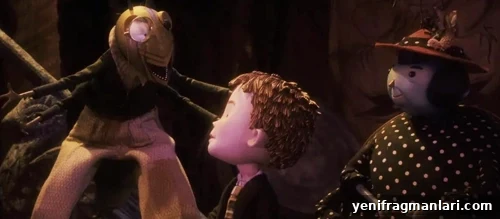
Based on Roald Dahl’s classic, James Henry Trotter escapes his cruel aunts by boarding a magically enlarged peach crewed by anthropomorphic insect companions. Selick leans into Dahl’s darkly comic sensibility, using slightly unsettling character designs and gothic stop‑motion aesthetics that suit the story’s macabre heart.
The film is light in scope but rich in memorable sequences: a mechanical shark battle, a rhinoceros bursting from a storm cloud, and the warmth of James’s bonds with his unusual friends. These moments demonstrate Selick’s ability to balance whimsy and darkness in a family film.
The musical numbers, however, are a weak point. Randy Newman’s songs feel tacked on, as if added to satisfy 1990s expectations for animated features to be musicals. Those songs dilute the film’s mood and hold it back from being as cohesive as it could be.
Recommended for you: Stop Motion Animated Feature Oscar Nominees Ranked
3. Wendell & Wild (2022)
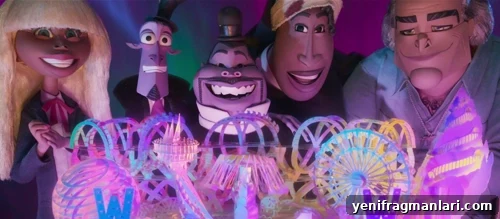
Wendell & Wild centers on foster kid Kat, who becomes entangled in a supernatural scheme involving two bickering demon brothers (voiced by Keegan‑Michael Key and Jordan Peele) who promise to resurrect her parents if they can cross into the world of the living. The film mixes horror, dark comedy and emotional stakes while showcasing inventive production design.
Netflix’s willingness to fund and distribute ambitious stop‑motion projects has helped sustain the form in recent years, and collaborations with producers willing to take risks allowed this film to be bold, strange and original. Wendell & Wild faced added production challenges—made during the COVID pandemic and surviving regional wildfires—and the fact that it came together at all feels like an achievement.
The movie’s wild imagination, its carnivalesque afterlife visuals and an effort to assemble a diverse array of voices make it an admirable work. Some choices—such as a few incongruous song selections—don’t land for everyone, but the film’s originality and heartfelt oddness earn it a strong place in Selick’s filmography.
2. The Nightmare Before Christmas (1993)
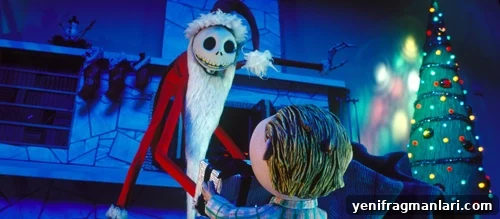
The Nightmare Before Christmas Review
Jack Skellington, the Pumpkin King of Halloween Town, grows weary of his endless routine and attempts to bring Christmas to his spooky world. When he takes over Santa’s role, chaos and comic tragedy follow. Though Tim Burton conceived the story, Henry Selick directed and translated Burton’s sketches into a living, breathing stop‑motion universe.
This film is unmistakably Selick’s: it builds a family‑friendly story around grotesque and quirky characters while maintaining genuine emotional warmth beneath the macabre surface. Children enjoy a measured level of fright, and the film balances scares, humor and a moral core that keeps it accessible.
Danny Elfman’s memorable score and songs, the striking character designs and the film’s ability to merge dark imagery with tenderness helped The Nightmare Before Christmas transcend cult status to become a perennial favorite around Halloween and Christmas alike. The film also stands as a shared victory for creators who once found themselves out of step with mainstream studio expectations.
Recommended for you: 50 Unmissable Christmas Movies
1. Coraline (2009)
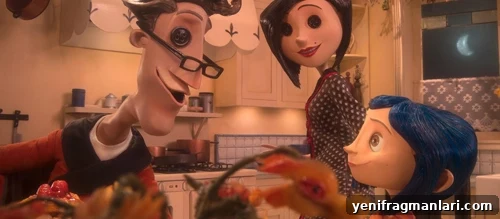
Coraline Jones, a bored young girl living with busy parents, discovers a hidden door that leads to an alternate version of her life—one where her Other Mother seems to give her everything she wants. That world quickly reveals a sinister underside, and Coraline must find the courage to save herself and her family.
From the opening title sequence—one of the most unsettling and artful in recent animation—the film establishes a creeping menace beneath a deceptively cheerful surface. The Other Mother’s process of assembling idealized children is chilling, and the contrast between the vibrant, over‑saturated alternate world and the muted reality is used to great effect.
Production stretched long enough that Dakota Fanning’s voice noticeably matured over the course of the shoot, a testament to how time‑intensive stop‑motion can be. That patience paid off: the film’s miniature sets, handcrafted costumes and nuanced puppet animation create a richly layered experience. The animators coax extraordinary emotional subtlety from armatures and silicone, achieving a level of expressiveness that elevates the story.
Coraline stands as Selick’s masterpiece: a children’s entry into eerie, thoughtful horror and a moving coming‑of‑age tale that resonates with adults as well. Selick resisted turning the film into a musical, preserving its moody, gothic tone. Over time Coraline’s reputation has grown, especially among kids who feel like outsiders and appreciate a film that validates their perspective while encouraging courage and self‑reliance.
Recommended for you: Laika Animated Movies Ranked
Henry Selick exemplifies artistic commitment to the craft of stop‑motion animation. By choosing to work in a painstaking, old‑school medium, he keeps a vital art form alive and continues to push its expressive limits. The meticulous care evident in each of his feature films makes them worthwhile viewings, and the recurring themes—outsider identity, imagination as escape, and a darker edge to family storytelling—resonate strongly with audiences who appreciate something a little different. Fans can only hope that Selick’s next project, long discussed by observers, will arrive without another decade‑long delay.