
I have been promising the third installment of this religious and spiritual film series for some time, but these pieces take a long time to write. With Easter approaching, though, I’ve been revisiting faith-related films and found the inspiration to publish a short appetiser: part 2.5 of “Movies I’ve Had a Religious/Spiritual Experience With.”
Readers familiar with the first two entries in this series — part 1 and part 2 — will notice I don’t always cover explicitly religious movies. That’s partly because my aim has been to show cinema’s power as a medium, and partly because my spiritual perspective is rooted in the Judeo‑Christian tradition; I’ve wanted to invite readers of different backgrounds into the conversation rather than make them feel excluded. I also tend to avoid writing about Jesus online because public discussions often make believers look foolish, and I’m keen to avoid that stereotype. Still, after rewatching The Miracle Maker (2000), I felt it was time to be forthright about how cinema can nourish faith.
These are uncertain times, and I’m candid about my doubts. Maintaining faith amid news of terrible atrocities — wars, terror, oppression, displacement, and suffering on a massive scale — is not easy. I have often prayed for an end to such evils and have sometimes felt met with silence. I question the audacity of asking for protection when human history shows so much persistent suffering. Yet I remain a believer, though there are days when God can feel absent or powerless.
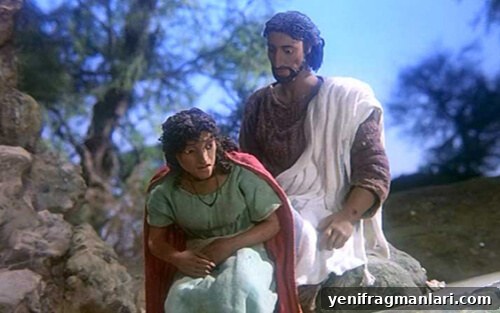
The Miracle Maker is often dismissed as a children’s film because it is an animated feature produced by the BBC and Icon, but it has long been meaningful to me. I remember watching it at Easter as a child and being captivated. Revisiting it as an adult this year deepened my appreciation of Jesus of Nazareth and helped restore a sense of hope. Seeing the gentleness and love attributed to Jesus dramatically portrayed felt restorative in an age of relentless bad news.
Two thousand years after his life, the essence of Jesus remains mysterious. As a Catholic I believe he is the Son of God, part of the Trinity — Father, Son, and Holy Spirit — a divine person who was also truly human. That paradox — how one can be both mortal and divine — has perplexed theologians for centuries. The Miracle Maker handles this mystery with remarkable sensitivity, presenting a relatable, compassionate figure whose actions and character help viewers understand worship and the nature of God in more personal terms.
The film opens with Jesus completing his last job as a carpenter, the trade he learned from Joseph, before embarking on his public ministry. After a forty-day fast in the desert where he is tempted, he returns to teach about love, forgiveness, and inclusion. His teachings prioritize the spirit of the law over legalistic literalism, and that message makes him popular with ordinary people but threatens the religious establishment, which eventually conspires to have him killed. Using a stunning blend of stop-motion and 2D animation and the voice talents of actors like Ralph Fiennes, the film renders Jesus’ dual identity — human and divine — in a way that feels accessible and emotionally true.
One of the film’s strengths is how it emphasizes Jesus’ ordinariness alongside his extraordinary compassion. He enjoys common human activities — meeting people, eating, and socializing — but he also displays a charisma and moral authority that draws the outcast and challenges the powerful. Much of the story is told through the eyes of Tamar — Jairus’ daughter in the Gospels — a child who follows Jesus and experiences his patient, respectful care. Jesus treats her and other marginalized people with dignity, refusing to dismiss them because of age or social status.
The Miracle Maker highlights two dimensions of Jesus’ work: physical healing and deeper wholeness through forgiveness. While the miracles are dramatic and memorable, the film invites viewers to look beyond the spectacle to the mercy at their center. His acts of healing often restore relationships and hope as much as bodies, and it is this mercy — interpreted in the film as a divine love intolerant of human suffering — that explains his conflict with authorities and ultimately his death. For me, seeing God’s character expressed through Jesus’ compassion was consoling: it suggested a God who grieves over human pain rather than being indifferent to it.
The film also shows how the social and political realities of Jesus’ time mirror our own. First‑century Palestine was marked by Roman occupation, political violence, and entrenched elites who profited while ordinary people struggled — not unlike many modern societies. Different groups then, as now, responded in diverse and sometimes violent ways. The Gospel portrait of Jesus in The Miracle Maker challenges both the zeal of revolutionary violence and the complacency of collaborators, offering instead a message of radical love and justice.
Some of the most powerful scenes depict Jesus’ vulnerability. When he learns of John the Baptist’s execution, the film shows him weeping and calling out “Father,” a raw, human response that resonates with anyone who has felt abandoned or spiritually dry. The Garden of Gethsemane sequence — animated with hallucinatory 2D imagery — captures Jesus’ anguish as he begs for another way yet accepts the path before him. These moments make the Passion feel more immediate and human, and they underscore that divine love, in this portrayal, is willing to suffer with humanity rather than distant from it.
The Miracle Maker presents heavy themes to younger viewers without condescension, much like other animated films that respectfully tackle difficult biblical stories. By combining accessible storytelling with artistic daring, it introduces complex questions about suffering, sacrifice, and forgiveness in ways both children and adults can engage with.
In short, The Miracle Maker humanizes Jesus more effectively than most cinematic treatments. It shows a figure who fully experiences human temptation, pain, and grief while embodying an extraordinary love that reshapes lives. For believers, the film clarifies the nature of divine love by portraying a God who knows what it means to be human. For everyone, it demonstrates cinema’s ability to open conversations about the deepest existential questions at times like Easter.
John 3:16, For God so loved the world that he gave his one and only Son, that whoever believes in him shall not perish but have eternal life.
The Miracle Maker is a compelling example of film’s potential to engage both children and adults with profound spiritual themes. It remains a powerful, resonant film to watch during Easter and beyond.