
Christopher Nolan: Sound, Structure, and Emotional Depth
Christopher Nolan’s early short Doodlebug (1997) already carries the hallmarks that would define his career: compact, claustrophobic spaces, existential unease, and a twist that unsettles chronological expectations. At three minutes it demands little character exposition, yet its visuals and idea-driven focus are precise. Across the next two decades Nolan expanded those instincts into ambitious features—films that ask whether he has deepened his themes or simply stretched the same impulses across much longer running times.
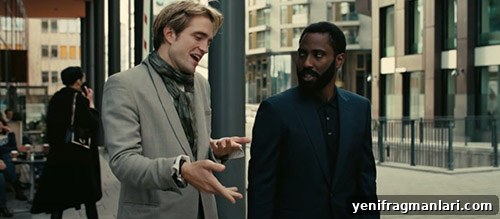
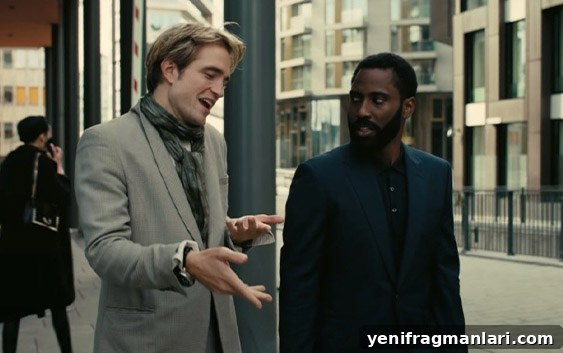
One recurring complaint about Nolan’s blockbusters—from Inception (2010) and The Dark Knight Rises (2012) to Interstellar (2014) and Tenet (2020)—is the mixing and prominence of music and atmospheric sound, sometimes at the expense of clear dialogue. That criticism often misses an important point: Nolan deliberately uses sound design as a narrative instrument. He treats music and sonic texture as essential compositional elements that shape pace, mood, and viewer response.
In films like Tenet the score and sound effects form a constant undercurrent—throbbing beats, sudden booms, and dense synth textures tie tightly to the editing and visual choices. This creates an adrenalized viewing experience where quiet reflection is rare. Scenes that might have given audiences time to breathe under another director are frequently compressed; emotional beats and small gestures are often swept into the overall rhythmic force of the soundtrack and editing.
This kinetic approach suits Nolan’s taste for high-concept, puzzle-like storytelling. His admiration for James Bond-style spectacle and tightly engineered set pieces is evident: his films often read like elevated thrillers in which plot mechanics are foregrounded. That emphasis can leave character moments feeling abbreviated. A small, revealing look can flash by in an instant because the film moves immediately to the next logistical beat.
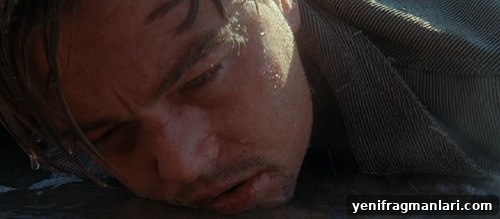
Yet Nolan is not indifferent to character or emotion. When he slows down, he slows with impact. Interstellar, for example, deliberately gives space to quieter, poignant sequences—especially the family scenes that establish Cooper’s motivations and the later montage of time-lapsed video messages that devastate him. The Prestige (2006) and Dunkirk (2017) likewise offer more grounded emotional registers: intimacy, obsession, and survival are presented with a patience that allows the audience to feel as well as understand.
Part of the debate over Nolan’s films hinges on how viewers approach them. Are they puzzles to be solved, or emotional odysseys to be felt? Nolan, who studied English literature, often designs his films so that thematic layers reveal themselves on repeat viewings. Narrative obliqueness and bold soundscapes can be interpreted as deliberate strategies to produce lingering unease—stories that keep working on you after you leave the theater, rather than delivering every nuance in a single sitting.
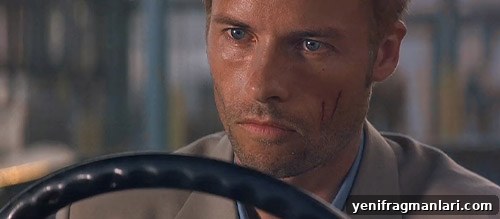
Consider Memento (2000), Nolan’s breakthrough feature. Its backward structure does more than demonstrate clever form; it places us inside Leonard’s traumatic condition and self-deception. Leonard records facts and constructs meanings precisely because memory fails him—his choices are both practical and an emotional defense mechanism. Here, narrative form and character psychology are inseparable.
Dunkirk uses non-linear time not as a mere trick but to express the radically different temporal experiences of sailors, soldiers, and pilots during the evacuation. The film’s fragmented chronology creates an immersive, tactile sense of chaos and endurance. Whether you read these devices as gimmick or artistry depends on your appetite for formal experimentation, but Nolan’s choices consistently aim to connect structure, theme, and feeling.
Recommended for you: Christopher Nolan Films Ranked
Nolan himself has defended an impressionistic approach to sound and storytelling. He argues that clarity of story and emotion can be achieved through a layered assembly of picture and sound, not only through dialogue. From this perspective, loud scores and dense mixes are not careless design errors but deliberate aesthetic decisions intended to make films feel more experiential—less conversational, more visceral.
Understanding Nolan often requires patience: some themes—grief, denial, the desire to reverse loss—are embedded in character gestures, in repetitions, and in structural conceits rather than handed to the viewer in plain speech. In Tenet, for instance, certain relationships and motives suggest deeper emotional currents that could have been explored at length but are instead communicated economically amid the film’s logistical whirlwind. That economy can frustrate viewers seeking conventional character arcs, but it also preserves a sense of propulsion and mystery.
Ultimately, Nolan’s films function like orchestral compositions where sound, rhythm, and form cohere to deliver emotional and intellectual impact. The puzzles he constructs are part of his voice, but they do not exclude tenderness or moral depth. Some of his most affecting moments arrive when narrative complexity and emotional truth converge—when a formal device reveals something essential about a character’s inner life. Viewers who accept Nolan’s methods may find their impressions deepen over multiple viewings; those who expect straightforward storytelling may prefer his quieter works, but few will forget the sensory force of a Nolan theater experience.
Written by Louis B Scheuer
You can support Louis B Scheuer in the following places:
Twitter – @louisbscheuer
Instagram – @louisbscheuer
Recommended for you: Christopher Nolan’s Cinematic Chores – Understanding Tenet