
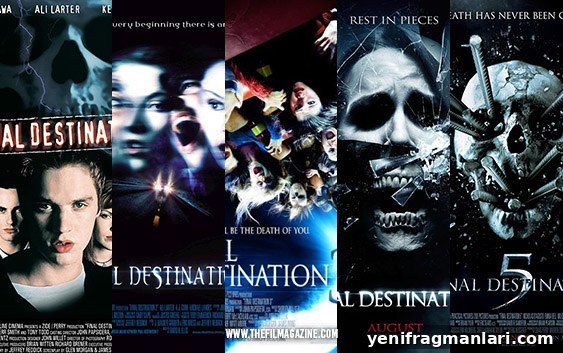
Death is inevitable. How and when it arrives remain mysteries, yet the early 2000s horror franchise Final Destination built an entire premise around cheating fate—at least temporarily. Across five films released over eleven years, the series explored the idea that a premonition or a sudden “feeling” can spare a handful of people from an immediate disaster, only for death to methodically reclaim them through a sequence of inventive and often brutal accidents. From exploding planes to everyday household hazards, the franchise turned mundane situations into elaborate finales where the inevitable catches up with the survivors.
Conceived for the screen by James Wong—an established writer and director known for his work on The X-Files—Final Destination replaced an on-screen monster with something far more abstract and unnerving: Death itself. This shift allowed the franchise to deliver some of the most surprising and elaborate cinematic deaths of its era. While the series never fully realized every creative possibility it hinted at, it remains a defining part of 2000s horror and a favorite among genre fans.
In this edition of Ranked, we peer through the grisly moments and rank the five Final Destination films from worst to best in Final Destination Movies Ranked.
Share your order in the comments, and follow us on social media for more rankings and horror commentary.
5. The Final Destination (2009)
Released amid the 3D fad of the late 2000s, The Final Destination represents the franchise’s most notable decline. Where earlier entries relied on building prolonged tension before delivering shocking payoffs, this fourth installment often substitutes momentum for cheap thrills and visual gimmicks. The film opens with an overly tone-deaf pop soundtrack and comedy beats that undercut the intended dread, while performances and dialogue frequently feel flat and uninspired.
Structurally, the movie leans heavily on the era’s “objects flying toward the camera” 3D trick—wrenches, wheels, and splashes of blood repeatedly assault the frame. Those choices reduce the franchise’s usually clever set-piece executions to predictable spectacle. The cinematography also adopts a bland, washed-out palette that robs disorienting sequences of atmosphere. Technical missteps—at times even basic continuity and shot composition errors—further undermine the film.
Overall, The Final Destination feels like a cash-in that favors surface-level shocks over genuine suspense. Its death scenes read more like punchlines than carefully constructed sequences, and that shift in tone leaves it feeling like the weakest entry in the series.
Recommended for you: Nightmare on Elm Street Films Ranked
4. Final Destination 5 (2011)
Final Destination 5 arrives after the franchise’s dip into 3D excess, and while it still nods to that era with occasional direct-to-camera effects, it represents a clearer, more focused attempt to restore the series’ strengths. The film opens with a dramatic cable bridge collapse that delivers a spectacular and bloody prologue, and then settles into a more deliberate rhythm of tension and escalating dread.
The movie suffers slightly from its willingness to stage deaths in less everyday scenarios, which reduces some of the unsettling relatability that made earlier entries so effective. Still, the performances are solid, and the production embraces a sharper visual approach reminiscent of the stronger films in the franchise. Most notably, Final Destination 5 ties itself to the original film in a shocking final act reveal that reframes the movie as a prequel—an ending that rewards longtime fans and brings the series’ mythology full circle.
3. Final Destination 2 (2003)
Directed by David R. Ellis, Final Destination 2 improves on the original’s concept by scaling up both the spectacle and the gore. It embraces blockbuster-style set pieces—most memorably the chaotic multi-vehicle highway pileup—while keeping the franchise’s essential mechanics intact: tense sequences, misdirection, and the creeping sense that everyday life can become catastrophically lethal.
The sequel is not without flaws; performances are uneven, and character motivation sometimes suffers when the story shifts focus. Yet it makes up for these weaknesses with ambition and energy. The film leans into more elaborate special effects and explosive choreography, delivering several gruesome and creatively staged deaths that satisfy viewers looking for visceral thrills. Final Destination 2 sits comfortably as a solid follow-up that expands the franchise’s scope without losing its core identity.
Recommended for you: The Omen Films Ranked
2. Final Destination (2000)
The original Final Destination is the concept that launched the franchise and remains one of its most memorable entries. James Wong’s background in television—especially his X-Files work—shows in the film’s efficient, episodic structure: an intense, cinematic prologue (the airplane disaster) followed by tight, suspenseful sequences that gradually reveal the rules of the universe.
Viewed years later, the film still feels well-paced and smartly restrained. Effects are used economically and to great effect, and the film’s look retains the slightly timeless sheen of classic studio horror. While there are logical gaps and occasional clunky dialogue typical of the era, the core idea is compelling and executed with a confidence that explains why the movie spawned multiple sequels. The original remains a compelling, entertaining watch for both longtime fans and newcomers.
1. Final Destination 3 (2006)
Final Destination 3 earns the top spot by combining sharpened craft, an engaged cast, and some of the franchise’s most ingenious sequences. Mary Elizabeth Winstead leads a strong ensemble, and the film benefits from more mature performances and better-developed characters. Instead of relying solely on vague premonitions, this entry gives its protagonists concrete clues—photographs taken after a near-fatal rollercoaster accident—that they must interpret to prevent further deaths. That hook adds a satisfying investigative element and keeps viewers actively engaged.
The film excels at sustained tension. Long, suspenseful passages build patiently to brutal payoffs, demonstrating a clear command of pacing and visual storytelling. Its inventive death scenes feel earned and meticulously staged rather than gratuitous. Final Destination 3 strikes the best balance between spectacle and suspense in the series, making it not only the franchise’s high point but also one of the stronger studio horror films of its decade.
Recommended for you: 10 Best Horror Movies of the 2010s
What do you think of this ranking? Would you order the films differently? Share your thoughts in the comments, and follow us on social platforms for more lists, reviews, and horror features.