
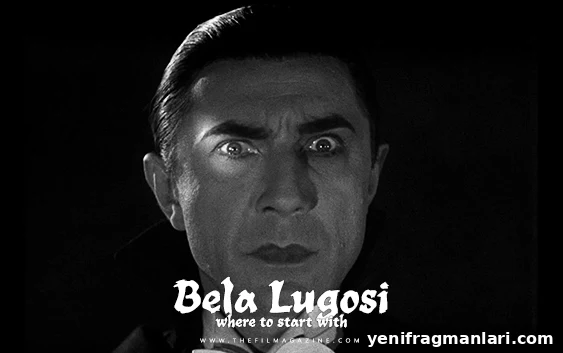
There comes a moment in Bela Lugosi’s career when he no longer seems able to disappear into a part. No matter the costume or character, audiences unmistakably see and hear Bela Lugosi himself. Much of this stems from his distinctive voice and accent. Born in Lugos, Hungary, on October 20, 1886, he adopted the stage surname Lugosi to honor his birthplace. After serving in the Austro-Hungarian army during World War I, he acted in silent films before emigrating to the United States in the mid-1920s. In America he developed a unique way of speaking English—often learning early parts phonetically—which gave his performances a deep, exotic cadence that became central to his screen persona.
Lugosi became world-famous for portraying Count Dracula in the 1927 Broadway adaptation of Bram Stoker’s novel, and that role defined much of his professional life. He later appeared in a string of classic horror films from studios like Universal and in early British productions (including Hammer’s The Mystery of the Marie Celeste), often sharing the screen with contemporaries such as Boris Karloff, Glenn Strange, and Lon Chaney Jr. By the late 1930s, his health had been compromised by injuries sustained during the war. Leading roles became rarer, and his attempts to break free from typecasting never fully succeeded. Struggling with morphine dependency and alcoholism, his career momentum declined. His final screen appearance was a posthumous role in the widely criticized Plan 9 From Outer Space. Lugosi died on August 16, 1956, at age 73 after retiring for a nap and never waking. He married five times and had one son, and was buried in Los Angeles.
Despite the personal challenges that shadowed his later years, Bela Lugosi remains a towering figure in cinematic history. His presence—equal parts vocal, physical, and magnetic—has endured in popular imagination alongside other horror icons such as Vincent Price and Christopher Lee. His work transcends the films themselves and continues to influence generations of viewers and performers. If you’re wondering where to begin exploring Lugosi’s filmography, here are a few essential titles that showcase his range and lasting impact.
1. Dracula (1931)
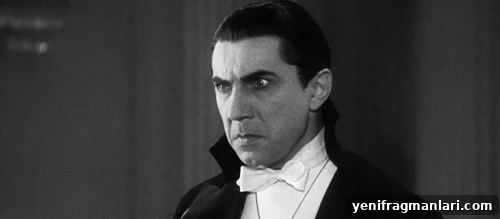
Dracula is the definitive Lugosi performance and the role that cemented his image in the United States. When Universal Pictures decided to adapt Dracula as one of their first talking horror films, producer Carl Laemmle Jr. turned to the actor who had already made the role famous on stage. Lugosi returned to the part he had played on Broadway, and Edward Van Sloan, who had been his onstage Van Helsing, also reprised his role for the film.
Lugosi’s portrayal differs from Bram Stoker’s novel, which implies the Count makes an effort to speak fluent English. Lugosi’s heavy, stylized delivery instead gave the part an alluring otherworldliness that audiences associated with vampires for decades. Today, the sound of Lugosi’s voice is what many people imagine when they think of Dracula. His measured cadence, his iconic line “I am… Dracula,” and his dramatic, gliding movements—cloak spread like bat wings—established a visual and vocal shorthand for the character that persists in popular culture. His stare, slow movements, and singular delivery created an image that both defined and confined him. The coffin-cloak that made him famous became inseparable from his public identity.
2. White Zombie (1932)
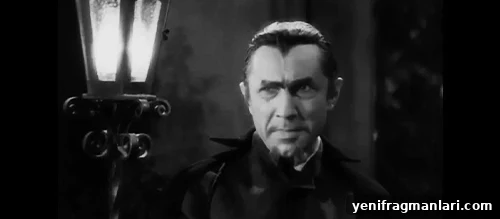
A year after Dracula, Lugosi helped establish another monster archetype on film: the cinematic zombie. In 1932’s White Zombie, the concept of the zombie was still rooted in voodoo folklore rather than the modern undead hordes made famous later in the 20th century. The film presents zombies as people reanimated by mystical means to serve as laborers or instruments of control. White Zombie functions as a chilling allegory for slavery and exploitation: a white landowner or sorcerer commands the bodies of the voodoo-enslaved for profit and labor.
Lugosi’s character, Murder Legendre, is a calculating manipulator who exerts power from his eerie castle, bending others’ affections and wills to his designs. What White Zombie is most remembered for is Lugosi’s mesmerizing stare and commanding presence. Even amid uneven supporting performances, his intense eyes and controlled delivery provide the film with real menace and gravitas. In this role, Lugosi demonstrates the potency of subtle menace and quiet control—his presence is the film’s most enduring element.
3. Ninotchka (1939)
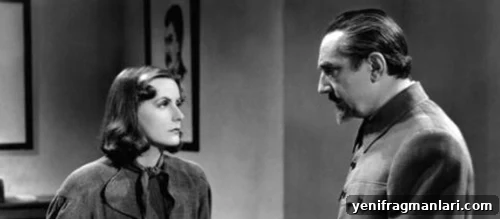
Lugosi’s casting in Ninotchka offers a tantalizing glimpse of what might have been had his career taken a different path. The 1939 romantic comedy—starring Greta Garbo as the stern but gradually softened Comrade Ninotchka—gave Lugosi only a brief scene near the film’s end, despite him receiving fourth billing. In that three-minute appearance he plays Commissar Razinin, a composed and authoritative figure who brings an unexpected weight to an otherwise light-hearted picture.
Even with limited screen time, Lugosi brings class, screen presence, and a controlled intensity that hints at broader dramatic possibilities outside horror. His measured posture, cool authority, and the slight menace in his eyes force even major stars to take notice. Ninotchka was nominated for multiple Academy Awards and remains a classic of its genre, yet Lugosi’s small but memorable role did little to alter his typecasting. The scene stands as a reminder that he possessed versatility and dramatic depth, qualities that Hollywood often failed to fully exploit.
Throughout his career Lugosi moved between stage and screen, between leading roles and smaller parts, but his legacy is defined by a handful of iconic performances that shaped the language of cinematic horror. His Dracula continues to be the image many people call to mind when they think of vampires, while his work in films like White Zombie helped introduce other monstrous archetypes to mainstream cinema. Though personal demons and industry typecasting limited his later opportunities, Bela Lugosi’s influence on film acting, horror iconography, and popular culture remains unmistakable and enduring.