
Gretel & Hansel (2020)
Director: Oz Perkins
Screenwriter: Rob Hayes, Oz Perkins
Starring: Sophia Lillis, Sam Leakey, Alice Krige
Gretel & Hansel (2020) is a modern, atmospheric retelling of the classic Brothers Grimm fairy tale. This review examines the film’s reinterpretation of the story, its thematic ambitions, and the elements that make it visually compelling — particularly its cinematography. Fans of fairy-tale adaptations and artful horror will find much to appreciate, even if the film does not fully realize every idea it introduces.
The movie shifts the traditional tale’s tone toward dark realism. In this version, Gretel is the older sibling who seeks work to care for herself and her younger brother, Hansel. Instead of discovering a candy house in the woods, the children encounter a seemingly ordinary home owned by a witch who offers shelter and food. The dynamic between Gretel and the witch is more complex than the original story’s obvious villainy: the witch mentors Gretel, introducing her to a peculiar, natural magic and revealing that Gretel possesses a latent power of her own.
Screenwriters Rob Hayes and Oz Perkins use this relationship to explore a central conceit: the idea that gifts are never entirely free — that every gain requires a corresponding loss. This “give and take” motif is embedded in a secondary tale within the film, about a girl who traded her sickness for power. The film hints at a moral economy in which benefits come at a price, and it suggests links to broader issues like consumption and sustainability. However, the movie does not fully develop these implications. While the notion could have been sharpened into a critique of modern resource exploitation or environmental neglect, the screenplay remains more suggestive than explicit.
The film’s pacing and structure sometimes struggle under the weight of its aesthetic ambitions. At 87 minutes, the story occasionally feels thin, with repeated scenes set at tables or in tight interiors. Given the witch’s apparent connection to the natural world, more active sequences — foraging, rituals in the forest, or demonstrations of natural magic — might have enriched the narrative and strengthened the theme. Still, the quieter moments do allow space for character interaction and for Gretel’s transformation to unfold slowly.
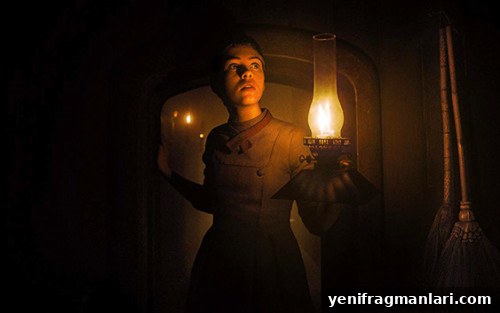
Cinematography is the strongest asset of Gretel & Hansel and the primary reason to watch. The film frequently employs low angles and wide negative space to convey a childlike viewpoint, making the world feel both imposing and uncanny. Compositions often center Gretel beneath large architectural and natural elements: chandeliers that resemble crowns, diagonally fallen trees that slice the frame, and triangular motifs that echo the film’s symbolic language. Natural lighting — candlelight and window glow — creates high-contrast scenes, bathing interiors in warm ambers and cold blues. One of the film’s most memorable images is a red-tinged woods scene in which Gretel faces a stark, morally charged choice; the color design amplifies the sense of dread and temptation.
The performances are restrained but effective. Sophia Lillis portrays Gretel with a brooding, guarded intensity that suits the film’s slow-burn tone. Sam Leakey’s Hansel offers a credible, sometimes irritating sibling presence that helps ground the more mystical elements. Alice Krige brings a seasoned ambiguity to the witch: she can be both alluring and menacing, a mentor who also embodies the film’s moral contradictions.
Where the film succeeds, it does so as mood and visual poetry rather than as plot-driven horror. Viewers who prioritize atmosphere, style, and metaphor will likely respond well to its measured dread. Those seeking a more explicit exploration of the film’s moral ideas or a denser narrative may find it frustratingly elliptical. Ultimately, Gretel & Hansel is coherent and accomplished in its craft, even if it leaves several promising lines of inquiry underexplored.
The film earns credit for its unique aesthetic and for taking a deliberate, artful approach to a familiar folktale. It may not fully satisfy viewers hoping for a conventional horror arc or a rigorous social critique, but it stands out as a distinctive fairy-tale adaptation with an arresting visual identity.
14/24