
The Remarkable Life of Ibelin (2024)
Director: Benjamin Ree
Starring: Mats Steen, Mia Steen, Zoe Croft, Kelsey Ellison, Ed Larkin, John Andrew Mclay, Elena Pitsiaeli, Sebastian Tjørstad, Paul Wild
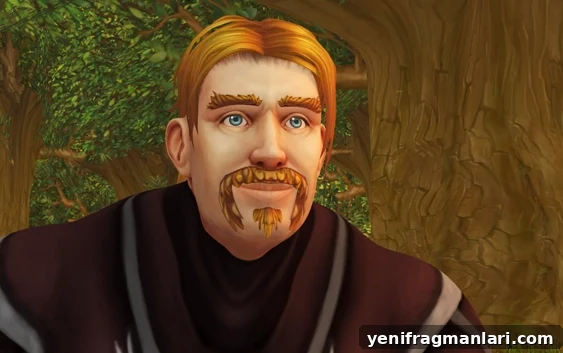
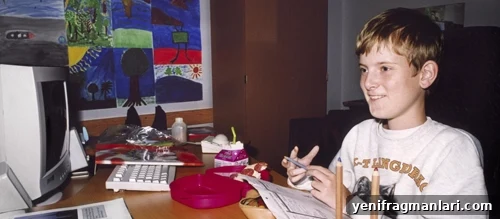
In 2014, 25-year-old Mats Steen from Norway died after a lifetime battling a rare muscular condition. To his parents, Mats’s world seemed small and lonely: a young man limited by his body and unable to form lasting, meaningful relationships. But Benjamin Ree’s documentary The Remarkable Life of Ibelin reveals a different truth. Mats lived a rich and deeply felt second life online as Ibelin, a persona he created in the massively multiplayer role-playing game World of Warcraft. Through that virtual identity he forged powerful friendships, found love, and left a lasting impact on people around the world.
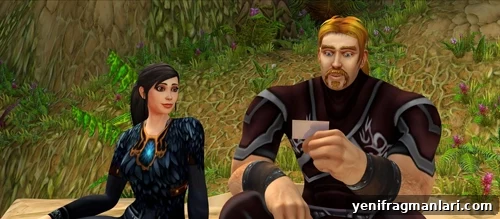
Ree opens with home movies and intimate family voiceovers to sketch Mats’s early years, then shifts into the digital sphere with stylistic, game-like animation that recreates Ibelin’s adventures. The film uses a compelling mix of media: reenacted in-game chat performed by voice actors, readings from Mats’s candid blog posts, interviews with friends and family, and animation inspired by the aesthetics of the world he loved. Those different modes occasionally overlap, but together they build a vivid portrait of a life lived between screens and the physical world.
A remarkable production choice is that much of the in-game dialogue is reproduced verbatim: “Every line of dialogue is written by Mats and his friends.” That fidelity gives the film emotional precision. Mats’s blog excerpts are especially striking—clear, honest passages where he wrestles with disability, loneliness, desire and aspiration. The contrast between the glorious freedom of the virtual landscapes and the stark limitations of his body in reality is heartbreaking. The documentary repeatedly pulls viewers from Ibelin’s spirited runs across imagined fields back to the humbling image of a prone, frail body that can move little more than its fingers. Those transitions are devastating and essential to the film’s emotional logic.
“In this other world, a girl wouldn’t see a wheelchair or anything different. They would get my soul, heart and mind conveniently placed in a handsome strong body.”
Like many teenagers, Mats longed for intimacy. His first confessed crush developed inside the game, and the film captures their meet-cute and romantic moments rendered in the virtual landscape. The relationship ends abruptly when the other player—an avatar called Rumour, controlled by a Dutch teenager—is pulled out of the game world when her parents confiscate her computer to protect her schoolwork. The loss devastates Mats, plunging him into isolation and emotional pain. The documentary smartly shifts perspective to show both sides of the story: the virtual romance and the real-life consequences players face outside the screen.
“If only I wasn’t handicapped… it was always my excuse.”
Mats often hid his physical reality from his guildmates, unwilling to expose the difference between himself and his avatar. That meant he never joined the group for an in-person trip across Europe. The guild documented their meet-up with photos and stories they later shared with him, hoping to include Ibelin, but those images also underscored what he could not experience. He was a valued mediator and confidant, yet he struggled to reciprocate emotionally, pushing people away as frustration mounted. In the film’s later chapters, that strain contributes to a painful drifting from the friends who once supported him.
As much as the virtual world liberated Mats, his physical disabilities eventually interfered with the specialized hardware he relied on. He observes that there was “always one button I can’t quite reach,” a line that functions as both a literal limitation and a poignant metaphor for the barriers he faced in life.
Animation is used thoughtfully here to visualize moments that could never be filmed and to immerse viewers in the world that felt most like home to Mats. The technique honors his experience without sacrificing authenticity, letting audiences inhabit the digital spaces where his friendships and affection flourished.
For those who dismiss gaming as mere escapism, this documentary offers a corrective. Video games can be liberating, healing and essential, particularly for people who navigate the world differently. The film includes a moving example of a Danish mother who learns to connect with her autistic son by playing World of Warcraft together on Ibelin’s suggestion—an intimate scene that shows how shared gameplay can build emotional bridges where traditional contact fails.
Mats’s online life allowed him to form friendships that were sincere and reciprocal without falling into caretaker dynamics of pity or obligation. His virtual existence—complex, loving and socially real—was as valid as any in-person relationship. In showing that, the documentary compels viewers to rethink what constitutes a meaningful life.
The title says it plainly: The Remarkable Life of Ibelin is remarkable. Mats Steen faced profound hardship, but he also found joy, love and purpose through the tools available to him. Benjamin Ree tells this story with sensitivity and care, balancing sorrow with celebration. The film leaves you thoughtful and moved: it honors a life that many would have overlooked and confirms the power of connection in unexpected places.
Score: 20/24
Rating: 4 out of 5.