
Tony Stark has been at the center of some of the MCU’s most persistent moral controversies. He begins as a weapons manufacturer whose products fall into the hands of terrorists, then moves on to develop the Iron Man suits, an army of autonomous Iron Man drones, and finally creates Ultron—developments that repeatedly backfire. The events of Captain America: Civil War hinge on Tony’s belief that the Avengers need oversight. Yet the real problem often seems less about the Avengers and more about the technology Tony builds and the lack of meaningful safeguards around it.

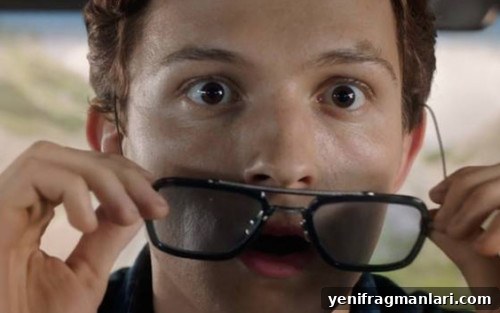
That theme becomes most striking in Spider-Man: Far From Home, where Tony’s legacy includes E.D.I.T.H. (Even Dead, I’m The Hero)—a pair of glasses that grants control over a global Stark satellite network. E.D.I.T.H. consolidates surveillance, personal data access, and lethal drone capabilities into a single interface. The glasses allow their wearer to access private messages, search histories and deploy armed drones—turning one person into an unchecked intelligence and strike platform. The choice to pass that technology to a teenager raises serious ethical and practical questions that the film touches on only briefly.
Imagine, for a moment, giving a real seventeen-year-old access to this kind of power. Even among seasoned adults, control over drones and mass surveillance raises complex challenges. In the film, Peter Parker’s inability to safely manage a drone strike on a classmate is treated as a comic or dramatic incident, but it exposes the real danger of concentrating so much capability in a single, insecure hands-off system. The film never establishes reliable fail-safes—no accessible kill-switch for trusted colleagues like Nick Fury, Happy Hogan, or other responsible parties. That omission is striking given the clear, catastrophic potential of such a system if misused, compromised, or obtained under coercion.
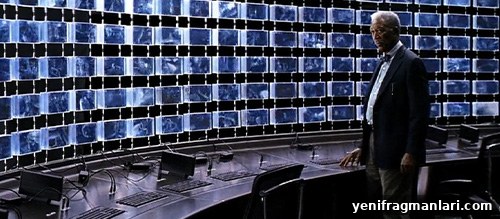
The moral questions surrounding E.D.I.T.H. are not new in superhero cinema. Christopher Nolan’s The Dark Knight presents a comparable dilemma in its sonar surveillance device, which uses the citizens’ phones to map Gotham. There, Lucius Fox points out that the machine is “beautiful, dangerous, and unethical,” and the film makes sure to show that Batman builds a contingency—Lucius can shut the system down by typing his name. Nolan’s film explicitly recognizes the weight of the decision to sacrifice privacy for security and, ultimately, decides to destroy the machine when its use crosses a line.
By contrast, Far From Home treats E.D.I.T.H. more casually. The film acknowledges the danger of the technology falling into the wrong hands, but it largely avoids exploring the broader ethical implications: Who oversees the satellite network? What legal or institutional checks exist to prevent abuse? How is private data protected from misuse by state or corporate actors? Instead, the movie reduces the issue to the simple idea that E.D.I.T.H. is “too much power for a teenager,” a point that is obvious but ultimately unsatisfying as an ethical treatment.
This casualness is notable because the franchise has previously engaged more deeply with questions of responsibility and accountability. Films like Captain America: Civil War framed debates over oversight and the balance between freedom and security as central conflicts. Allowing an all-encompassing surveillance-and-strike system to persist in the MCU without meaningful critique or resolution feels like a step back. E.D.I.T.H. essentially functions as a private military and intelligence capability with none of the checks and balances that exist—at least in theory—in democratic systems.
Marvel’s decision to normalize such technology in a blockbuster context also has cultural implications. When a widely popular film treats mass surveillance and remote military power as a quirky plot device rather than a perilous moral issue, it risks diminishing public scrutiny of analogous real-world technologies. Films can serve as useful venues for examining the trade-offs between security and privacy; when they don’t, audiences lose an opportunity to engage with the ethical dilemmas the technology provokes.
Ultimately, E.D.I.T.H. raises fundamental questions about power, accountability, and the ethics of control. Even dead, Tony Stark’s legacy is a reminder of the potential harm that can stem from brilliant but unrestrained inventions. If the MCU is going to introduce a device that combines surveillance and lethal capability, it would be more responsible—both narratively and morally—to address those risks directly: establish clear limits, build robust fail-safes, and show the consequences of unchecked authority. Until then, E.D.I.T.H. remains an unsettling symbol of how technology, even in fictional universes, can concentrate extraordinary power without adequate oversight.