
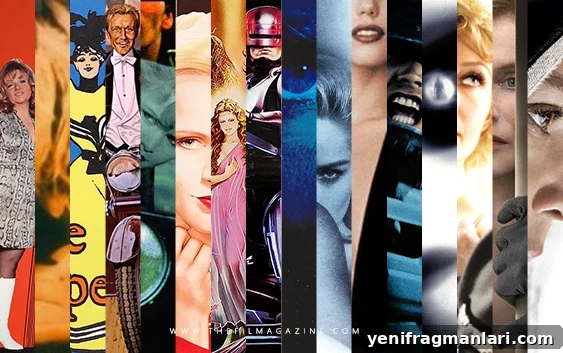
Dutch provocateur Paul Verhoeven has followed a remarkable, often controversial trajectory across a 50-year career in film.
He began by making violent, sexually frank and politically challenging films in the Netherlands, moved to Hollywood where his work became still violent but less explicit and often misread, and later returned to Europe to make films on his own uncompromising terms.
Although Verhoeven was a lucrative director for American studios for many years, Hollywood frequently misunderstood him. His satirical impulses were often missed or misinterpreted, and studio constraints limited how far he could push subject matter in U.S. productions.
That raises a persistent question: how should we rank a divisive artist who consistently swims against the tide and refuses to dilute his vision?
Below, organized by quality, reception and sheer defiant spirit, are all 16 Paul Verhoeven films ranked.
16. Hollow Man (2000)

Inspired by H.G. Wells, a scientist and his team develop an invisibility serum intended for military use. Impatient for approval, Dr. Sebastian Caine (Kevin Bacon) tests it on himself and proceeds into a terrifying descent into sociopathy.
While a more modern and psychologically subtle take on the concept would arrive later, this film remains an unsettling, abrasive exploration of what an unseen psychopath might do. It also delivered strong blockbuster-era special effects for its time.
15. Flesh and Blood (1985)

Set in early 16th-century Italy, a band of mercenaries led by the fierce Martin (Rutger Hauer) seize a castle and abduct a noblewoman (Jennifer Jason Leigh) after promises of plunder are broken.
Verhoeven’s first English-language film feels caught between his European boldness and the commercial expectations of international cinema. It contains more explicit sex and violence than typical historical epics, but uneven tone and diluted ambition left it struggling to find its audience.
14. Showgirls (1995)
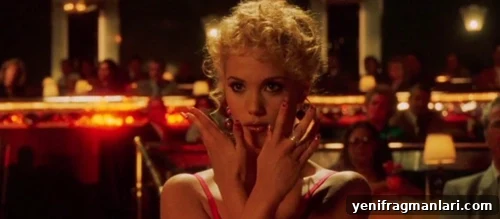
Nomi (Elizabeth Berkley) arrives in Las Vegas and rises from nightclub stripper to the starring role in a lavish nude stage show.
The film’s cult status and meme-driven afterlife have overshadowed its original intentions. A problematic screenplay and uneven performances leave it lodged in “so bad it’s good” territory for many viewers. Verhoeven has since called it one of the most realistic films he made in the United States—an ironic defense of its raw, unglamorous portrayal of show business.
13. Business Is Business (Wat zien ik) (1971)
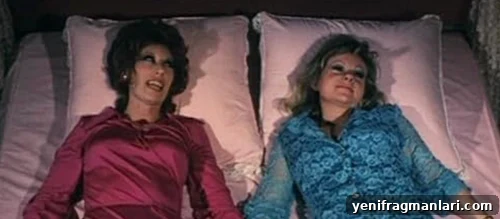
This gritty drama follows two sex workers in Amsterdam and the tumultuous choices they face.
Verhoeven’s directorial debut is deceptively bleak—technically a comedy in some classifications—yet it reads as a dark, neorealist mood piece. It introduces themes he would revisit throughout his career: morally compromised protagonists, social realism, and flashes of unexpected, almost camp humor.
12. Basic Instinct (1992)

A troubled detective (Michael Douglas) becomes obsessed with Catherine Tramell (Sharon Stone), the prime suspect in a murder case and a bestselling novelist whose latest book mirrors the crime.
While one infamous scene dominates popular memory, the film offers more: a cold, compelling antiheroine in Stone’s career-defining performance and a moody, seductive thriller atmosphere. The central mystery may be straightforward, but the film’s tension and style carry it effectively.
11. Spetters (1980)

A group of young dirt-bike racers seek escape from their bleak lives and confront tragedy along the way.
With a young, attractive cast including Renée Soutendijk and Hans van Tongeren behaving recklessly, Verhoeven channels an anti-establishment energy reminiscent of late 1960s and 1970s youth films. Critics’ backlash to its provocations contributed to Verhoeven’s eventual move to Hollywood.
10. The Fourth Man (1983)

A disillusioned academic (Jeroen Krabbé) becomes obsessed with a woman he meets at a lecture (Renée Soutendijk) and is drawn into a bisexual love triangle, haunted by disturbing visions.
This film can be seen as an earlier, darker, more intricate European counterpart to Basic Instinct: tense, erotic and occasionally bewildering, it showcases Verhoeven’s Hitchcockian interest in obsession, duplicity and sexual danger.
9. Total Recall (1990)

An ordinary worker (Arnold Schwarzenegger) undergoes implanted memories and becomes convinced he is an undercover agent, traveling to Mars to uncover the truth.
Beginning with the philosophical ambiguity of its Philip K. Dick source, the film gradually turns into a high-polish Arnold action spectacle. Still, Schwarzenegger’s physical presence pairs well with Verhoeven’s inventive visuals and the film’s escalating paranoia.
8. Turkish Delight (Turks fruit) (1973)
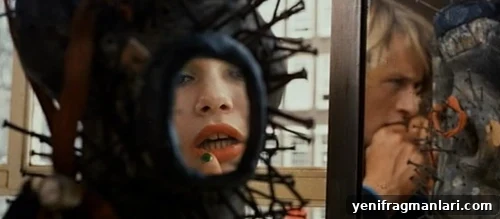
This erotic melodrama traces the volatile relationship between a sculptor with compulsive sexual behaviour (Rutger Hauer) and the young woman he emotionally abuses and eventually marries (Monique van de Ven).
Often cited as the finest of Verhoeven’s European erotic dramas, Turkish Delight remains a staple of Dutch cinema. The characters are deliberately unlikeable and morally messy, yet deeply compelling: van de Ven’s performance as the self-destructive Olga is especially unforgettable.
7. Benedetta (2021)
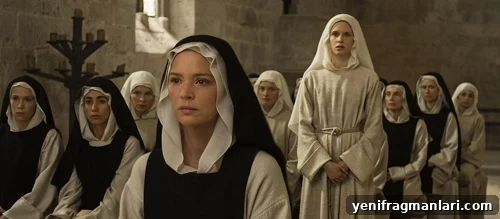
Based on historical research into a lesbian nun in Renaissance Italy, Benedetta follows a convent sister (Virginie Efira) whose crisis of faith is precipitated by a same-sex affair and intense religious visions.
Verhoeven’s long-running appetite for provocation extends here into religious territory. The film is a rich period psychological drama with magnetic performances by Efira and Daphné Patakia and a provocative mix of spirituality, desire and power that may divide audiences.
6. Katie Tippel (Keetje Tippel) (1975)

Based on the life of Neel Doff, the film follows a young woman (Monique van de Ven) striving to escape poverty by any means available in 19th-century Amsterdam.
Though bleak and demanding, the film’s small moments of joy are all the more affecting against its persistent hardship. Lavish period detail and van de Ven’s luminous, heartbreaking lead performance make this a cornerstone of Verhoeven’s Dutch period work.
5. Black Book (2006)
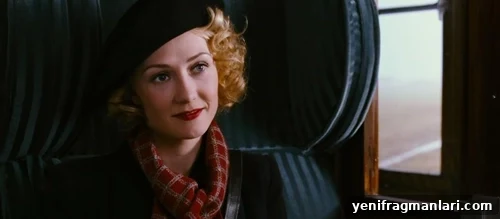
A Jewish woman (Carice van Houten) joins the Dutch resistance during WWII, posing as a socialite to infiltrate Nazi ranks and get close to a ruthless SS commander (Sebastian Koch).
Black Book provides a visceral, often harrowing perspective on resistance and survival. Van Houten anchors the film with a powerful, resilient performance, and the story’s willingness to explore the chaotic moral aftermath of the war sets it apart from typical wartime narratives.
4. Elle (2016)

A media executive (Isabelle Huppert) confronts her response to a brutal sexual assault in her home while a controversial video game is being released by her company.
Verhoeven examines trauma, agency and the complexity of human reaction. Rather than relying on shock alone, the film spends time with its protagonist’s interior life, and Huppert delivers a fierce, controlled performance as a woman who refuses to be reduced to victimhood.
3. Robocop (1987)
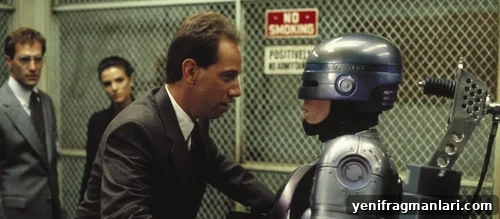
A dedicated police officer (Peter Weller) is mortally wounded and transformed into Robocop, a corporate-controlled cyborg programmed to clean up a crime-ridden near-future Detroit.
On the surface, Robocop is an ultraviolent 1980s action film, but Verhoeven and writer Edward Neumeier layer it with satire about corporate greed, militarized law enforcement and commodified violence. Weller’s restrained, robotic performance retains a human core, giving the character depth amidst the carnage and corporate satire.
2. Starship Troopers (1997)

After graduating high school, friends in a seemingly utopian, militarized society enlist in the Mobile Infantry and battle intelligent alien bugs.
This film functions as a broad, bitter satire of fascism and militarism. Verhoeven—shaped by his childhood experience of Nazi occupation—turns the story into a razor-sharp parody of propaganda and blind nationalism. Misunderstood on release as a straight action movie, it has since been reassessed as a subversive cult classic with striking visual effects and a biting subtext.
1. Soldier of Orange (1977)
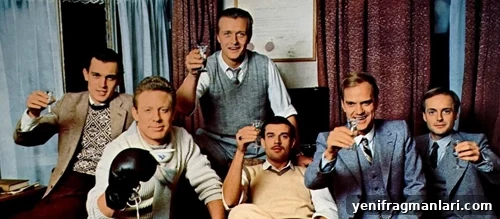
This wartime epic follows a circle of university friends in Leiden through the Nazi occupation of the Netherlands: some resist, some collaborate, and some perish.
Arguably Verhoeven’s most personal and artistically restrained work, Soldier of Orange unfolds over half a decade with careful attention to character and moral complexity. It confronts Dutch collaboration and resistance without offering easy judgments, portraying young people forced into impossible decisions under occupation. The film remains a powerful, nuanced study of honor, compromise and survival.
Paul Verhoeven’s films often test audiences with extreme violence, frank sexuality and provocative satire. He can be read as a satirist, a moral provocateur and a shock artist, but in many of his best works the provocation serves a clear thematic purpose: to unsettle viewers and force them to confront uncomfortable truths.
Do you prefer Verhoeven’s unbridled European cinema or his Hollywood work that tried to balance commerce with critique? Share your thoughts and join the ongoing conversation about one of the most iconoclastic filmmakers of his generation.