
Raging Bull (1980)
Director: Martin Scorsese
Screenwriters: Paul Schrader, Mardik Martin
Starring: Robert De Niro, Joe Pesci, Cathy Moriarty, Frank Vincent
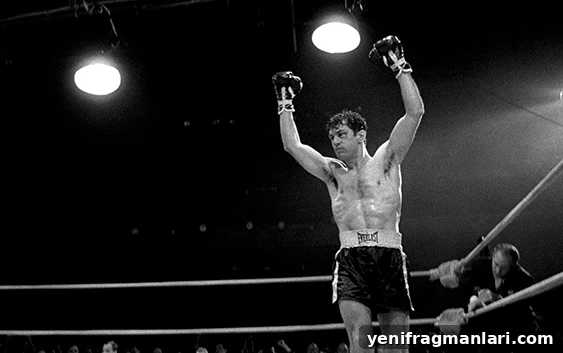
A dimly lit ring, ropes in the foreground, and a lone boxer shadowboxing in the haze: that opening image sets the tone for Raging Bull. Camera flashes from the crowd record a career already becoming memory. In a quiet back room, a middle-aged fighter rehearses a poem—an image far removed from the aggressive, young athlete of his past. Jake LaMotta was a real man, and his life is a study in contradiction. Inside the ring, his fights provided structure; outside of it, a relentless series of battles with family and friends revealed a man who trusted no one. Even in dreams and recollection, LaMotta is isolated, continually fighting forces that are sometimes real and sometimes imagined.
Today Raging Bull is widely regarded not only as one of Martin Scorsese’s finest achievements but as one of the great American films. For Scorsese, the movie marked a creative maturation: he took a sports narrative and reshaped it into an uncompromising character study that resisted conventional genre comforts. Robert De Niro’s famously immersive approach to the role drew critical attention, and editor Thelma Schoonmaker emerged as a major new voice in film editing, winning an Academy Award for her work. Together, direction, performance, cinematography, and editing create what many critics call a Modern Impressionist masterpiece of American cinema.
Robert De Niro was instrumental in bringing Raging Bull to the screen. He first introduced Scorsese to LaMotta’s autobiography, insisting it would make a powerful film. Scorsese eventually connected with LaMotta’s self-destructive impulses and agreed to make the movie. After multiple screenplay revisions, production and post-production extended over a year—partly because of Scorsese’s exacting standards in the editing room, though Schoonmaker has noted his careful planning made the editing process disciplined rather than chaotic. Influenced by the boxing newsreels of his youth, Scorsese updated the classic 1940s boxing film template for a grittier, more psychologically intense age.
The narrative of Raging Bull resists a simple plot summary. It follows Jake LaMotta’s life in mostly chronological terms, but the film isn’t built around a single external goal. Instead, it maps his inner turmoil: jealousy, insecurity, and a corrosive rage that shapes his relationships and choices. The movie becomes less a chronological biography than an immersive portrait of how one man’s drive—to win, to dominate, to be seen—destroys intimacy and dignity. It examines patriarchy and violence, the hollowness of success, and how personal ambition can poison both private life and public persona.
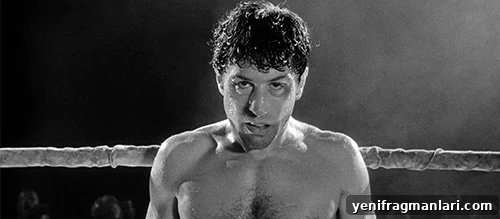
De Niro’s performance is the emotional engine of the film. He deeply studied LaMotta’s habits, voice, and movement, even spending time with the boxer to absorb mannerisms. He trained as a boxer for the fight sequences and famously gained significant weight to portray LaMotta in later life. These physical transformations and his commitment to inhabiting the character make his performance visceral and convincing. De Niro’s ability to shift from a simmering calm to explosive anger—whether in a private argument or in the ring—makes the character feel terrifyingly real.
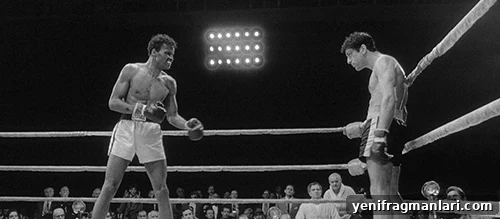
One of the film’s most distinctive qualities is its raw honesty. Unlike earlier Hollywood boxing films—often constrained by production codes and sentimental conventions—Scorsese’s approach allowed for a darker, less sanitized portrayal of a boxer’s life. The violence here doesn’t feel gratuitous; it reveals character and consequence. Portraying LaMotta as morally flawed and sometimes reprehensible made the film feel truer to its era and more psychologically complex than romanticized alternatives.
Visually and rhythmically, Raging Bull pushed boundaries. Cinematographer Michael Chapman and editor Thelma Schoonmaker used inventive techniques—unusual cuts, shifts in focus, slow motion, and jarring spatial edits—to convey LaMotta’s internal experience. Some sequences deliberately disorient the viewer, mirroring the boxer’s fractured perception during fights and in his personal life. At the same time, the choice to shoot in black and white lent the film a documentary texture and a formal connection to classic cinema, while allowing Scorsese to mix expressionistic flourishes with grounded realism.
Casting also strengthened the film’s authenticity. Cathy Moriarty, in her debut, offers a striking portrayal of Vickie LaMotta—at once vulnerable and composed—while Joe Pesci and Frank Vincent, then relative unknowns, helped populate the world with convincing supporting characters. Pesci’s role as Joey LaMotta foreshadowed his later, more famous collaborations with Scorsese, and the ensemble overall contributes to the film’s lived-in, convincing atmosphere.
Assessing Martin Scorsese’s body of work is challenging because of its range and depth, but Raging Bull is consistently cited among his most powerful films. It represents a high point in auteur-driven American cinema of the 1970s and early 1980s. The film’s uncompromising imagery, rigorous performances, and innovative formal techniques combine to create a lasting classic. For anyone who loves film—especially movies that blend stylistic daring with emotional honesty—Raging Bull is essential viewing.
Score: 24/24
Recommended for you: The Importance of Expressionism in ‘Raging Bull’