

Steven Spielberg is one of the most famous and influential film directors in the world. Over more than half a century in cinema, he has worked across virtually every genre—horror, science fiction, spy thrillers, period drama, family entertainment and intense adult drama—creating countless iconic moments and many films widely regarded among the greatest ever made.
Spielberg’s long career has evolved with the times and can be divided into thematic eras. To mark six decades of feature filmmaking, this piece selects one defining film from each ten-year span of his professional career, highlighting the movies that best represent his creative concerns in each period.
Welcome to Six Decades of Spielberg. Cue the John Williams fanfare.
1970s: Jaws (Birth of the Blockbuster Era)

In the early 1970s, after proving himself in television—including directing the pilot of Columbo—Spielberg transitioned to feature films with the gripping chase picture Duel (1971). He then changed cinema’s commercial landscape with Jaws, an adaptation of Peter Benchley’s bestseller. Despite a famously troubled production—budget overruns, on-set tensions and a malfunctioning mechanical shark—Jaws became one of the first true summer blockbusters.
The seaside community of Amity Island is terrorized by a great white shark. Police Chief Martin Brody (Roy Scheider) teams up with marine biologist Matt Hooper (Richard Dreyfuss) and grizzled shark hunter Quint (Robert Shaw) to stop the creature and protect the town.
Jaws is more than a creature feature; it examines community dynamics, leadership failures and human instincts under pressure. Spielberg builds sustained tension—helped immeasurably by John Williams’ simple, terrifying score—and employs horror conventions such as well-timed jump scares and withholding the monster. Yet the film’s enduring power comes from vivid, believable characters and their relationships.
Production difficulties turned into creative advantages: friction between actors helped create an authentic trio dynamic in the film’s final act, and the mechanical shark’s unreliability forced Spielberg to suggest menace rather than fully reveal it, heightening suspense. Jaws opened record-breaking and earned enormous box office returns on a modest budget, proving how powerful spectacle and marketing could generate mass audiences.
Spielberg closed the decade with Close Encounters of the Third Kind, a very different but equally influential work that cemented his status as a major director.
1980s: E.T. the Extra-Terrestrial (Family Upheaval Era)

E.T. epitomizes Spielberg’s gift for family-centered storytelling and defined the nostalgic, heartfelt tone now often described as “Amblinesque.” The film, which inspired Spielberg’s company logo of a boy and alien silhouetted against the moon, shaped a generation’s imaginative landscape and inspired countless works that evoke 1980s childhood.
Ten-year-old Elliott (Henry Thomas) discovers a gentle alien accidentally left on Earth. With help from his siblings, Elliott hides E.T. from adults and government agents while trying to help the extraterrestrial return home.
Told through a child’s uncynical perspective, the film centers on Elliott’s emotional journey. The bond between Elliott and E.T. is profoundly empathetic and affects Elliott’s behavior and well-being as E.T.’s connection to his species weakens. Spielberg draws natural performances from young actors—Henry Thomas and Drew Barrymore—by keeping production playful and maintaining the puppet’s presence between takes.
E.T. established recurring Spielberg themes: mistrust of bureaucratic authority, families with absent fathers, and children’s imaginations as refuge. Coupled with John Williams’ evocative score, these elements create a moving, timeless family drama.
Throughout the 1980s, Spielberg continued to explore difficult family experiences and moral complexity in films such as The Color Purple, Empire of the Sun and Indiana Jones and the Last Crusade, each reflecting different facets of his thematic interests.
1990s: Saving Private Ryan (Trauma and Innovation Era)

The 1990s balanced crowd-pleasing spectacles like Jurassic Park with a deeper engagement with historical trauma and cinematic innovation. Spielberg explored human experience in wrenching, morally complex films such as Schindler’s List, Amistad and particularly Saving Private Ryan.
In 1944, Captain John Miller (Tom Hanks) leads a squad tasked with finding Private James Ryan, the last surviving brother of a family that lost three sons in combat. The mission aims to spare Mrs. Ryan the grief of losing all her children at once.
Saving Private Ryan combines technical daring—its raw, immersive cinematography and visceral action sequences reshaped modern war filmmaking—with powerful, intimate storytelling. The opening Omaha Beach sequence remains a benchmark for realism. Spielberg and screenwriter Robert Rodat focus on compact, meaningful character moments, and Janusz Kamiński’s stark cinematography heightens the emotional impact.
The film refuses to offer easy comfort, instead examining sacrifice, duty and the personal costs of war. Its emotional honesty makes it one of the most affecting modern war films and a defining statement of Spielberg’s 1990s concerns.
2000s: Minority Report (Future Blockbuster Era)
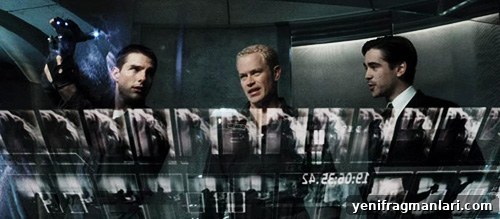
At the turn of the millennium Spielberg continued to deliver big-budget visual spectacles while exploring speculative, idea-driven science fiction. The 2000s saw him tackle imaginative what-if scenarios—A.I. Artificial Intelligence, War of the Worlds and Minority Report—with the latter exemplifying his skill at marrying thrilling action to thematic depth.
Set in a near-future Washington, Minority Report follows Captain John Anderton (Tom Cruise), an officer in the Precrime unit that arrests people for crimes predicted by psychic “precogs.” When Anderton himself is flagged as a future murderer, he goes on the run with one of the precogs to uncover the truth behind the system and his own fate.
The film weaves a noir mystery through futuristic set pieces while remaining grounded in personal loss: Anderton’s anguish over his missing son underpins his choices. The story also examines the exploitation of precognitive children by authorities and the moral compromises of a security-obsessed state. Spielberg expands a core Philip K. Dick idea into a fully realized, plausible dystopia, balancing cerebral concepts with kinetic thrills.
2010s: Lincoln (Popcorn and Prestige Era)

Aside from animated and effects-driven projects like The Adventures of Tintin and Ready Player One, the 2010s represent Spielberg’s commitment to prestige filmmaking—intense dramatizations of historical events and iconographic figures. Lincoln stands out as his most accomplished work of this period.
Rather than a sweeping biography, Lincoln focuses tightly on a critical few months in 1865 as President Abraham Lincoln (Daniel Day-Lewis) navigates the political struggle to pass the Thirteenth Amendment and abolish slavery. The film captures the era’s moral complexity and the pragmatic, sometimes unglamorous tactics required to secure crucial votes.
Spielberg assembled an extraordinary ensemble cast to populate this intimate political drama. The film emphasizes measured, naturalistic performances and domestic moments that reveal Lincoln’s humanity alongside the high-stakes political maneuvering. Daniel Day-Lewis’s portrayal makes Lincoln fully realized, flawed and profoundly committed to reunifying the nation.
2020s: West Side Story (Reminiscence and Nostalgia Era)
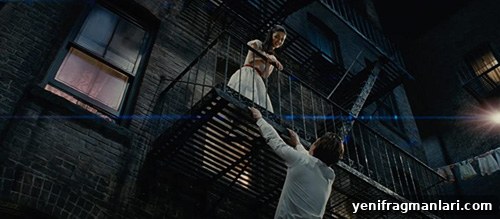
Although it may be early to define Spielberg’s 2020s era definitively, his recent films suggest a reflective, nostalgic phase. He has revisited autobiographical ground in The Fabelmans and embraced the musical form with a thoughtful reimagining of West Side Story.
West Side Story retells Romeo and Juliet as a story of love across social and racial divides. Tony (Ansel Elgort) of the Jets falls for Maria (Rachel Zegler), sister of a leader of the rival Sharks gang, and their relationship sets off tragic consequences.
Spielberg and collaborator Tony Kushner update the material with attention to its social and racial context, giving marginalized voices greater prominence while preserving the original’s emotional intensity. Janusz Kamiński’s expressionistic cinematography and strong supporting performances—especially Ariana DeBose and Mike Faist—bring new nuance to familiar songs and characters.
Remaking a beloved classic requires a clear, fresh vision. Spielberg approaches West Side Story with respectful creativity, blending nostalgia with contemporary insight and reaffirming his ongoing ability to reinvent familiar stories for modern audiences.
Recommended reading: Where to Start with Steven Spielberg