
The Wolf of Wall Street (2013)
Director: Martin Scorsese
Screenwriter: Terence Winter
Starring: Leonardo DiCaprio, Jonah Hill, Margot Robbie, Matthew McConaughey, Kyle Chandler, Rob Reiner, Jon Bernthal, Jon Favreau, Jean Dujardin, Joanna Lumley, Cristin Milioti
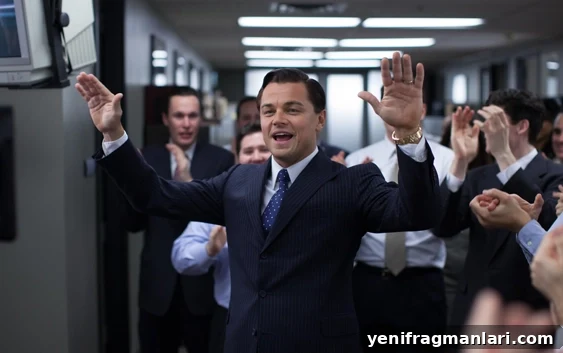
Martin Scorsese’s three-hour spectacle The Wolf of Wall Street arrived in 2013 as both a provocation and a cultural touchstone. For many viewers, especially younger audiences, the film became shorthand for an era fascinated and repelled by excess: opulent parties, instant wealth, and the moral rot behind the glamour. Its impact stretched from launching Margot Robbie into the mainstream to embedding the film’s beats and lines into popular culture.
Scorsese navigates satire and biography with a tone that is equal parts indulgent and observant. The movie chronicles the rise and fall of Jordan Belfort—portrayed with electrifying commitment by Leonardo DiCaprio—whose meteoric ascent as a stockbroker morphs into a criminal empire fueled by greed, manipulation, and substance abuse. The director refuses to moralize outright; instead, he stages Belfort’s world in vivid, overblown detail, inviting the audience to both marvel and recoil.
The film’s energy is relentless. A booming score, rapid-fire narration, and extended set pieces create an atmosphere where everything feels amped up—until it isn’t. Beneath the bravado, Scorsese subtly interrogates America’s fascination with wealth and the systems that enable exploitation. Released after the financial crisis of 2008 and in the cultural shadow of movements that protested financial inequality, the movie resonates as a critique dressed in black humor and spectacle.
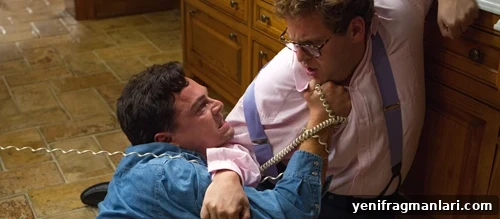
One of the most unforgettable sequences illustrates how the film balances comedy with a sympathetic, if damning, view of its protagonist. In a scene that has become iconic, Belfort confronts the collapse of his empire while grappling with the lingering effects of quaaludes. The physical comedy is visceral—Belfort dragging himself toward his Ferrari, his body betraying him—and beneath the laughter is a stark image of hubris undone. Scorsese times the tension perfectly; the audience is drawn into a mixture of embarrassment, pity, and involuntary amusement.
The script by Terence Winter provides a sharp backbone but intentionally leaves room for performance flourishes. DiCaprio gives one of his finest, most kinetic performances, inhabiting Belfort with manic charisma and precise comic timing. His rapport with Matthew McConaughey, who plays the eccentric Mark Hanna, is a highlight. Their first lunch scene at a brokerage office—where business talk dissolves into improvised mania—captures the film’s blend of improvisation and disciplined direction. DiCaprio and McConaughey play off each other’s energy, creating a moment that feels spontaneous yet perfectly crafted.
Beyond individual performances, the film works as a broader commentary on class and power. It demonstrates how those at the top manipulate systems for profit while others bear the consequences. Scorsese’s direction keeps the film moving with brisk pacing and comic invention; three hours pass quickly because the director knows how to sustain momentum, balancing spectacle with quieter moments that expose the characters’ moral emptiness.
Technically, the film is polished without being precious. The cinematography, editing, and sound design all serve the story’s hyperreal tone. Costume and set design underline the excess—tailored suits, marble offices, and a parade of luxury that feels almost theatrical. Yet the production never loses sight of the human cost behind the shine: relationships strained, trust broken, and a protagonist who ultimately must face the consequences of his choices.
More than a decade after its release, The Wolf of Wall Street still provokes strong reactions: admiration for its audacity, discomfort at its morality, and appreciation for its craft. It remains a vivid portrait of greed and charisma, anchored by standout performances and Scorsese’s sure-handed control. Whether viewed as a dark comedy, a cautionary tale, or a cultural mirror, the film endures as one of the director’s most talked-about works of the 21st century.
Score: 23/24
Rating: 5 out of 5.
Recommended for readers interested in film and directors: Where to start with Martin Scorsese — a primer for exploring his work and signature themes.