
This article was written exclusively for The Film Magazine by Rory Doherty.
12 Hour Shift Review (2020)
Director: Brea Grant
Screenwriter: Brea Grant
Starring: Angela Bettis, Chloe Farnsworth, Tara Perry, Mick Foley, David Arquette
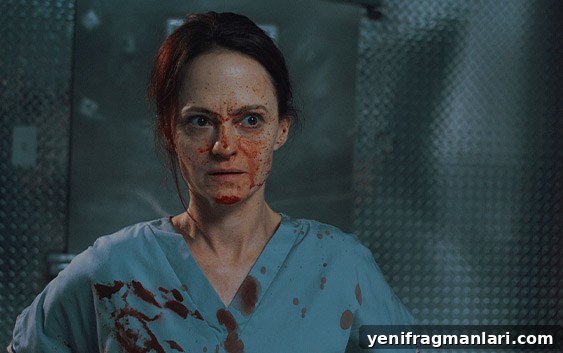
Stories that reveal a respectable exterior collapsing to expose a criminal double life are a reliable source of tension and dark comedy. 12 Hour Shift deploys that idea with gusto: Mandy (Angela Bettis), a drug-dependent nurse, takes on a double shift at a modest hospital while running a side business selling harvested organs on the black market. When her cousin Regina (Chloe Farnsworth) misplaces the illicit merchandise, the women are forced into a frantic scramble to obtain replacements, dodge the police, and survive increasingly dangerous encounters inside the hospital. The film plays like a Southern caper—think Logan Lucky or Raising Arizona—but with an emphasis on active female leads. It’s energetic and frequently funny, although the film occasionally feels rough around the edges in its execution.
Writer-director Brea Grant, better known as an actor, earned the Best Screenplay prize at Fantasia Fest 2020 for this script, and for good reason. The premise is clever and the story structure holds together. Mandy’s character is established quickly and vividly: she’s sharp, abrasive, and morally compromised, the kind of nurse who has no qualms about pocketing pills and stealing from a comatose patient. These small but telling details efficiently communicate who she is and what she’s willing to do to survive.
Angela Bettis brings Mandy’s mix of toughness and vulnerability to life with dry comic timing and moments of awkward pathos—whether she’s making penitent gestures in a hospital chapel or flirting uncomfortably with police officers to gain advantage. Cinematographer-composer Matt Glass helps shape the film’s tone, pairing a propulsive, drum-driven score that swells into strings with handheld camerawork that follows Mandy’s frantic pacing through corridors, creating a real sense of pressure and urgency.
The supporting cast is deliberately broad, which suits the film’s madcap mood even when it verges on caricature. Chloe Farnsworth’s Regina is a standout: unpredictable, unhinged, and often hilarious, she makes a vivid foil for Mandy. That said, some of the criminal characters fall into familiar, exaggerated territory—loud, theatrical gangsters who feel more movie trope than true menace. Because those antagonists are played for maximum volume, the stakes sometimes feel weaker than they should; you’re not always convinced the protagonists truly face mortal danger from them.
The plot’s complications arrive in series: an overdose patient with a mysterious tie to Mandy, the escape of a convicted killer (David Arquette), and patients waking from comas at the worst possible moments. These events accumulate largely through coincidence rather than causal setup. Coincidence can be a useful storytelling tool when used deliberately, but it risks feeling like a shortcut if the film doesn’t weave those threads together tightly. 12 Hour Shift avoids outright cheating, however, because its aim is to overwhelm Mandy with a single night of unraveling chaos—the point is the piling-on itself.
Where the film falters is in the flow between those episodic crises. Instead of a steady escalation that binds incidents into a cohesive descent, the movie jumps from one chaotic set piece to the next. Each sequence is entertaining on its own, but the transitions sometimes lack momentum, leaving the overnight collapse a touch disjointed rather than a relentless spiral.
Still, 12 Hour Shift earns unpredictability. A bold midpoint turn finds Mandy and Regina each taking extreme measures, and Grant leans into pulpy melodrama with Glass’s dramatic score and bits of gospel singing that amplify the film’s operatic impulse. In the second half, the filmmakers make excellent use of the hospital environment for both comedy and suspense—the slick floors, intersecting hallways, and even a crucial vending machine become settings for clever physical comedy and tense confrontations.
At times the movie drags—certain final-sequence beats, where Mandy appears to suddenly embrace compassion, can feel inconsistent given her earlier behavior. Yet the depiction of long, grueling hospital nights rings true, and when sudden bursts of brutal violence land, they hit harder because of that weariness. The film’s commitment to trashy, dark humor and excessive brutality is refreshing in its fearlessness, and the focus on multiple active female characters is welcome.
Ultimately, 12 Hour Shift is a rough-edged, entertaining black comedy that dazzles in parts but doesn’t always sustain its momentum or polish. Strong performances, eccentric humor, and surprising turns make it worth watching, but a tighter integration of its many chaotic threads would have lifted it from good to great.
14/24
Written by Rory Doherty
You can support Rory Doherty in the following place:
Twitter – @roryhasopinions