
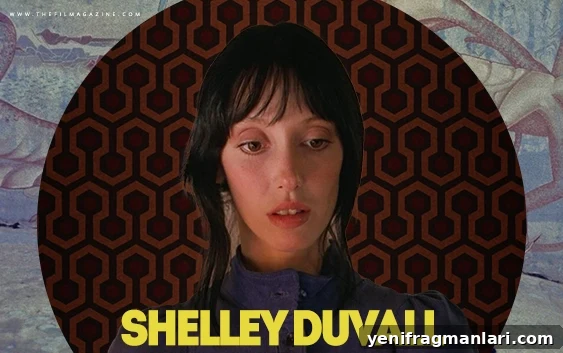
American actress, writer, producer and artist Shelley Duvall built a film career defined by memorable, distinctive performances. In a relatively brief period in the spotlight she earned critical recognition — most notably the Best Actress prize at the Cannes Film Festival in 1977 — and remains best known to many for her role in The Shining (1980). Duvall’s work spans dramatic art-house films, mainstream studio projects and family entertainment, showcasing a rare range that continues to influence performers and filmmakers.
Although widely remembered for her work with Stanley Kubrick, Shelley Duvall’s career was shaped most profoundly by her long collaboration with Robert Altman. Between 1970 and 1980 she appeared in seven Altman films, making her screen debut in his 1970 Brewster McCloud. That role came about unexpectedly: crewmembers who encountered Duvall at a party where she was selling artwork introduced her to Altman’s circle, and an informal meeting quickly became an audition that launched her career.
Duvall continued acting for three decades and expanded her creative output by producing and hosting the children’s series Shelley Duvall’s Faerie Tale Theatre (1982–1987), which adapted classic fairy tales with imaginative production values. After a final film appearance in Manna from Heaven (2002) she announced her retirement and returned to Texas. Following a long period away from public life, she returned to acting in the 2023 horror film The Forest Hills. Her absence did not diminish the lasting impact of her performances: Duvall’s filmography includes some of modern cinema’s best-loved and most-discussed roles, and her work remains a touchstone for actors exploring psychological complexity and emotional vulnerability on screen.
Duvall brought a natural, often idiosyncratic presence to her characters, using expressive eyes, nuanced body language and a distinct sense of timing to create enduring screen portraits. Below are three performances that best illustrate the depth and variety of Shelley Duvall’s contribution to cinema.
1. 3 Women (1977)
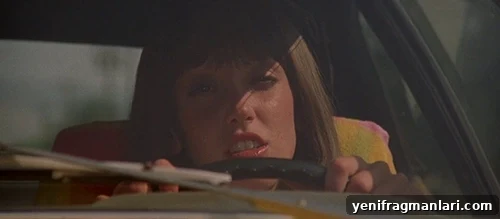
Robert Altman’s 3 Women was inspired by a dream and influenced by Ingmar Bergman’s Persona; it examines identity, intimacy and the porous boundaries that form between women who come to share each other’s lives. The story follows three distinctly different women whose personalities and lives become entangled. Duvall plays Millie Lammoreaux, a vain, meticulous woman who appears polished and put together but is emotionally vulnerable and often lonely.
Duvall invested parts of herself into Millie: she wrote the character’s diary entries, chose décor and even selected the food Millie keeps in her apartment. These contributions helped make Millie a fully realized character rather than a costume. Duvall’s performance balances surface cheerfulness with an underlying sadness; she meticulously shapes Millie’s gestures, smiles and conversational habits to suggest both earnestness and a desperate need for validation. Her interactions with coworkers, her tendency to hold on to conversations even as others drift away, and the brittle quality beneath her smile all deepen the role.
As the narrative unfolds and Sissy Spacek’s Pinkie intrudes on Millie’s life, Millie’s composure unravels. Duvall’s transition from restrained sweetness to mounting irritation and, ultimately, explosive rage is handled with surprising nuance: small changes in expression and tone accumulate until the performance reaches a raw, intense climax. For this role Duvall won the Best Actress award at Cannes in 1977, a breakthrough that brought wider attention to her work and led directly to her casting in The Shining.
2. The Shining (1980)
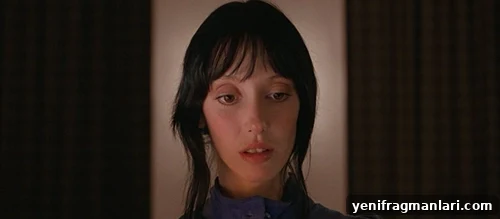
Stanley Kubrick’s adaptation of Stephen King’s novel is one of cinema’s definitive horror films, and Shelley Duvall’s portrayal of Wendy Torrance anchors much of the movie’s emotional weight. As the isolated family succumbs to the Overlook Hotel’s malevolent influence, Duvall delivers a portrayal of escalating fear, resilience and devastation.
Kubrick’s exacting directorial approach — famously involving numerous takes — pushed Duvall to repeatedly revisit extreme emotional states. Whether responding to threats from Jack Torrance or confronting the creeping psychological terror around her, Duvall’s Wendy oscillates between brittle composure and palpable terror. Her screams, trembling gestures and shifting glances communicate a credible, lived-in sense of peril. There are also quieter moments in which Duvall conveys dread through small, deliberate choices: nervous smiles, evasive eye contact and the thin, exhausted tone of a mother trying to keep her child safe. These details turn Wendy into a character whose domestic fears feel universally recognizable and deeply affecting.
Critics and fellow actors have praised Duvall’s performance for its humanity and extremes. Her Wendy remains a benchmark for portrayals of women confronting domestic violence and psychological breakdown on screen, and continues to be referenced and echoed in later works that engage with the same themes.
3. Popeye (1980)
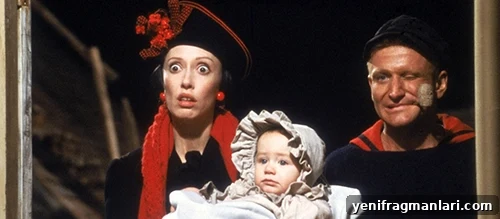
Shelley Duvall’s final collaboration with Robert Altman was Popeye, a colorful musical adaptation of the classic comic strip character. Starring Robin Williams in his feature film debut, Popeye finds the tough, spinach-powered sailor arriving in the seaside town of Sweethaven and falling for Olive Oyl, a character Duvall portrays with comic precision and heartfelt warmth.
Duvall transforms Olive Oyl into a living cartoon: exaggerated gestures, a rhythmic physicality and a high-energy vocal delivery create a character who is both humorous and surprisingly complex. Olive is at once coquettish and strong-willed; Duvall’s performance highlights Olive’s vulnerability and tenacity without reducing her to a stereotype. The chemistry between Duvall and Williams adds a lively, improvisational spark that lifts the film’s musical numbers and comic sequences.
Popeye demonstrated Duvall’s versatility — she could inhabit stylized comic roles as convincingly as she could intimate, psychologically driven characters. The film also sparked the idea for Faerie Tale Theatre after Duvall read The Frog Prince with Williams on set and imagined a children’s anthology series that would adapt classic stories with cinematic care.
Across two decades Shelley Duvall produced a body of work notable for its emotional honesty, unusual choices and stylistic range. Whether portraying fragile resilience, simmering tension or cartoonish exuberance, Duvall consistently created characters that felt real and unpredictable. Her influence endures in contemporary acting and filmmaking, and these three performances—3 Women, The Shining and Popeye—offer a clear view of her talent, bravery and lasting contribution to cinema.
Written by Holly Carter
Support the author: Portfolio: hollycartertheatre.com — Twitter: @hollyhollyca