
Sound of Metal (2021)
Director: Darius Marder
Screenwriters: Darius Marder, Abraham Marder, Derek Cianfrance
Starring: Riz Ahmed, Paul Raci, Olivia Cooke, Mathieu Amalric, Chelsea Lee
Some of life’s most defining moments arrive not in a single, cinematic instant but slowly, in shifts and fractures that remap who we are. Darius Marder’s Sound of Metal explores one such transformation: the abrupt loss of hearing and the emotional landscape that follows. The film resists melodrama and instead offers a careful, intimate portrait of a man forced to reckon with identity, addiction, and the pull of a life he can no longer fully inhabit.
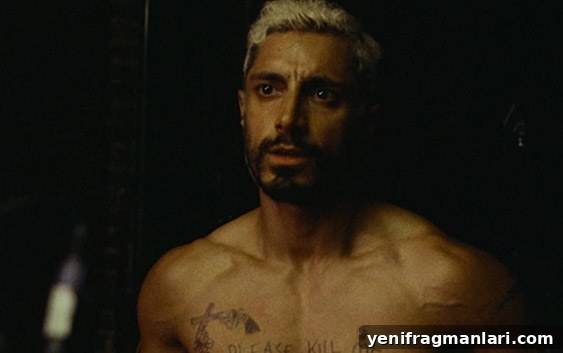
Riz Ahmed plays Ruben Stone, a bleach-blond drummer whose life revolves around touring with his band and his partner, Lou (Olivia Cooke). On the road, Ruben keeps a disciplined routine—making coffee, managing logistics, attending to Lou’s fragile recovery from self-harm—while performing violently beautiful music as a central part of his identity. When Ruben begins to lose his hearing, that carefully balanced world starts to collapse. Unable to hear the music that defines his career and increasingly disconnected from Lou, Ruben experiences panic that threatens both his sobriety and his sense of self.
Lou takes Ruben to a rural, church-supported rehabilitation center run for members of the deaf community, where Paul Raci’s Joe leads a program focused not on curing hearing loss but on helping people accept and live with it. Joe insists Ruben embrace the community and its practices: learn American Sign Language, participate in daily routines, and relinquish contact with the outside world long enough to adjust. The center’s approach is blunt and humane—Joe’s refrain, pointing first to Ruben’s ears and then to his head, emphasizes that acceptance must begin internally before any surgical or technological solution can be pursued.
One of the film’s most striking achievements is its sound design. Marder and his team immerse the audience in Ruben’s auditory experience, shifting from piercing silence to muffled, underwater voices and back again. These choices are not merely stylistic: they create empathy by letting viewers inhabit Ruben’s disorientation and isolation. Many conversations at the center unfold in sign language without subtitles, a deliberate decision that deepens the viewer’s sense of exclusion and invites reflection on privilege and communication.
Ahmed’s performance is quietly powerful. Rather than adopting a caricature of a volatile punk drummer, he gives Ruben restraint and interiority. Small gestures—a way of breathing, a look of panic, an attempt at humor turned brittle—reveal a man navigating loss while clinging to the rituals that once saved him. Opposite Ahmed, Paul Raci brings a steady, lived-in authority to Joe. His moments of silence and brief exhalations convey vast emotional terrain, often more eloquent than explicit dialogue.
Costume and cinematography further reinforce the film’s texture. Megan Stark Evans’s wardrobe choices root Ruben in a grunge and post-punk aesthetic that reads as both identity and armor. Daniël Bouquet’s camera offers a tactile, grainy look that pairs Ruben’s shadowed moments with Joe’s lighter, more composed framing. Together these elements create a visual language that complements the film’s auditory experiment.
While the surface narrative centers on deafness, the film’s themes are broader: addiction, loss, acceptance, and the struggle to let go. Ruben’s journey is not portrayed as a problem to be neatly solved but as an ongoing interior work. The film resists tidy endings, instead honoring the complexity of adaptation and the dignity of communities often sidelined in mainstream storytelling.
Sound of Metal succeeds on multiple levels: technically, as an immersive exercise in sound craft; dramatically, as a character study anchored by Riz Ahmed’s nuanced work; and ethically, for its respectful depiction of the deaf community and its insistence that adaptation requires more than medical intervention. It is a thoughtful, affecting film about what it means to lose a sense that once defined you—and about the quiet, difficult work of finding a new way to live.
24/24