
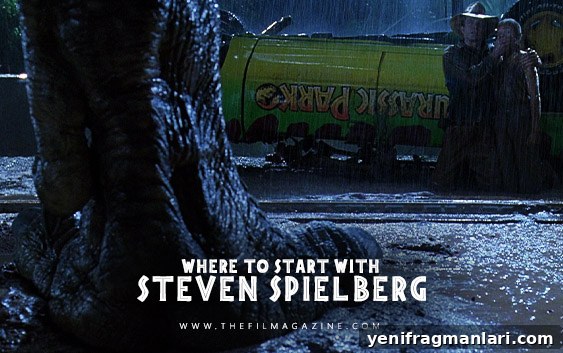
When someone asks “Where should I start with the films of Steven Spielberg?” a realistic answer is: anywhere. Few filmmakers have reshaped mainstream Western narrative cinema the way Spielberg has, and his work spans so many genres and moods that almost any entry point is valid.
Born in Cincinnati and raised in Phoenix, Spielberg moved to California to study filmmaking. After honing his craft directing television episodes, he broke into feature films largely on the strength of a 30-minute short he made while studying. That short, Amblin, became his calling card and later lent its name to his production company.
Once working in features, Spielberg quickly established himself as one of cinema’s defining directors. He practically codified the modern blockbuster with Jaws (1975) and then explored virtually every genre imaginable: horror, science fiction, fantasy, musicals, wartime comedy, political thrillers, historical epics, and romantic dramas. Over more than fifty years he has directed 35 feature films and produced many more, becoming one of the most commercially successful directors in history while maintaining recurring themes, stylistic trademarks, and moral concerns throughout his evolving career.
Picking just three films to recommend is difficult—many could serve as excellent introductions—but the following selections showcase distinct facets of Spielberg’s artistry: his mastery of tension and economy, his gift for creating overwhelming cinematic wonder, and his ability to fuse blockbuster spectacle with thoughtful, darker themes. As Spielberg once put it, he “dreams for a living.” Here are three of those dreams to follow: Where to Start with Steven Spielberg.
1. Duel (1971)
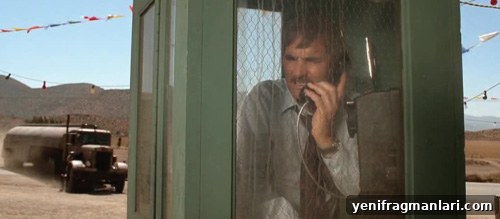
In 1971, after a period of television work, Universal hired a young Spielberg to adapt a Richard Matheson story about a man pursued and terrorized by a massive, mysterious truck. Initially intended for television, Duel gave Spielberg a professional crew and the chance to prove himself under severe constraints. With less than two weeks to shoot, the production faced an impossible schedule, yet the result is a tightly controlled thriller that remains effective and unnerving.
Starring Dennis Weaver, Duel sustains relentless tension for its runtime, following David Mann across dusty highways as the truck becomes an almost supernatural menace. Spielberg draws on Hitchcockian economy—never showing the driver, avoiding explanations—so the truck itself becomes the monster. Duel reveals early evidence of Spielberg’s talent for editing, camera movement, and building suspense: techniques he would refine in later films such as Jaws, E.T., and The BFG. It remains a lean, potent showcase of what the young director would become.
2. Jurassic Park (1993)
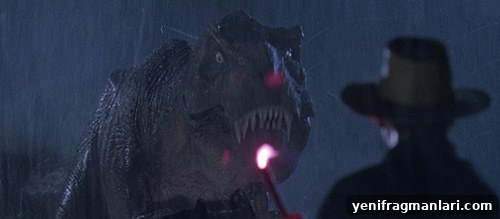
If Jaws defined the modern blockbuster in 1975, Jurassic Park reaffirmed Spielberg’s hold on mainstream cinema in 1993. Adapting Michael Crichton’s novel and reuniting with composer John Williams, Spielberg opened the gates to a living theme park of cloned dinosaurs. The film combined state-of-the-art practical and CGI effects, sweeping cinematography, and a stirring score to create moments of awe and terror in equal measure.
Jurassic Park became the highest-grossing film of its time, and its success rests on more than spectacle. Spielberg balances wonder and dread, often seeing the story through the eyes of children whose innocence heightens the emotional stakes. He also demonstrates his skill at using simple visual shorthand to generate suspense: one of the film’s most famous shots is a close-up of ripples in a cup of water that signals impending danger. That brevity—cutting through dialogue to an instinctual visual—shows Spielberg’s gift for making films that connect viscerally with audiences of all ages.
3. Minority Report (2002)

By the turn of the century Spielberg had increasingly blended blockbuster scale with more reflective, darker themes. While films like The Color Purple and Schindler’s List demonstrated his dramatic range earlier, the late 1990s and early 2000s saw him probing moral complexity within high-concept cinema. Minority Report, adapted from a Philip K. Dick story, fuses cyberpunk visuals with Hitchcockian man-on-the-run suspense.
Set in a near future where crimes are predicted and preempted, the film follows Chief John Anderton, played by Tom Cruise, as he becomes accused of a yet-to-be-committed murder. Spielberg deploys brisk pacing, tense chase sequences, and striking production design—vertical car garages, reflective cityscapes and polished, lens-flared lighting—to create a convincing and unsettling world. At the same time, Minority Report asks bigger questions about free will, state power, and human fallibility. It exemplifies Spielberg’s post-9/11 era shift toward socially conscious blockbusters that retain popcorn entertainment while grappling with ethical dilemmas.
These three films—Duel, Jurassic Park, and Minority Report—offer a compact but revealing tour of Spielberg’s range. Duel shows the young director’s mastery of tension and minimalist storytelling. Jurassic Park demonstrates how he turns spectacle into wonder while still grounding emotion in human reactions. Minority Report illustrates his capacity to combine blockbuster visuals with moral inquiry. Together they reflect why Spielberg remains a central figure in contemporary cinema: adaptable, ambitious, and consistently guided by a humanist curiosity about the world and the people who inhabit it.