
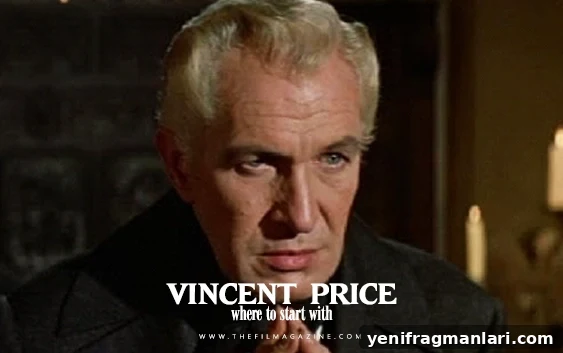
If there were an award for the most instantly recognisable voice in cinema history—a single vowel, a single drawn syllable—Vincent Price would be a leading contender. Celebrated across the 20th century as a legend of horror cinema, Price’s range extended far beyond the genre; only about a third of his roles were horror, yet his presence and voice made him synonymous with the macabre. He is remembered alongside icons such as Christopher Lee, Peter Cushing, and John Carradine, and though the four only appeared together once on screen, Price’s distinctive persona makes him unforgettable. Towering at 6 feet 4 inches, his imposing elegance and measured gravitas held audiences captive, whether on film, in narration—most notably on Michael Jackson’s “Thriller”—or on stage and in music collaborations like Alice Cooper’s “Devil’s Food.”
Born into a prosperous St. Louis family—with a father in the candy industry and a grandfather credited with an early baking powder innovation—Vincent Price enjoyed a privileged upbringing that encouraged high scholarly and artistic aspirations. Initially directed toward music, he grew passionate about visual art and travelled through Europe to study the great paintings of Florence and Paris. At Yale during the 1929 stock market crash, his family’s resources let him continue his studies while many others faced ruin.
Price began acting in school productions and formed a lifelong friendship with playwright Tennessee Williams. He later studied Art History and English in London, where friends persuaded him to try professional theatre. Early stage work included a production of Chicago before a breakthrough role as Prince Albert opposite Helen Hayes in Victoria Regina. After Hayes challenged him on whether he truly understood his craft, Price committed to mastering it—touring extensively, taking rigorous acting classes, and refining his technique until he felt ready to return to leading roles on stage and screen.
Although his filmography covers many genres, horror is where Price made his most lasting impact. His starring role in House of Wax (1953), one of the first mainstream color 3D pictures, helped cement his association with the genre, even if instant superstardom didn’t immediately follow. Collaborations with showman director William Castle on films like The Tingler and House on Haunted Hill further amplified his reputation: Castle’s gimmicks—audiences hearing screams or seeing skeletons fly—paired well with Price’s theatrical intensity. Price also delivered memorable, serious performances, such as Robert Morgan in The Last Man on Earth, the first adaptation of Richard Matheson’s I Am Legend, and the brutal magistrate Matthew Hopkins in Witchfinder General—one of folk horror’s pivotal films.
Price’s interests extended far beyond acting. He authored cookbooks and hosted culinary television programs—famous for quirky tips such as unconventional ways to cook salmon—appeared on television variety shows including The Muppets, opened art galleries, and maintained a lifelong passion for visual arts. Personal life had its complexities: multiple marriages strained his relationship with his daughter, Victoria, though they reconciled later. Victoria would describe him in her biography as a Renaissance man in an age of specialists: an aesthete who embraced twentieth-century media with gusto.
Vincent Price’s career spanned more than a hundred films and several decades, constantly reinventing himself into the late 1980s and 1990s. For readers wanting a concise introduction to his work, three films encapsulate different phases of his talent: Dragonwyck (1946), The Fall of the House of Usher (1960), and the short Vincent (1982). These selections showcase Price’s early leading-man sophistication, his full immersion in gothic horror, and his enduring influence on later generations of filmmakers and artists. This is Where to Start with Vincent Price.
1. Dragonwyck (1946)
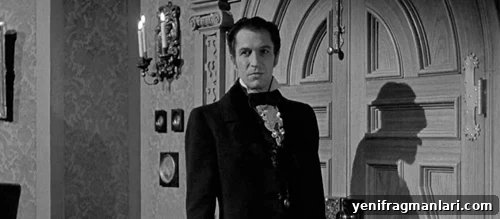
Before Price fully embraced horror, he honed his skills in dramatic roles. Dragonwyck, adapted from Anya Seton’s 1944 novel, gave Price one of his earliest major film leads after Gregory Peck exited the project. Co-starring Gene Tierney and Walter Huston, the film is an elegant gothic drama that channels the stately melancholy of earlier classics. Tierney’s Miranda, a farm girl drawn into the opulence and unease of an aristocratic household, finds herself under the influence of Nicholas Van Ryn, played by Price. He projects cerebral charm that gradually reveals a darker, possessive core.
Dragonwyck is visually sumptuous: meticulous set design, Arthur C. Miller’s refined cinematography, and period costumes transform the story into a cinematic feast. The film underlines class divides by contrasting Miranda’s plain rural world with the lavish, oppressive estate she must inhabit. Price’s performance anchors the film—his aristocratic bearing, controlled intensity, and a voice that hints at the iconic timbre to come lift every scene. While the film isn’t flawless, it is an essential early example of Price’s ability to command the screen and shape a character through subtle menace.
2. The Fall of the House of Usher (1960)
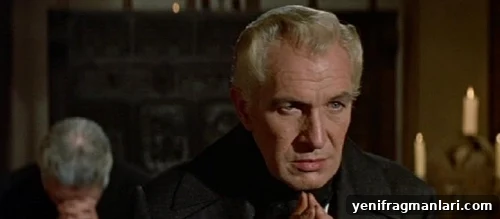
In the 1960s, Price became a central figure in Roger Corman’s series of Edgar Allan Poe adaptations, films that brought lush Technicolor Gothic horror to American audiences. In The Fall of the House of Usher, Price plays Roderick Usher, a man of refined sensibility tormented by inheritance, decay, and a heightened, almost unbearable sensitivity. The role captures Price’s unique combination of cultivated elegance and unnerving instability, a template for many of his most famous horror performances.
The film itself is a visual extravaganza: saturated colours, inventive production design, and Corman’s flair produce an almost surreal atmosphere. Richard Matheson’s screenplay expands Poe’s original tale into a full, sustained cinematic experience, and supporting performances heighten the film’s theatricality. Above all, Price dominates as Roderick Usher—his measured voice and controlled physicality give the movie its emotional core, and his portrayal remains one of the defining horror performances of his career.
3. Vincent (1982)
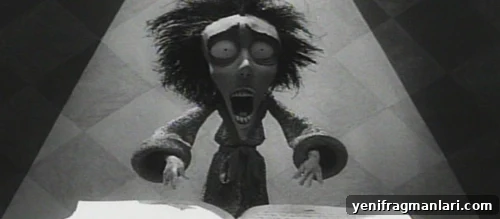
Vincent, a six-minute black-and-white stop-motion short directed by a young Tim Burton, highlights Vincent Price’s cultural impact on later generations. Created while Burton worked as a conceptual artist at Disney, the film follows a morbid young boy, Vincent Malloy, who idolises Edgar Allan Poe and yearns to be like Vincent Price. Price supplies a haunting, poetic narration that animates Burton’s expressionistic visuals, which nod to German Expressionism and early silhouette animation.
This short is a love letter from a youthful filmmaker to an elder icon. Price later called Vincent more meaningful than a star on the Hollywood Walk of Fame, describing it as one of the most rewarding projects of his life. The film captures how Price’s persona had come to embody a certain blend of cultivated decadence and theatrical spookiness, and it stands as a concise, affectionate tribute to a performer whose influence stretched across film, music, art, and popular culture.
These three films—Dragonwyck, The Fall of the House of Usher, and Vincent—offer a compact introduction to Vincent Price: the early gentlemanly lead, the full-throttle gothic icon, and the inspired muse to a new generation of artists. For newcomers wondering where to start with Vincent Price, these selections showcase the vocal presence, visual style, and cultural legacy that made him a singular figure in cinema history.