
The Emoji Movie (2017)
Director: Tony Leondis
Screenwriters: Tony Leondis, Eric Siegel, Mike White
Starring: Anna Faris, Maya Rudolph, T.J. Miller, James Corden, Patrick Stewart, Christina Aguilera, Sofia Vergara
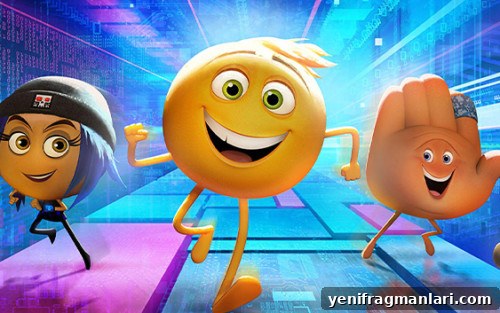
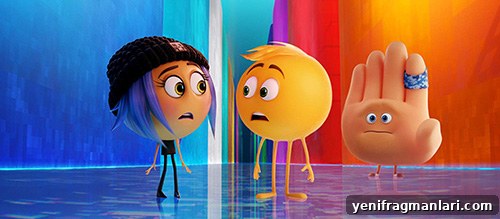
The Emoji Movie is widely remembered as a misstep for Sony Pictures Animation. The film imagines a hidden world inside a teenager’s smartphone where emojis live, work and perform their single assigned expressions. The protagonist, Gene, is a “meh” emoji who, unlike his peers, can make multiple facial expressions. When that difference becomes a problem, Gene sets off on a journey with Jailbreak, a mysterious hacker emoji, and Hi-5, a once-popular emoji, trying to find where he belongs. Outside the emoji world, a teenager named Alex owns the phone and has his own minor subplot involving school and a crush.
The movie was met with harsh critical reaction and dismissive audience responses. Reactions ranged from bemused frustration to outright contempt, with many critics calling it a shallow exercise in corporate branding rather than a meaningful animated feature. Excerpts of that critical chorus described the film as an ill-conceived exploration of app culture, while some viewers responded with extreme derision. Others framed it as symptomatic of studio attempts to turn digital culture into intellectual property without much substance behind the idea.
“Now comes ‘The Emoji Movie,’ a film that dares to ask ‘What goes on in the magical worlds contained within our cell phones?’ — Peter Sobczynski, rogerebert.com
“If I was God, and I heard this product was not only being made, not only being promoted, but actually released, then I would invite Satan over to manage the heavens so I could personally eradicate my failure below.” — IMDb user review
“The Emoji Movie is not just a critical flop, but also a metaphor for a Hollywood that is struggling to find the line between branding that audiences love and branding that audiences resent.” — Megan Garber, The Atlantic
“A viewer leaves The Emoji Movie a colder person, not only angry at the film for being unconscionably bad, but resentful of it for making them feel angry.” — Charles Bramesco, Guardian
Knowing this widespread negativity, I went to the film with a fair amount of bias. The premise — turning emojis into characters — felt inherently disposable and ripe for corporate exploitation. That said, director Tony Leondis has described the film’s core idea as personal: a story about feeling different in a world that expects conformity. He framed Gene’s struggle as a universal experience of otherness, which is a legitimate emotional foundation for a children’s movie.
Despite that intention, the execution falls short. The main problem is not that the film is offensively bad, but that it is dull and thin. The story divides focus between Gene inside the phone, Alex in the real world, and Gene’s parents, but none of these threads develop with much depth. Alex’s scenes function mostly as connective tissue — teenager on a phone, crush that needs courage — and add little emotional weight. They could be trimmed without harming the film’s overall arc.
Inside the phone, Gene’s adventure traverses a series of apps and digital locations that feel familiar from other modern-family animation: brief set pieces stitched together with quips and pop-culture references. Some moments aim for humor through side characters like Hi-5, but those beats land inconsistently. The film moves quickly, likely to maintain a child’s attention, and its pace helps it avoid unbearable stretches. Still, the result is a bland, forgettable feature rather than the energizing, inventive family film it might have aspired to be.
One strange byproduct of the premise is how little the movie explores the imaginative questions it raises. If emojis populate an entire society, what are its rules? How do emoji families work? Which jobs or apps determine social roles? The movie hints at practical and ethical complications of an emoji civilization but never fully explores them, preferring obvious moral points about self-acceptance. Those themes are fine in themselves, but the surrounding world-building is undercooked, leaving curious viewers wanting more coherence or creativity.
Leondis’s background in animation is clear — the film is professionally animated and technically competent — but the script lacks the sharpness or distinct comedic voice that could have elevated the project. A stronger, more singular comedic sensibility might have transformed the film’s concept into sharper satire or broader family-friendly humor. As it stands, it’s an inoffensive but uninspired entry in the animated canon.
For all the vitriol the movie received on release, it’s not the most egregious cinematic failure you might encounter. It’s not a cult-classic disaster like some notoriously bad films; rather, it’s a commercially driven, mildly entertaining product built on a flimsy premise. If your expectations are low and you’re watching with young children, some fleeting laughs and colorful visuals may be enough. If you’re looking for depth, originality or memorable characters, this film will likely disappoint.
Rating: 2/24