
This article was written exclusively for The Film Magazine by Jack Cameron.

Surge (2021)
Director: Aneil Karia
Screenwriters: Rupert Jones, Rita Kalnejais
Starring: Ben Whishaw, Jasmine Jobson, Ellie Haddington
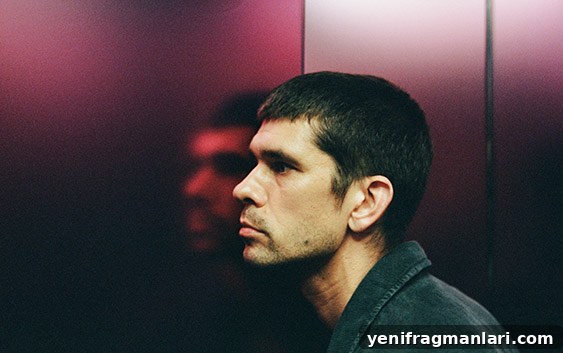
Ben Whishaw delivers a startling, transformative performance in Surge (2021), shedding any trace of his gentler, familiar screen persona. As Joseph, Whishaw embodies a volatile, unpredictable energy: a man constantly in motion, alternately manic and withdrawn, whose behavior keeps the audience off balance. Director Aneil Karia, in his feature debut, embraces that volatility and crafts a kinetic, claustrophobic portrait that feels more experiential than explanatory.
The film follows Joseph almost exclusively, using long telephoto lenses and extended takes to observe him with clinical detachment. The camera often behaves like a passive observer, documenting Joseph’s actions as if recording a case study. That observational approach reinforces the film’s uneasy tone: there is little moralizing or explicit commentary from the filmmakers, only a sustained, often grim fascination with their protagonist.
Surge opens in a crowded airport where Joseph works in security. He is an outsider within both his workplace and the public spaces he patrols—ignored by colleagues, emotionally removed from the stream of travelers. Two brief encounters with people who seem to recognise him escalate oddly: during pat-downs they whisper cryptic words, then suddenly run, only to be tackled. These moments introduce a world that is slightly off-kilter, suggesting that what we’re watching is guided more by atmosphere than plot.
Rupert Jones and Rita Kalnejais’ screenplay leans into the uncanny. The city around Joseph—London in this case—feels heightened: aggression and hostility bubble up in public spaces, and even casual interactions carry a hint of menace. As Joseph walks home or moves through his neighborhoods, acts of violence and confrontation occur around him, often captured in passing without becoming the film’s primary focus. Nearly every secondary character—from colleagues to his parents—responds to him with impatience, irritation, or disappointment, reinforcing his sense of isolation. Those relationships are sketched economically but effectively, creating a portrait of a man at odds with a world that seems both ordinary and askew.
The bulk of Surge unfolds over a single day as Joseph goes on what might be called a private metamorphosis—or a muted rampage. Small provocations compound into larger actions: a favor that goes wrong leads him into a shop, a faulty card sends him to a bank, and failure to access funds culminates in a desperate decision to rob. Whishaw communicates much of this with minimal dialogue; his performance is physical and vocal in short bursts—sudden, wild laughter, long, tremulous silences, and sudden shifts between glee and fear. The effect is an escalating current of adrenaline and discomfort that propels the film forward.
It’s hard not to notice thematic echoes of other modern films that explore social alienation and volatile reactions to marginalisation, but Surge resists easy comparison. Unlike more sensationalist portrayals, Joseph rarely seeks notoriety; his actions feel solitary and inward-facing. He often seems apologetic in the moment—offering a quiet sorry even as he commits acts that break social codes—suggesting that his violence is not about spectacle but about a breakdown that remains personal and mysterious.
Karia’s direction contains several striking sequences. One long take that follows Joseph up and down an entire street, with the camera never cutting away, builds relentless tension and demonstrates how economy of technique can amplify unease. These moments are the film’s strengths: focused, immersive, and viscerally effective. Yet Surge does not always sustain that momentum. Between standout scenes, the film occasionally stalls, trading the intense forward thrust for quieter stretches that underline its episodic, experiential nature rather than delivering a tightly unified narrative.
As a debut feature, Surge is impressive in its formal confidence and in how it leverages Whishaw’s unrecognizable tour-de-force performance. The film creates a convincing atmosphere of social dislocation and personal unraveling, even if it leaves many questions intentionally unanswered. It is not a conventional character study or a clear diagnosis of its protagonist; instead, it offers an intimate, often uncomfortable immersion into a single day when a man’s contained unrest erupts into decisive action.
16/24
Written by Jack Cameron
You can support Jack Cameron in the following places:
Twitter – @JackCam86118967
Contently – Jack Cameron