
The Fabelmans (2022)
Director: Steven Spielberg
Screenwriters: Steven Spielberg, Tony Kushner
Starring: Gabriel LaBelle, Mateo Zoryan, Michelle Williams, Paul Dano, Seth Rogen, Judd Hirsch, Keeley Karsten, Alina Brace, Julia Butters, Birdie Borria, Sam Rechner, Chloe East, Oakes Fegley
Steven Spielberg’s body of work has been examined and debated across decades, with interpretations ranging from conspiratorial to quintessentially American, from nostalgic to Hollywood-glamour. Across that wide span, one constant remains: Spielberg’s films are deeply earnest and suffused with hope. In his latest movie, The Fabelmans, Spielberg—by his own account—offers his most personal film yet: a semi-autobiographical story about his adolescence, his family, and the moment he discovered his devotion to cinema. Names and specifics may be altered, and some events fictionalized, but this film focuses Spielberg’s characteristic optimism inward, crafting a heartfelt meditation on why art—especially film—matters.
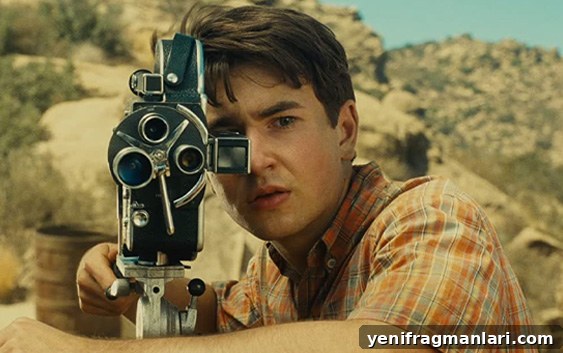
The Fabelmans is not a conventional “struggling artist” story. Instead, written by Spielberg and longtime collaborator Tony Kushner, it centers on family dynamics while interweaving the emergence of an artist. Cinema is portrayed not merely as entertainment but as a tool for truth, empathy, and healing. Key scenes show how a small act—assembling still frames, making a short film as a gift—can carry immense emotional weight. To some characters within the story, filmmaking is dismissed as a hobby or not “real,” yet the film repeatedly demonstrates that art has the power to console, reveal, and connect. When people most need compassion and understanding, art can provide that space.
Throughout the screenplay, movies are depicted as capable of producing wonder, building trust, unearthing truth, and sometimes inventing it. Cinema in this film serves many roles: a source of revelation in one scene, a crafted illusion in the next, a way to see aspects of people that others might miss. Presented this way, The Fabelmans becomes one of Spielberg’s most candid endorsements of the medium. Spielberg has long championed theatrical experiences, the preservation of film, and a dialogue between traditional and modern techniques. This film reinforces his belief that cinema deserves more than passive consumption—it is a vital cultural and emotional practice.
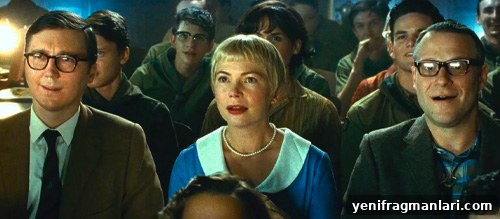
For devoted Spielberg fans and cinephiles versed in American film history, The Fabelmans may not deliver the large-scale set pieces or overt proclamations about cinema that have defined some of his earlier blockbusters. Instead, this film is intimate and restrained. Spielberg and Kushner have described seeking permission from Spielberg’s mother to tell this story—a gesture that underlines the film’s familial reverence. The movie functions as much as an ode to his mother as it does a reflection on creative awakening. Michelle Williams gives a layered, nuanced performance as the filmmaker’s mother—playful, free-spirited, and quietly luminous. Her portrayal captures both the wonder and complexity that Spielberg remembers, offering one of the film’s most affecting elements.
That intimacy can also be a source of critique. The film’s warm nostalgia—soft color palettes, romanticized slow motion, and a gentle glow—sometimes feels deliberately curated, a crafted recollection rather than raw excavation. Moments that might invite deeper scrutiny of family flaws are often handled with sympathy, which can make confrontations feel muted or incomplete. The narrative prefers gentle reflection to ruthless self-examination. As a result, The Fabelmans reads like a reflective lecture delivered by an accomplished artist rather than a seismic, perspective-altering experience. It is a late-career Spielberg film with a lighter touch: quieter, constructed, and deliberately composed to emphasize memory and feeling over shock and spectacle.
Yet despite measured critique, the film contains a universal, resonant message: follow what your heart compels you to do. The movie’s advice—“Do what your heart says you have to, because you don’t owe anyone your life”—is both simple and profound. Spielberg’s career demonstrates how personal stories can shape culture and inspire others. Watching a filmmaker of his stature celebrate curiosity, persistence, and honest storytelling serves as encouragement for anyone seeking their own creative path. The film argues that each person’s voice and experience are unique and worth expressing. Spielberg’s legacy shows how a single, devoted artist can influence cinema, art, and society; The Fabelmans invites viewers to consider doing the same in their own way.
Score: 20/24