
They Cloned Tyrone (2023)
Director: Juel Taylor
Screenwriters: Tony Rettenmaier, Juel Taylor
Starring: John Boyega, Jamie Foxx, Teyonah Parris, Kiefer Sutherland
They Cloned Tyrone is a bold, genre-blending mystery with strong science fiction elements and a sharp social undercurrent. In his feature-length directorial debut, Juel Taylor delivers a fast-paced, twist-filled narrative that mixes pulp detective tropes with satirical commentary on power, exploitation, and community. The film follows three unlikely investigators—a pimp, a sex worker, and a neighborhood drug dealer—who uncover a large, sinister experiment taking place beneath their feet. The result is a provocative and entertaining film that plays like a cinematic page-turner.
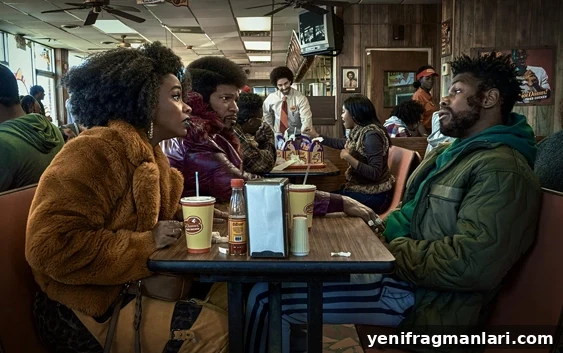
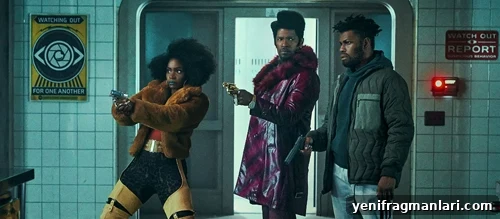
The film’s marketing calls its leads an unlikely trio, but within the world of the story they make perfect sense as the ones most motivated to reveal the truth. Teyonah Parris’s Yo-Yo is fierce, quick-witted, and determined, delivering lines with the same precision she uses when firing a gun. Her confidence in solving the mystery is infectious, even if her two partners, Fontaine (John Boyega) and Slick Charles (Jamie Foxx), sometimes express skepticism. Together they form a compelling team whose chemistry is one of the movie’s greatest strengths.
Plotwise, the mystery begins when Fontaine is shot dead in front of his community only to awaken unscathed. That impossible event sparks questions that lead the trio deeper into a shadowy conspiracy. John Boyega, already known for his early sci-fi work and later franchise performances, brings grounded intensity to Fontaine. Jamie Foxx provides comic brilliance as Slick Charles, a flamboyant, verbose character who mixes charm with danger. Teyonah Parris anchors the film with ferocity and intelligence, offering a magnetic presence opposite Boyega and Foxx.

Beyond the surface thrills, They Cloned Tyrone functions as a social allegory. The neighborhood known as the Glen stands in for marginalized communities everywhere: neglected, trapped by cycles of poverty, violence, and limited opportunity. Taylor and his co-writer Tony Rettenmaier use genre conventions to highlight how institutions and those in power benefit from maintaining those cycles. The film’s satire often leans into caricature—costumes, slang, and mannerisms are exaggerated—but beneath that surface are nuanced characters with real hopes, fears, and motivations.
Stylistically, the movie plays like pulp fiction given a modern, slightly surreal twist. The cinematography and production design embrace a gritty, retro aesthetic that suits the story’s detective roots. Details such as Fontaine’s gold teeth or Slick Charles’s ostentatious footwear add texture and help define character in a way that feels deliberate rather than accidental. These visual choices support the tone of the film, which blends dark humor with suspense.
At times, the film’s ambition works against it. It juggles many themes—identity, systemic injustice, the ethics of experimentation, masculinity—alongside its central mystery, and some viewers may find the narrative overloaded. Certain revelations and resolutions feel hurried in the final act, while other scenes are allowed to linger, creating a pacing imbalance. Despite this, the journey to those moments remains engaging thanks to strong performances and an inventive script.
Juel Taylor’s background as a writer on diverse projects is evident in the way the film borrows from multiple genres. That cross-genre fluency broadens the movie’s appeal: viewers who enjoy social satire, pulpy crime stories, or offbeat science fiction should find elements to appreciate. While They Cloned Tyrone may not fully reach the heights of every film it echoes, it stands on its own as an imaginative, entertaining piece of filmmaking that sparks conversation.
In short, They Cloned Tyrone is frequently funny, often thrilling, and consistently provocative. Its mixture of genre fun and pointed social critique, paired with standout performances from Boyega, Foxx, and Parris, makes it a memorable film that invites repeat viewings and discussion.
Score: 19/24