
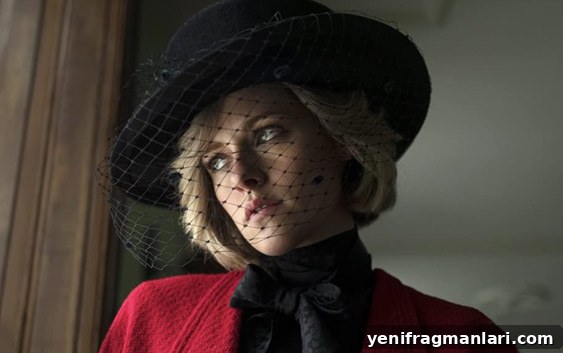
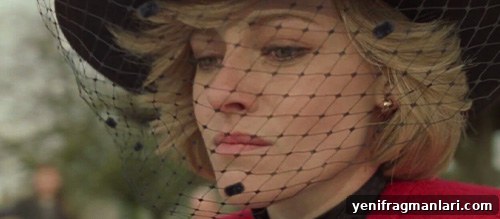
Spencer (2021)
Director: Pablo Larraín
Screenwriter: Steven Knight
Starring: Kristen Stewart, Timothy Spall, Jack Farthing, Sean Harris, Sally Hawkins
Pablo Larraín, the Chilean director known for his distinctive approach to historical portraits, follows his celebrated study of Jacqueline Kennedy with Spencer, a bold and intimate film about Diana, Princess of Wales. Larraín’s earlier work demonstrated a preoccupation with the pressures society places on women and the desperate efforts some take to break free; Spencer continues that exploration. The film draws on the director’s fascination with confinement and public image, fusing the psychological nuance of prior projects with a formally daring cinematic language to present a fresh, haunting portrait of a global icon.
Spencer is set during Diana’s final Christmas at Sandringham House, a secluded royal estate where rituals and rules dictate every movement. The film labels itself “a fable from a true story,” signaling that it blends factual grounding with fictionalized interpretation. We first meet Diana as an outsider to the estate—lost, roaming the nearby village, and awkwardly seeking directions from ordinary townspeople. Her late arrival to Sandringham introduces her to Major Alistair Gregory (Timothy Spall), the household’s equerry and a rigid enforcer of tradition. Gregory and Diana embody opposing forces: his devotion to protocol versus her restless, untamed spirit. Their mutual disdain is immediate and sets the tone for a claustrophobic holiday defined by small cruelties and silent judgment.
On the surface Diana attempts to maintain composure for the sake of her sons, William and Harry. Yet the restrictions she faces—timed meals, prescribed clothing, constant surveillance and the prohibition against wandering alone—intensify her sense of imprisonment. Larraín deliberately keeps most members of the royal family off-screen, allowing their presence to be inferred through Diana’s reactions: furtive looks, trembling hands and moments of near-breakdown. The film uses absence as a device, forcing viewers to inhabit Diana’s anxiety and to imagine the criticisms and schemes that hover beyond what the camera shows.
Rather than offer a straightforward biopic, Spencer moves into psychological and occasionally supernatural territory. Diana discovers a biography of Anne Boleyn and begins to experience visions of the Tudor queen, a spectral figure who haunts her imagination and underscores her fear of replacement and betrayal. The specter of Camilla Parker Bowles and the bitter symbolism of an identical pearl necklace purchased for both Diana and the Princess of Wales feed her paranoia. These apparitions sometimes feel operatic, stretching beyond strict realism, but they serve Larraín’s aim to portray internal torment rather than to reconstruct events with documentary precision. In one striking sequence, Diana snaps a pearl necklace and is shown consuming the scattered pearls with her meal—an image that fuses ritual obedience with physical pain and conveys the brutal cost of public performance.

Kristen Stewart anchors the film with a committed and nuanced performance. Though an American actor portraying a British royal might invite debate among purists, Stewart transforms herself: she captures Diana’s vulnerability, defiance and simmering despair while largely shedding traces of earlier screen personas. At times the dialogue and script limit the emotional range, leaning into moments of petulance that make Diana appear less sympathetic. Nonetheless, Stewart conveys the underlying fragility and the complex contradictions of a woman living in a gilded cage—someone capable of warmth with her children and simultaneously undone by the obligations of monarchy.
Larraín pairs strong performances with a meticulous aesthetic. Jonny Greenwood’s score intensifies the film’s uneasy mood, using dissonant strings and sharp tones to reflect Diana’s fraying sense of reality. Costumes and production design are rendered with exacting care: each outfit, prop and table setting is chosen to reinforce the air of ceremonial suffocation that surrounds the heroine. Cinematographer Claire Mathon composes frames that resemble paintings—each shot is carefully lit and balanced, as arresting as the period portraits that adorn Sandringham’s walls. The combination of sound, costume and image builds an atmosphere that feels both sumptuous and oppressive.
Spencer finds its most affecting moments in scenes between Diana and her children. These interactions humanize the woman at the film’s center, showing tenderness and a fleeting escape from the public role that dominates her life. Larraín’s intention is not merely to recount scandal or spectacle but to recover Diana’s humanity—to frame her as mother, as an individual struggling against a system that consumes her identity.
The film will not satisfy viewers seeking a conventional royal chronicle or an exhaustive historical account. Instead, Spencer operates as an impressionistic, emotionally charged study—part psychological portrait, part fable—that reframes how we imagine one of Britain’s most famous figures. Ambitious and formally daring, the film cements Pablo Larraín’s reputation for finding cinematic poetry in biographical material and offers a distinctive, sometimes unsettling, reappraisal of Diana’s final days at Sandringham.
19/24