
This article was written exclusively for The Film Magazine by Christopher Connor.

Time Bandits (1981)
Director: Terry Gilliam
Screenwriters: Terry Gilliam, Michael Palin
Starring: Craig Warnock, David Rappaport, Kenny Baker, Michael Palin, John Cleese, Sean Connery, Ian Holm
Terry Gilliam emerged from his Monty Python years to become one of cinema’s most distinctive directors, and Time Bandits (1981) stands as an early and enduring example of his imaginative filmmaking. More playful and family-friendly than the darker, more satirical works he later pursued—such as Brazil and Twelve Monkeys—this film blends comedy, fantasy and adventure into a singularly whimsical journey that still charms viewers decades after its release.
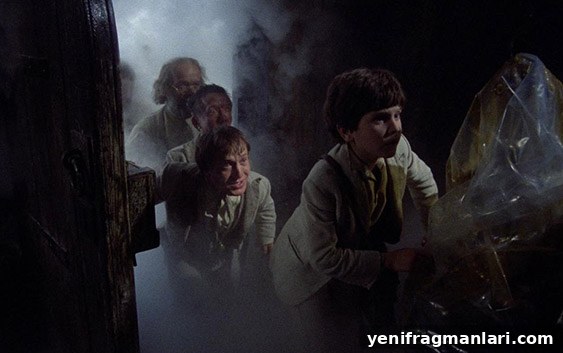
The story centers on Kevin (Craig Warnock), an imaginative eleven-year-old who feels neglected by his parents and longingly escapes into fantasy. His life takes a dramatic turn when a group of time-traveling dwarves, having stolen a mysterious map of time, recruit him for a series of episodes across history. Together they encounter larger-than-life figures—Napoleon, Robin Hood and Agamemnon among them—each sequence offering a mixture of absurdity, satire and tenderness. Gilliam’s visual inventiveness and affection for oddball characters give the film a playful tempo, with set pieces that emphasize theatrical design, surreal humor and spirited performances.
Casting is a major strength of Time Bandits. The film gathers an eclectic ensemble that highlights Gilliam’s taste for unexpected pairings. Michael Palin, who co-wrote the screenplay, brings his familiar Python sensibility in a warm supporting role and provides a kind of narrative presence through voice and performance. Ian Holm delivers a delightfully comic turn as Napoleon, fully embracing the role’s theatricality, while Sean Connery makes a memorable appearance as Agamemnon, forming an immediate bond with Kevin. John Cleese also appears briefly, and several other recognizable British character actors populate the film’s roster, lending it a theatrical, community-like energy.
One of the film’s recurring pleasures is its inventiveness of set-pieces and creatures. Gilliam stages each historical vignette with a fresh visual approach, often leaning into handmade effects and production design that emphasize texture and imagination over polished realism. This aesthetic gives Time Bandits a timeless quality: it feels crafted, tactile and undeniably personal. At times the pacing slows and certain comedic gambits repeat, but for many viewers the variety of worlds and oddball characters sustains interest and delight.
Gilliam has described Time Bandits as the first installment in his so-called “Trilogy of Imagination,” a group of films exploring different “ages of man” that also includes Brazil (1985) and The Adventures of Baron Munchausen (1988). Seen in that context, the film functions both as a standalone family-friendly fantasy and as an early expression of themes—fantasy versus bureaucracy, the power of imagination, and the collisions of myth and history—that Gilliam would continue to elaborate in darker, more complex forms.
For viewers new to Gilliam’s work, Time Bandits is one of the most accessible entry points. It demonstrates the director’s ability to mix broad comedy with visual inventiveness and a distinctly British sense of absurdity. Compared with his later films, which often delve into more adult and dystopian territory, this film’s lighter tone and rollicking spirit offer a different, but complementary, side of his cinematic voice.
Over the years Time Bandits has maintained a devoted following. Its balance of heartfelt moments, comedic set pieces and imaginative world-building keeps it relevant for contemporary audiences seeking quirky family adventure or a portal into Gilliam’s singular imagination. The film remains a significant early work in his filmography and a rewarding watch for fans of fantasy cinema and offbeat comedy alike.
19/24
Written by Christopher Connor
You can support Christopher Connor in the following places:
Twitter – @chrisconnor96