
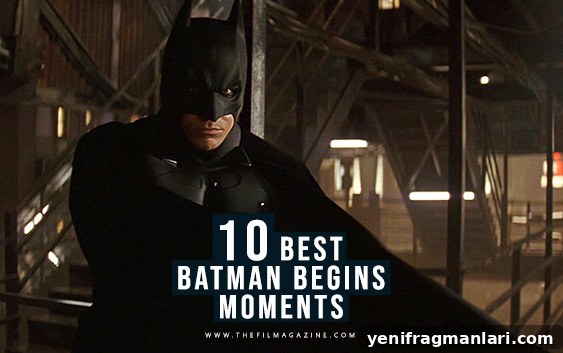
Batman Begins was released in 2005. Christopher Nolan was only 34 and Christian Bale 31 at the time. It was Nolan’s fourth feature film and, despite a $150 million production budget, Warner Bros invested heavily in promotion to ensure the reboot did not fail as previous Batman films had. Nolan arrived with a strong reputation from films like Memento and Insomnia, and assembled an exceptional cast and crew, including Michael Caine, Morgan Freeman, Liam Neeson, Hans Zimmer, James Newton Howard, David S. Goyer and Wally Pfister. Batman Begins altered expectations for superhero cinema, elevating the genre with a grounded, tension-driven approach and cinematic credibility.
In this movie list from The Film Magazine, we celebrate Christopher Nolan’s film and its ensemble, ranking the 10 best moments from the prologue through the epilogue. These scenes are judged on their memorability, importance to character and plot, and overall impact on the film and the franchise.
10. Batman Meets Scarecrow
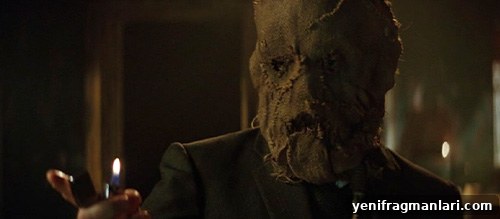
“Do you want my opinion? You need to lighten up.”
Dr. Jonathan Crane, the Scarecrow, represents a psychological threat rather than just a physical one. By the time Batman confronts him, Crane has already demonstrated the potency of his fear-inducing toxin. The scene begins in darkness, with Batman using his strengths, but when the toxin is deployed, we see Bruce struggle in a way that foreshadows the mental battles he must later face. The sequence climaxes with Batman falling several stories while on fire, then waking to Alfred and Lucius Fox, haunted by his father’s words: “Why do we fall, Bruce?” It’s a multifunctional scene that combines action, character development and thematic resonance.
9. Rachel’s Final Decree
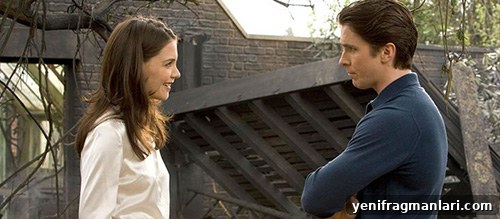
“The man I loved, the man who vanished, he never came back at all […] Maybe once Gotham no longer needs Batman, we’ll see him again.”
After Gotham is saved, Rachel Dawes delivers a painful truth: Bruce must sacrifice personal relationships to serve the city. Her words underscore Bruce Wayne’s loneliness and foreshadow the emotional stakes in the sequels. Rachel’s decree clarifies that while Batman can be a force for public good, Bruce Wayne is becoming increasingly isolated and haunted by grief—driving home the personal cost of his mission.
8. “I Bought Most of the Shares”
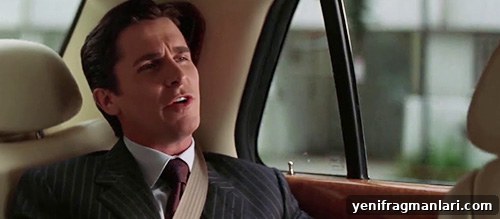
As the film resolves, one of Bruce Wayne’s quieter victories comes in business form: “I bought most of the shares.” By reclaiming control of Wayne Enterprises and replacing corrupt leadership with Lucius Fox, Bruce begins to repair the civic and corporate rot that feeds Gotham’s criminality. This moment completes a narrative thread that runs parallel to the street-level conflict and signals Bruce’s willingness to embrace his legacy and wield power responsibly.
7. James Gordon Comforts Bruce Wayne
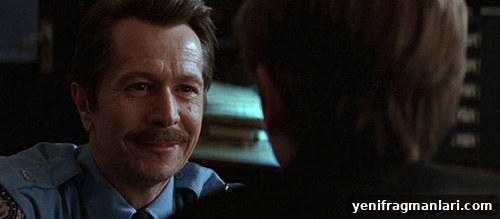
After the murder of his parents, a young Bruce Wayne sits terrified in a police station. Officer James Gordon places Thomas Wayne’s coat around him and quietly reassures him that “it’s okay.” This small act of kindness becomes a lasting anchor for Bruce and establishes Gordon as a rare, honest and compassionate figure amid Gotham’s corruption. It foreshadows a long alliance and grounds the film’s central conflict: Bruce’s belief that Gotham can be saved versus Ra’s al Ghul’s conviction that it must be destroyed.
6. Bruce Destroys the League of Shadows, Saves Ra’s
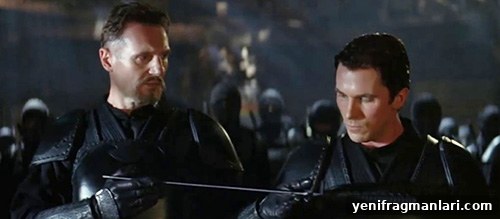
Bruce’s training with the League culminates in a dramatic test of his principles. When tasked to kill a criminal in the name of justice, Bruce refuses; he believes murder is revenge, not justice. His refusal leads to the destruction of the League’s stronghold and, in a surprising turn, Bruce saves the man he once called mentor. That act of mercy defines Bruce’s moral code and creates inner conflict that will shape his future decisions.
5. “Swear to Me!”
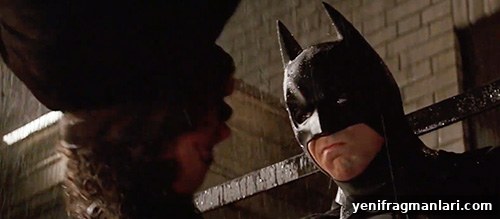
Nolan shifts Batman away from the campy interpretations of the past toward a more grounded and darker vigilante. The interrogation of corrupt cop Arnold Flass demonstrates this tonal change. Batman hoists Flass into the air and demands answers, punctuating the scene with the now-iconic command: “Swear to me!” The sequence is tense, precise and effective—showing Batman as a relentless enforcer who operates in moral gray areas while maintaining a strict personal code.
4. The Dark Knight Rises
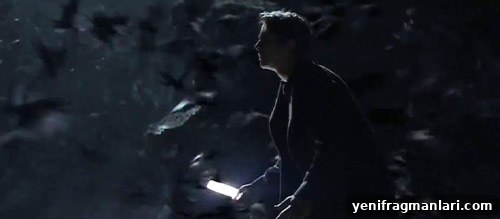
Returning to the caverns beneath Wayne Manor, Bruce faces the source of his childhood trauma: the bats. Initially shaken, he confronts and embraces his fear. As the score swells, Bruce rises—both physically and emotionally—transforming his fear into strength. This moment crystallizes the theme that fear can be harnessed and used as a weapon against criminals, and it introduces the musical and emotional throughline that carries across the trilogy.
3. Ra’s Reveal
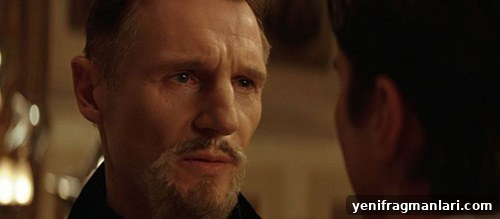
At a high-society party in Wayne Manor, Bruce plays the charming playboy to hide his true identity. The twist arrives when his mentor, Henri Ducard, is revealed to be Ra’s al Ghul. The betrayal shatters Bruce’s assumptions and forces him to question why he spared Ra’s earlier—especially as Ra’s sets Wayne Manor ablaze, literally burning Bruce’s past and legacy. The loss pushes Bruce to rebuild his identity and resolve on his own terms.
2. Batman Saves Rachel, Stops Scarecrow
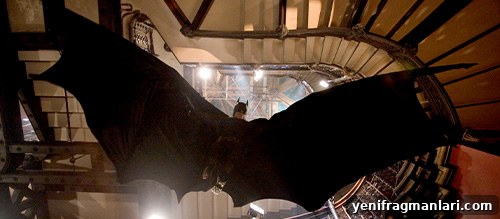
“He’s here.” / “Who?” / “The Batman…”
Rachel Dawes is kidnapped as Scarecrow deploys his toxin into the city’s water supply. Batman’s rescue escalates into a full-scale showdown that reveals how corruption runs through Gotham’s institutions, not just its streets. The sequence is notable for its visual flair—especially the moment when a cloud of bats distracts the police and allows Batman to disappear. That stairwell jump surrounded by bats is a defining image of Nolan’s Batman: theatrical, effective and unforgettable.
1. “I’m Batman!”
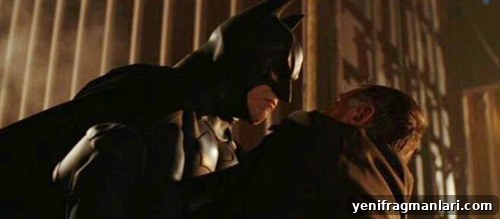
Nolan waits nearly an hour to fully reveal Batman, and the payoff is perfect. During a late-night raid overseen by crime boss Carmine Falcone, Batman intervenes with calculated brutality and some dark humor. After Falcone asks, “What the hell are you?” Batman delivers the blunt, defining line: “I’m Batman.” The sequence establishes this version of the character as a physical, intimidating force who uses stealth, strategy and spectacle to exact justice.
These moments illustrate why Batman Begins remains a landmark film: it grounded a fantastical hero in psychological realism, reshaped the tone of superhero storytelling, and set in motion a trilogy that explored fear, sacrifice and moral conviction. Which moments stand out to you? Are there scenes you would swap in or out of this list?