
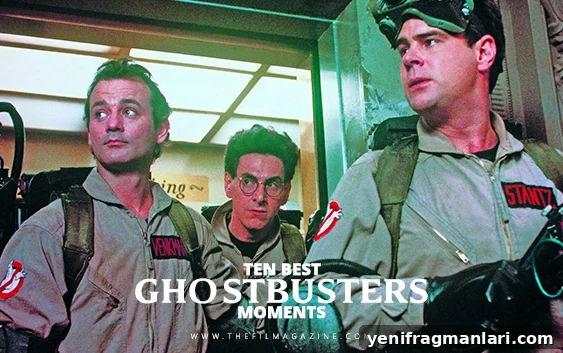
Three parapsychologists, driven by an obsession with the supernatural, form an agency to help New Yorkers cope with a sudden surge of ghostly apparitions across the city.
Featuring a legendary comedic ensemble—Dan Aykroyd, Bill Murray, Ernie Hudson, Rick Moranis and Harold Ramis—Ghostbusters (1984) quickly became a modern classic.
By blending comedy, action and horror in an unusually seamless way, the film went on to become the second highest-grossing picture of 1984 and established a lasting cultural footprint.
Ghostbusters spawned sequels, reboots and numerous spin-offs. Its influence shows up everywhere: from lunchboxes and Halloween costumes to references in science and pop culture—such as an ankylosaurus fossil nicknamed after Zuul in 2017.
In this Movie List from The Film Magazine, we count down the most hilarious, memorable and impactful moments from Ivan Reitman’s enduring supernatural comedy: the 10 Best Ghostbusters (1984) Moments.
Follow @thefilmagazine on X (Twitter).
10. The Theme Song
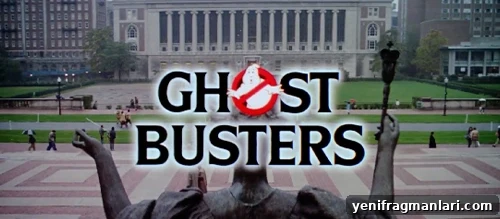
The film opens with Columbia Pictures’ familiar logo underscored by ominous music, giving the impression of a straightforward sci-fi picture—until it doesn’t. Within minutes a librarian is assaulted by an unseen force, and Ray Parker Jr.’s “Ghostbusters” theme explodes onto the soundtrack. That abrupt switch signals the film’s tonal promise: a story that will mix scares with broad comedy and self-aware wit.
Original songs often define movies of the era, but Parker’s tune stands out for its jingle-like catchiness and instant cultural reach. Its appearance immediately after a moment of horror underscores how effectively the film blends genres, setting the audience up for something playful and irreverent.
The song became a global hit, memorable and infectious—proof of the power a strong theme can give a movie.
Recommended for you: 10 Best Films of All Time (According to a 9-Year-Old Girl)
9. “What do we do?”
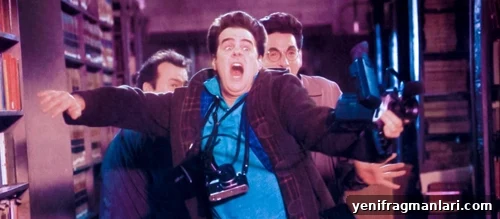
When the team faces their first real ghost it’s clear that Egon (Harold Ramis), Venkman (Bill Murray) and Ray (Dan Aykroyd) are untested in practice. Their work to that point has been largely theoretical, and the transition to hands-on ghostbusting is awkward and funny.
Their lack of coordination creates both narrative tension and broad comedy: the calm, deadpan deliveries from Egon and Venkman contrast hilariously with Ray’s frantic, cartoonish energy. This early sequence efficiently introduces the three leads, their flaws, and how differently each reacts under pressure.
8. Buying the Fire Station
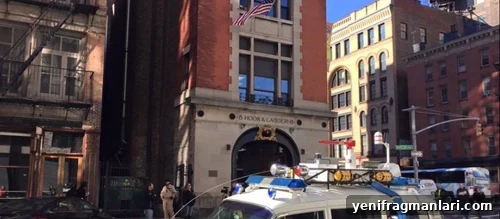
Finding a headquarters is a pivotal moment for the fledgling Ghostbusters. The large, vacant firehouse near Central Park is perfect for storing equipment and projecting confidence. The scene is small but revealing: Ray’s childlike delight—sliding down the pole and sprinting about—contrasts with Egon’s practical seriousness and Venkman’s sardonic wit.
It’s a warm, character-driven beat that deepens our investment in the team. That such a mundane act as signing a lease becomes a memorable high point is testament to the clever writing and committed performances.
7. “Is this true?” / “Yes, this man has no dick.”
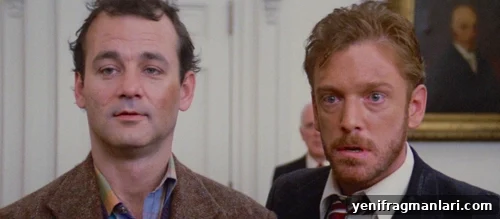
Besides supernatural threats, the Ghostbusters face antagonism from Walter Peck of the Environmental Protection Agency, who believes they’re a public menace. As pressures mount from the mayor, the EPA and the police, Venkman delivers one of the film’s most quotable and irreverent lines when he responds to accusations about an explosion.
That exchange—part blunt insult, part comic timing—showcases Bill Murray’s star-making turn. Venkman’s rude irreverence crystallizes Murray’s persona: a roguish, quick-witted everyman who steals scenes with a single line.
Recommended for you: 10 Best British TV Comedy Film Adaptations from the Past 30 Years
6. Zuul’s in the Fridge
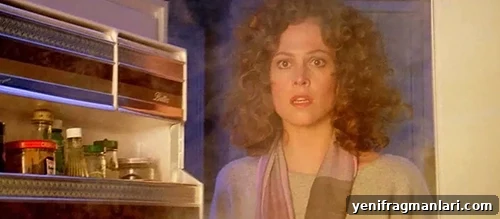
Dana Barrett (Sigourney Weaver) lives in an apartment building that becomes the epicenter of supernatural activity. Though Weaver had previously battled a deadly alien in Alien, nothing prepares her for the astonishingly bizarre discovery in her refrigerator.
As Dana’s food violently reacts, she realizes her home has been chosen as the site for Gozer’s presence. The reveal—complete with strange temple imagery inside the fridge and the sudden appearance of the terror dog Zuul—is delightfully absurd yet genuinely terrifying. Weaver sells the sequence with full commitment; her scream and physical reaction rank with the best of horror performances.
5. The Party
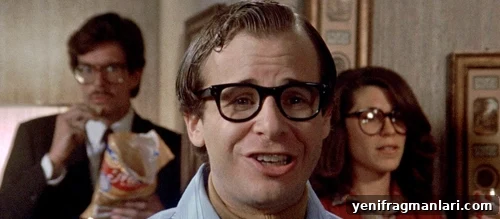
Louis Tully (Rick Moranis) is an endearingly goofy presence throughout the film. Nervous and bumbling, he manages to steal scenes with mannerisms that are both cringe-worthy and lovable. In many scenes Louis is actually possessed as Vinz Clortho, adding another layer of comic complexity to Moranis’s performance.
The party sequence—staged as a business expense to cover his social life—allows the audience to fully appreciate Louis’s eccentric charm. It’s a standout comedic moment where small details and physical comedy combine to memorable effect.
4. There Is Only Zuul
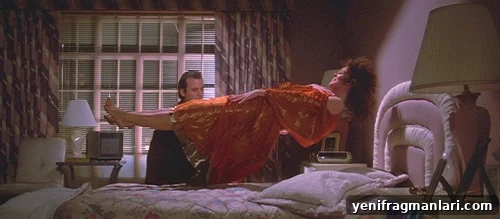
Once Dana is possessed by Zuul, her transformation is striking: makeup, posture, and a chilling detachment replace her previous demeanor. The levitation sequence—Weaver floating and rotating—is both visually impressive and played with complete seriousness, which heightens the absurdity and impact.
This scene also tests Venkman’s character: despite his roguish impulses, he shows restraint in the face of her possession, reinforcing the film’s balance between comic sensibility and genuine emotional stakes.
Recommended for you: 5 Horror Movies for People Who Don’t Like Horrors
3. The Key Master
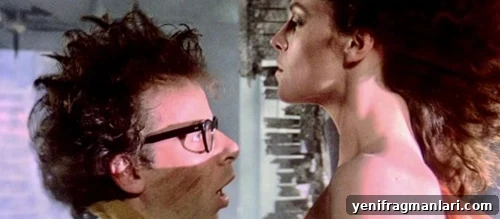
Louis Tully as the Key Master is comically disheveled and wide-eyed, while Dana—now the Gatekeeper—is statuesque and otherworldly. Their eventual pairing, after a series of citywide catastrophes, is both absurd and oddly tender.
The joke lands because Louis has always admired Dana from afar, and now the roles are reversed in the most unexpected way. The payoff is visual and wordless: a gag that slowly builds through the movie and lands with delightful comic timing.
2. Rooftop Battle
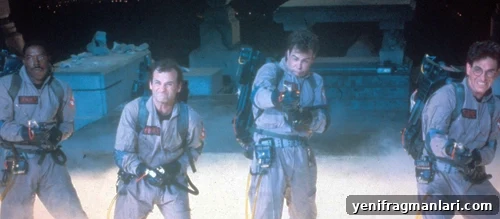
The climactic rooftop confrontation pits the Ghostbusters against Gozer in a spectacular set piece. The team’s proton packs are readied and the city’s fate hangs in the balance.
Ghostbusters was notable for combining broad comedy with high-quality visual effects. The effects team, working under a tight schedule, produced sequences that felt epic and cinematic while remaining integral to the film’s comedic tone. The rooftop battle showcases that ambition and technical expertise, delivering a thrilling crescendo to the movie’s escalating stakes.
1. The Stay Puft Marshmallow Man
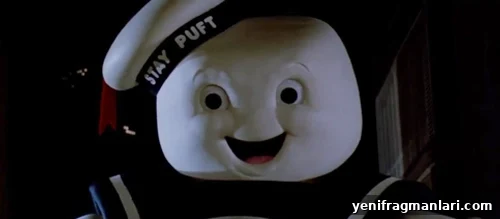
After the Ghostbusters believe they have defeated Gozer, they are forced to choose the form of their destruction by an ethereal challenge. Everyone must keep their minds blank, but Ray inadvertently calls to mind the one thing he can’t shake: the cheery, harmless mascot—the Stay Puft Marshmallow Man.
The result is equal parts absurd and terrifying: a gigantic, smiling marshmallow figure stomps through Manhattan. The image is iconic, emblematic of Ghostbusters’ genius in turning an innocuous slice of Americana into an unforgettable cinematic threat. Conceived by Dan Aykroyd, the Stay Puft figure became the enduring visual symbol of the franchise.
The sequel would later repeat the formula—taking a familiar icon, enlarging it to absurd proportions, and sending it loose through the city—but the original moment remains uniquely resonant.
Ghostbusters remains an iconic film with fans around the world. Which moments stand out most to you? Share your favourites in the comments and follow The Film Magazine on social media for more curated movie lists.