
Passages (2023)
Director: Ira Sachs
Screenwriter: Mauricio Zacharias, Ira Sachs
Starring: Franz Rogowski, Ben Whishaw, Adèle Exarchopoulos
Premiering at the 2023 Sundance Film Festival, Ira Sachs’ Passages arrived with considerable anticipation. Following Sachs’ previous features such as Little Men (2016) and Frankie (2019), this film continued to attract attention for its intimate exploration of desire, fidelity and the messy realities of adult relationships. After its UK screening at the Edinburgh International Film Festival, British audiences had the opportunity to see a film that divides critics and viewers alike.
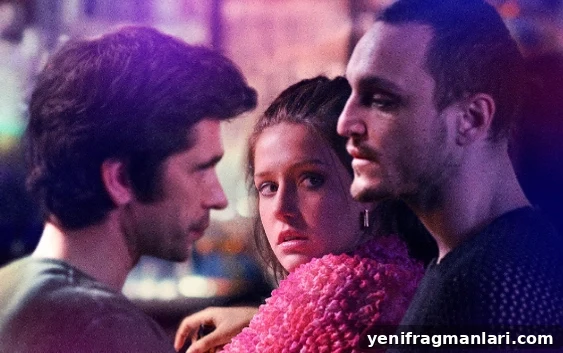
Passages centers on a fractured triangle: Tomas (Franz Rogowski) and Martin (Ben Whishaw) are a couple whose relationship unravels after Tomas begins an affair with Agathe (Adèle Exarchopoulos). The film examines how each character responds to betrayal, longing and the emotional fallout that follows. Rather than following a tightly plotted narrative, Sachs composes a series of moments and encounters that accumulate into a portrait of complicated attachment and self-deception.
The film opens with an extended scene of Tomas directing a film also titled Passages. This early sequence establishes Tomas’ personality — meticulous, controlling, and obsessed with detail. He orchestrates movement, posture, and even small prop actions down to the smallest nuance. That control on set implicitly contrasts with his inability to manage his private life, and the opening functions as an effective visual shorthand for the character’s inner contradictions.
Sachs uses visual strategy to shape our relationship with Tomas. Much of the film deliberately withholds his face during confrontations, framing him from behind or from a distance. That choice forces the audience to infer motives and emotions from posture, gestures and the reactions of others rather than explicit confession. It is a bold directorial move that highlights Sachs’ command of composition and blocking, and it often produces scenes of real tension and ambiguity.
Yet the screenplay complicates engagement with the protagonist. Tomas behaves in ways that can feel cruel and self-serving, and the film gives little clear explanation for his actions. He drifts from one affair to another, leaving a trail of hurt, and the narrative rarely permits viewers to access an inner logic that might justify his choices. As presented, Tomas appears indifferent to the people around him; he shows contrition when confronted with consequences more than remorse for the hurt he causes. That inscrutability makes it difficult to sympathize with or fully invest in his arc.
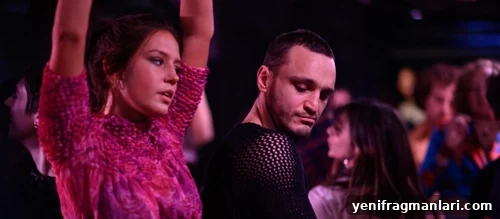
It is especially unfortunate because the performances are consistently strong. Franz Rogowski commits fully to a complex, often unlikeable role. He does not soften Tomas into charm; instead he crafts a convincingly self-absorbed man whose reactions suggest a fear of intimacy rather than a lack of feeling. There is subtlety in Rogowski’s work: he communicates regret about facing consequences, even if the film denies him clear penitence for his deeds.
Ben Whishaw offers a tender, heartfelt performance as Martin. Whishaw’s ability to convey quiet vulnerability and decency anchors much of the film’s emotional weight. His portrayal helps explain, to some degree, why Martin remains tied to Tomas despite repeated betrayals: there is a devotion and a softness that Whishaw renders with honesty. Adèle Exarchopoulos brings intensity and complexity to Agathe; her presence completes the triangle and adds a third emotional point that complicates any easy moral judgment.
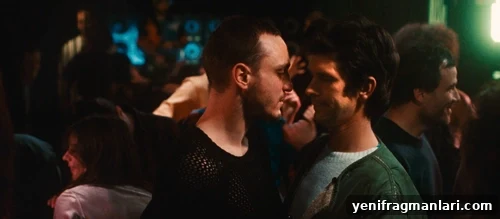
Where the chemistry falters is in the connections the film asks us to believe. There are moments of physical passion, including extended intimacy scenes, but the movie often fails to translate lust into convincing emotional bonds. The spark between Martin and Agathe appears intermittently, while Tomas’ relationships with both partners lack a credible foundation of affection. As a result, the central dynamic — the emotional architecture that should drive the drama — feels underdeveloped, and the audience struggles to understand why the characters remain entangled.
Visually confident and inhabited by fine acting, Passages nonetheless feels uneven. Sachs’ interest in atmosphere, composition and interior states yields moments of genuine insight, but the screenplay’s unwillingness to render Tomas’ interior life in more accessible terms leaves the drama dimmed. For viewers seeking a clear narrative impetus or emotional clarity, the film’s elliptical approach can be frustrating. For those who appreciate ambiguous, character-driven studies, there is much to admire in its restraint and formal courage.
Ultimately, Passages is a film of contrasts: accomplished in its visual language and performances, yet compromised by a script that keeps its central figure at arm’s length. It is a thoughtful, adult picture that will appeal to some viewers for its realism and complexity, while leaving others wanting more emotional coherence and connective warmth.
Score: 10/24
Rating: 2 out of 5