
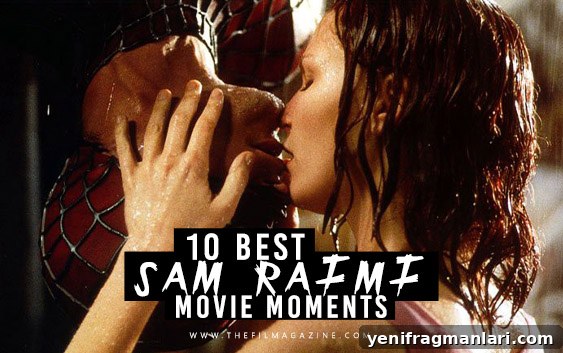
Sam Raimi is revered among genre fans. A master filmmaker, he moved from making handcrafted horror films with friends (including frequent collaborator Bruce Campbell) to orchestrating large-scale, effects-driven blockbusters for studios like Sony and Disney. Across a career spanning more than forty years, Raimi has built a devoted audience who love his mix of gore, slapstick comedy and heartfelt storytelling.
Raimi’s influence on modern cinema is notable: his films helped prove that comic-book adaptations could be treated seriously while still embracing emotion and spectacle. With a distinctive visual style and many memorable creative choices, his body of work offers countless iconic sequences. Below are ten of the most memorable moments from Sam Raimi’s films, chosen to illustrate what he does especially well—whether it’s crafting scares, choreographing physical comedy, or delivering unexpectedly tender beats. Groovy?
10. Annie’s First Vision (The Gift)
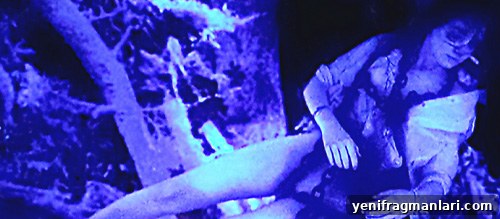
In a rural Georgia town, widow Annie Wilson (Cate Blanchett) makes a living as a local seer, using her family’s foresight to read for neighbors. When a local socialite vanishes under suspicious circumstances, Annie is overtaken by terrifying visions. The sequence in which she walks through misty woods and witnesses a grotesque revelation perfectly balances the eerie and the surreal. She sleepwalks among wilting wildflowers, encounters a sinister fiddler and finally sees the drowned body of the missing woman suspended in the trees. The scene underscores how little control Annie has over her gift—she can see tragedies but cannot always prevent them.
9. The Windmill (Army of Darkness)
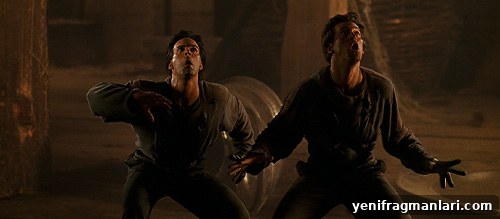
After narrowly escaping the Deadites, Ash Williams (Bruce Campbell) is hurled six centuries into the past. Sent on a quest for the Necronomicon Ex-Mortis, he hides in an old windmill from a malevolent force and ends up fighting dozens of tiny, mischievous versions of himself. A broken mirror scatters reflected shards that spring to life as miniature Ashes, leading to cartoonish, violent mayhem. One tiny double even dives into Ash and becomes a full-sized evil doppelgänger he must battle. The gag recalls earlier Raimi inventions but here it expands into a wild, body-horror twist that showcases Campbell’s gift for physical comedy.
8. The Kiss (Spider-Man)
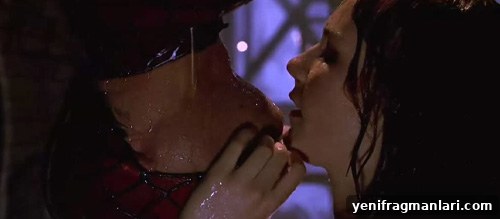
Early in his hero career, Peter Parker (Tobey Maguire) saves his neighbor Mary Jane Watson (Kirsten Dunst) from muggers. Later, drenched in rain, Spider-Man hangs upside down and Mary Jane gently peels down his mask to kiss him. The image—rain, an upside-down superhero, a tender, grateful kiss—is one of the most romantic in modern superhero cinema. It demonstrates Raimi’s ability to blend action and spectacle with genuine emotional warmth.
7. She’s Using the Reflections (Doctor Strange in the Multiverse of Madness)
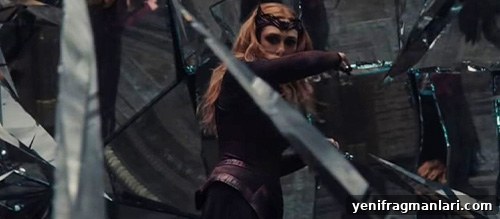
In this Marvel entry, the corrupted Wanda Maximoff pursues dimension-jumping America Chavez to Kamar-Taj. Trapped in the Mirror Dimension, Wanda nevertheless finds a way to escape by exploiting reflective surfaces. Raimi brings a horror director’s sensibility to the sequence: reflections become portals for violent, dislocated movement. The moment when Wanda emerges through a polished gong—limbs and neck contorted—blends supernatural terror with surreal imagery, reminding viewers of Raimi’s horror roots even within a mainstream superhero film.
6. Pink Elephant (Darkman)
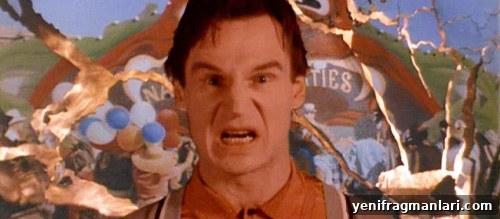
After surviving a brutal attack that leaves him disfigured and emotionally unstable, scientist Peyton Westlake (Liam Neeson) ventures into public wearing artificial skin. A fairground dispute over a prize triggers a violent breakdown: Peyton lashes out, hurls the vendor through a booth and staggers off as his artificial face degrades. Raimi’s camera work—Dutch angles, crash-zooms and heightened editing—escalates the scene into a delirious visual outburst that captures both the character’s unraveling and Raimi’s love of kinetic, over-the-top imagery.
5. Cheryl in the Cellar (The Evil Dead)
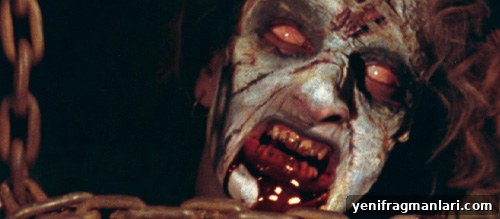
In Raimi’s original low-budget classic, a group of friends is besieged by demonic forces in a remote cabin. One of the most iconic images from the film is Cheryl—pale-eyed, ravaged by possession—peering out through the chained cellar door. The low-fi effects, committed performance and unsettling sound design combine to create a genuinely terrifying moment, proof of what inventive independent filmmaking can achieve.
4. It’s Him (A Simple Plan)
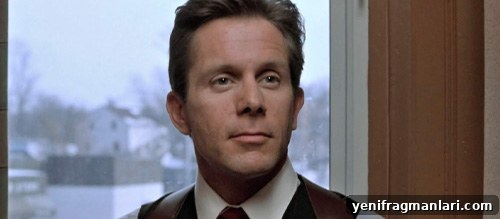
After discovering a bag of cash from a plane crash, brothers Hank (Bill Paxton) and Jacob (Billy Bob Thornton) try to hide their find. When an FBI agent arrives unexpectedly, Hank becomes convinced the stranger is dangerous and must arm himself without revealing what he knows. A tense sequence sees Hank sneak a pistol from the sheriff’s office while the agent waits nearby; the simple, well-executed line “It’s him” delivers a gut-punch of suspense. Raimi’s skill at building dread through timing and silent tension is on full display here.
3. Ash Tools Up in the Workshed (Evil Dead II)
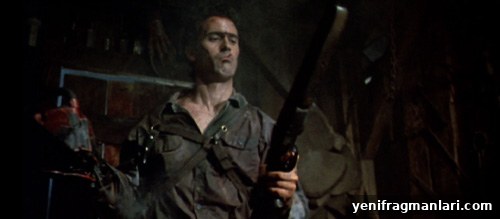
After amputating his possessed hand, Ash (Bruce Campbell) prepares for a final fight in a rundown workshed: he fashions a “boomstick,” mounts a chainsaw to his wrist and adopts a full action-hero posture. The scene culminates with Ash cocking an eyebrow and declaring “Groovy.” In roughly forty-five seconds and just twenty-one shots, Raimi and his sound design create a gleeful, grin-inducing montage of an ordinary man transformed into an unstoppable force—equal parts horror and slapstick bravado.
2. Backseat Driver (Drag Me to Hell)
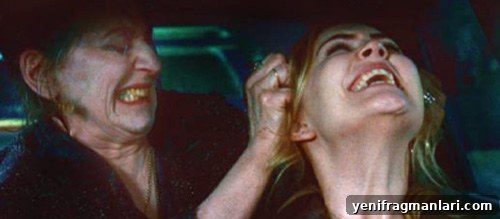
Timid bank clerk Christine (Alison Lohman) is cursed after refusing a mortgage extension and is later attacked by the vengeful Mrs. Ganush in Christine’s car. Raimi mixes horror and dark comedy so effectively that the scene—beginning with a mucus-covered handkerchief and escalating to a brutal, saliva-splattered struggle—balances genuine physical menace with twisted humor. The attack’s grotesque details and the frantic, inventive fight choreography underscore Raimi’s pleasure in combining shock with comedic timing.
1. Doc Ock Awakens (Spider-Man 2)
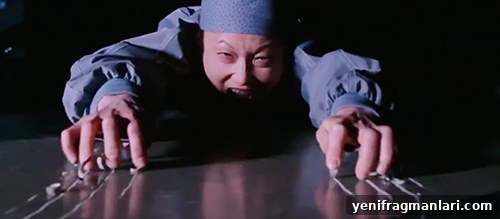
In Spider-Man 2, brilliant scientist Dr. Otto Octavius (Alfred Molina) undergoes a fusion experiment that goes horribly wrong, leaving him surgically fused to four mechanical tentacles. Waking in an operating theatre, he faces surgeons who attempt to remove the appendages—only for the arms to fight back with brutal force. The sequence builds tension slowly as subtle movements and reflections give way to chaos. Raimi injects raw physical danger into a big-budget superhero film, creating a violent, bloodless spectacle that blends horror energy with blockbuster scale. It exemplifies his knack for genre hybridization: treating comic-book material with both seriousness and an appetite for carnage.
These ten moments highlight Sam Raimi’s range: horror and humor, intimacy and spectacle, handcrafted invention and studio-scale ambition. Which of Raimi’s iconic sequences is your favorite? Share your thoughts and suggestions in the comments below.