
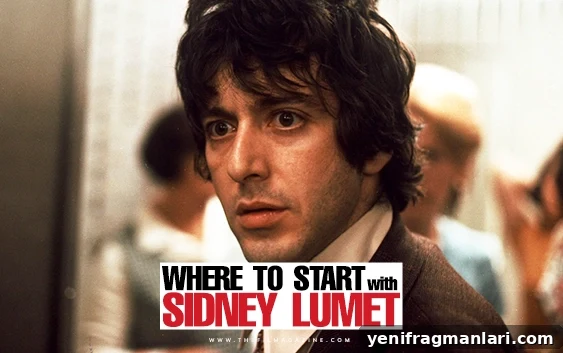
American director Sidney Lumet was raised in the world of theater. The son of Polish-Jewish immigrants who were veteran performers in the Yiddish stage, Lumet acted in Yiddish theater and on radio as a child and made his Broadway debut at eleven. He studied at the Professional Children’s School in New York and attended Columbia University. After serving four years in the U.S. Army during World War II, he joined the inaugural class of New York’s Actors Studio, which further honed his understanding of performance.
Lumet began directing off-Broadway in his early twenties and moved into television by 1950, learning speed, economy, and tight staging from the medium. His first feature film, 12 Angry Men (1957), adapted from Reginald Rose’s teleplay, announced him as a master of adaptation and actor-centered direction. Over a career spanning four decades, Lumet directed 39 films—an average of roughly one per year—often drawing from stage plays and novels. He was nominated for five Academy Awards and received an Honorary Oscar in 2005 for his lifetime contribution to cinema.
Lumet’s films frequently grapple with corruption, social injustice, and the erosion of the American Dream. He tended to favor character-driven stories set against the harsh beauty of New York City, populated by anti-heroes who rebel against systems rather than purely moralizing. His grounding in acting made him an “actor’s director”: he could coax nuanced performances and shape ensemble dynamics while maintaining efficient production practices learned in television.
1. 12 Angry Men (1957)
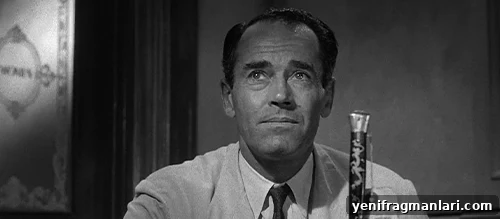
Lumet’s feature debut, 12 Angry Men, remains a definitive introduction to his craft. Based on Reginald Rose’s teleplay, the film confines its action almost entirely to a single jury room on a sweltering summer day. Henry Fonda stars as the lone juror who initially votes to acquit, triggering a methodical re-examination of evidence and a confrontation with collective bias. The premise allows Lumet to expose how institutions designed to produce justice can be compromised by prejudice, apathy, and human error.
The film showcases Lumet’s precise staging and his mastery of blocking—a skill he cultivated in theater and television. He arranges each frame so that the movement of bodies and the arrangement of faces reveal shifting alliances and moral reckoning without resorting to gimmicks. The cast work is uniformly excellent, and the gradual peeling away of certainty makes the film feel timeless. Its exploration of racism, civic responsibility, and the limits of legal systems resonates as strongly today as it did upon release.
12 Angry Men was recognized by the Academy with nominations for Best Picture, Best Director, and Best Screenplay, and it remains widely regarded as one of the finest courtroom dramas in film history.
2. Murder on the Orient Express (1974)
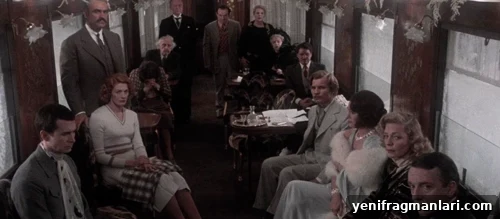
Murder on the Orient Express reveals a different facet of Lumet’s range. Adapted from Agatha Christie’s novel, the film is a stylish period whodunit that relocates Lumet from urban grit to elegant, frozen European landscapes. Albert Finney plays Hercule Poirot, the meticulous Belgian detective who must untangle a murder on a train full of suspicious passengers. The film draws on classic studio-era sensibilities, complete with lavish costumes and an ensemble of distinguished actors.
Lumet uses the train’s confined spaces to heighten tension and claustrophobia, arranging overlapping conversations and visual collisions so that the camera feels both intimate and crowded. The movie’s surface pleasure—its production design, performances, and pacing—pairs with Lumet’s interest in moral complexity. Rather than focusing only on the mechanics of detection, the film probes motivations and the consequences of failed justice. It’s a polished, entertaining demonstration of how Lumet could adapt his incisive social concerns to a lighter, suspense-driven form.
3. Dog Day Afternoon (1975)
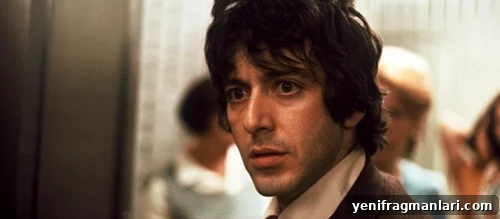
Dog Day Afternoon, based on a true 1972 bank robbery in Brooklyn, is one of Lumet’s most urgent and humane films. Al Pacino stars as Sonny Wortzik, a desperate man who attempts to rob a bank to finance his partner’s gender-affirming surgery. When the robbery goes wrong, Sonny and his accomplice become trapped in a hostage crisis that is magnified by media spectacle and bureaucratic failure. Lumet treats the event as a crucible, exposing institutional incompetence, sensationalism, and societal prejudice.
The film shifts tone halfway through—from kinetic and often darkly comic chaos to a more tragic, intense second half—allowing Lumet to depict how quickly public situations can become uncontrollable. Pacino delivers one of his most memorable performances, energized by Lumet’s direction, which emphasizes improvisation, emotional truth, and the messy humanity of his characters. While some elements of the film reflect the era’s limited vocabulary around gender identity, Lumet’s approach is notable for its effort to portray queer characters with dignity and complexity rather than caricature.
Dog Day Afternoon stands as a milestone in both New Hollywood cinema and the representation of marginalized lives on screen. It demonstrates Lumet’s ability to blend social critique with gripping, character-driven drama.
Across his work, Sidney Lumet excelled at telling stories about people pushed to the margins—those who feel excluded or betrayed by institutions. His films often center flawed, defiant protagonists who confront authority and force audiences to consider the human cost of systemic failure. With a rigorous work ethic and deep respect for actors, Lumet developed a distinctive, restrained visual style: one that serves the story and lets performance lead. As he put it, good style is often unseen; it is the feeling that carries a film, and Lumet’s best work remains defined by that quiet, powerful craftsmanship.