

Following production troubles on Thor: The Dark World and a crowded schedule that included two Avengers films, Taika Waititi revitalized Chris Hemsworth’s God of Thunder in 2017 with Thor: Ragnarok: a fresh, funny, and vividly colorful sci‑fi superhero adventure.
In the film, Thor returns to Asgard only to discover his long‑lost, warmongering sister Hela (Cate Blanchett) making a bid for the throne while the prophesied Viking apocalypse, Ragnarok, looms. Stripped of much of his power and enslaved to fight as a gladiator on the junk planet Sakaar, Thor must win his freedom and gather allies—some willing, some reluctant—to reclaim his home realm.
Known primarily for his work in comedy, Waititi infused the Marvel Cinematic Universe entry with his distinctive sense of humor, visible in the film’s oddball dialogue and unexpected comic beats. At the same time, Ragnarok embraced Jack Kirby’s wild comic designs and threaded several honest emotional moments and weighty subtexts through its bold visual and tonal reinvention.
This Movie List highlights the very best moments from Taika Waititi’s superhero debut. Here are the 10 Best Moments from Thor: Ragnarok.
10. Strange House Call
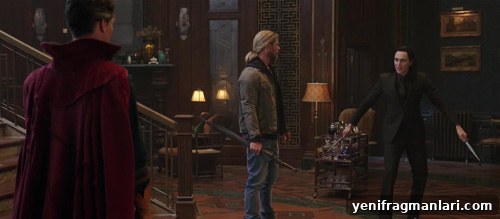
While searching for their missing father Odin (Anthony Hopkins), whom Loki (Tom Hiddleston) had hypnotized and hidden in an Earth retirement home, Thor and his trickster brother visit the Sanctum Sanctorum at 177A Bleecker Street for an audience with Doctor Strange (Benedict Cumberbatch).
Doctor Strange confounds the demigod visitors by altering the room around them, teleporting the troublesome Loki into a bottomless pit and serving Thor a bottomless beer during their exchange. He provides the information they need and conjures a portal to Norway—after Loki, offended by Strange’s tricks, tries to stab him for having “been falling for 30 minutes.” The sequence blends surreal visual effects with character comedy and sets a playful tone for Thor’s journey.
9. RIP Mjolnir
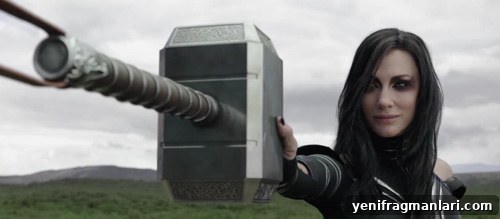
Shortly after Odin’s farewell and passing to Valhalla, his previously unknown firstborn Hela, Goddess of Death, breaks free. She confronts Odin’s other children—mocking Thor with “You don’t look like him” and Loki with “You sound like him”—and immediately sets about reclaiming her birthright.
Hela’s first—and most shocking—act is to strip Thor of his confidence by effortlessly catching and crushing Mjolnir with one hand. Humiliated, Thor and Loki flee through the Bifrost, only for Hela to strike them down and send them hurtling to the junk planet Sakaar. The moment redefines Thor’s arc and forces him to discover who he is without his hammer.
8. Horrific History Lesson
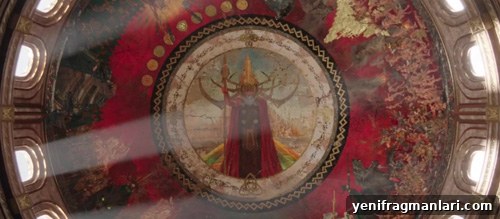
After conquering Asgard with surprising ease, Hela strolls into Odin’s palace with her lieutenants and realizes that Odin had deliberately erased her from their recorded history. She finds a pristine “garden party” mural on the ceiling and angrily exposes the layer beneath: a darker, bloodier mural showing Hela alongside Fenris and Odin building an empire through conquest.
By tearing down the bright facade, Hela reveals a brutal and imperial truth about Asgard’s past—a cinematic metaphor for historical mythmaking and colonial violence that gives the film a surprising moral gravity amid its spectacle.
7. “You Are Now Meeting the Grandmaster.”
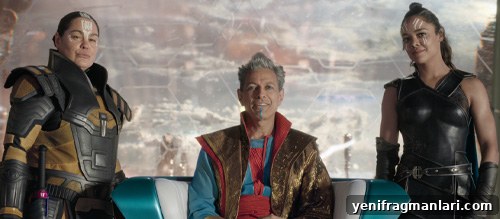
On Sakaar, Thor is imprisoned by the flamboyant, narcissistic ruler known as the Grandmaster (Jeff Goldblum). He awakens strapped to a chair as a conveyor carries him into the Grandmaster’s audience chamber.
The scene mixes psychedelic visuals with dark comedy—a narrated, half‑credible backstory, a space‑age stage show, and the Grandmaster’s eccentric cruelty. The ruler melts a prisoner to reclaim his favorite slippers, flirts with Loki, and decrees that Thor must fight as a gladiator and defeat the Grandmaster’s champion to earn his freedom. It’s absurd, stylish, and a perfect showcase for Goldblum’s performance.
6. “Are you Thor, the God of Hammers?”
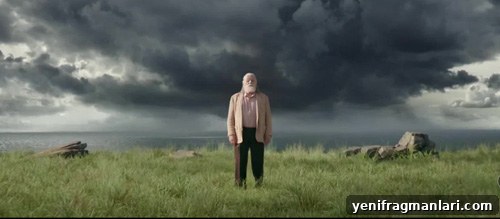
Facing Hela in a desperate battle, beaten and missing an eye, Thor receives a vision of Odin that shifts his perspective. Odin doesn’t deliver a conventional pep talk; instead he offers a cutting, sarcastic remark—one of the most memorable put‑downs in the MCU—that forces Thor to stop mourning Mjolnir and embrace who he really is.
That brusque push awakens Thor’s inner strength and sets him back on the path to reclaiming his identity and power. The line is simple, funny, and unexpectedly profound—a turning point in Thor’s emotional journey.
5. “He’s a Friend from Work.”
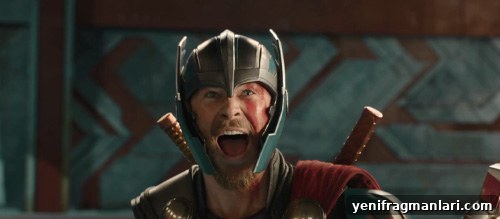
During the gladiator reveal, Hulk smashes into the arena, prompting Thor to cheer and explain to the bewildered crowd, “He’s a friend from work.” The reunion is comic gold, but it quickly becomes chaotic: Hulk is comfortable being Hulk, enjoying the fight and brutality, and Thor’s attempts to reason with him end in Thor being tossed around like a rag doll.
The sequence stands out for its mix of humor and action, showcasing how unpredictable and imperfect superhero teamwork can be—and how genuine affection can coexist with comic disaster.
4. “Get Help!”
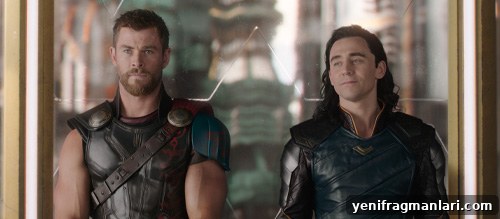
While fleeing the Grandmaster’s forces, Thor and Loki share an awkward but revealing elevator ride to a hanger with an escape ship. The pause in action gives them space to talk and to show a more mature side of Thor, who acknowledges the complicated bond he shares with his adopted brother.
Thor admits that despite their differences they will always have a begrudging affection—“Loki, I thought the world of you”—and accepts that neither will change the other. He then undercuts the moment with a comedic distraction tactic: suggesting they “get help,” which leads to Loki feigning death and being thrown from the elevator. The sequence balances sentiment and mischief with perfect comic timing.
3. The Tragedy of Loki of Asgard
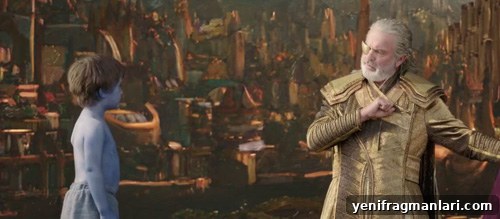
Early in the film, Thor witnesses a melodramatic stage reenactment of Loki’s apparent death from the events of The Dark World. Actors portray Thor and Loki while a mournful choir sings, all observed by Loki himself disguised as Odin.
The sight of Matt Damon and Luke Hemsworth as the theater Thors and Lokis, combined with Anthony Hopkins briefly playing along, is uproarious. Thor quickly sees through Loki’s disguise and forces him to reveal himself by threatening to bring Mjolnir down on his face. The moment cleverly satirizes mythmaking and celebrity while delivering solid comedy.
2. The God of Thunder Cometh
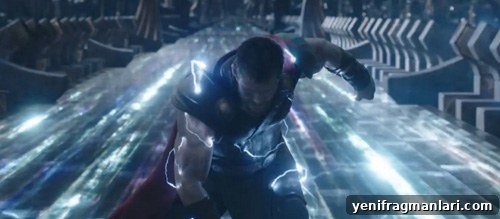
Reinvigorated by self‑belief, Thor rides a raging storm down onto the Rainbow Bridge to aid Asgardian defenders battling Hela’s undead forces. Led Zeppelin’s “Immigrant Song” heightens the scene’s momentum and raw power.
Without Mjolnir, Thor discovers he can channel lightning directly in close combat, tearing through the zombie Asgardians with authority and style. The sequence is pure cinematic exhilaration, combining music, elemental fury, and triumphant character growth.
1. The Doomed Ride of the Valkyries
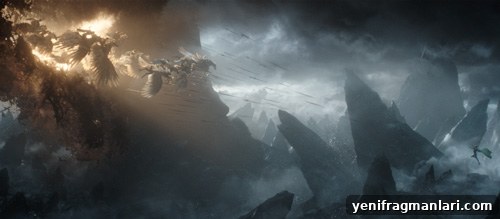
The film’s most haunting and visually striking moment is a brief, wordless memory sequence that reveals Valkyrie’s (Tessa Thompson) trauma. Loki assesses her pain and conjures an immersive vision of the day she lost everyone she loved.
We are transported thousands of years into a slow‑motion, Wagnerian tableau: winged Valkyries ride into battle and are cut down one by one by Hela. The sequence is silent, elegiac, and brutally beautiful—a concentrated burst of tragedy that explains Valkyrie’s guilt and her retreat into alcoholism. It’s one of the most visually original and emotionally resonant moments in any Marvel movie.
How does Thor: Ragnarok rank for you among MCU films? Which scenes stand out as your favorites? Share your thoughts and revisit the film to catch details you might have missed; it rewards repeated viewing with fresh humor, striking visuals, and sincere emotional beats.