
The Beekeeper (2024)
Director: David Ayer
Screenwriters: Kurt Wimmer
Starring: Jason Statham, Jeremy Irons, Josh Hutcherson, Jemma Redgrave, Emma Raver-Lampman, Bobby Naderi
A decade ago, three distinct films—John Wick, The Equalizer, and Kingsman: The Secret Service—helped redefine the Western action genre. Each established its own benchmark: John Wick revitalized a sparse, mythic approach to vengeance; The Equalizer delivered methodical, character-driven intimidation; and Kingsman introduced a fresh, kinetic style for spy thrillers. Since then, numerous action movies, from Bullet Train to Atomic Blonde and The Villainess, have tried to capture similar energy and inventiveness. Enter The Beekeeper, an action film fronted by Jason Statham that aims to stake its claim among those modern pillars.
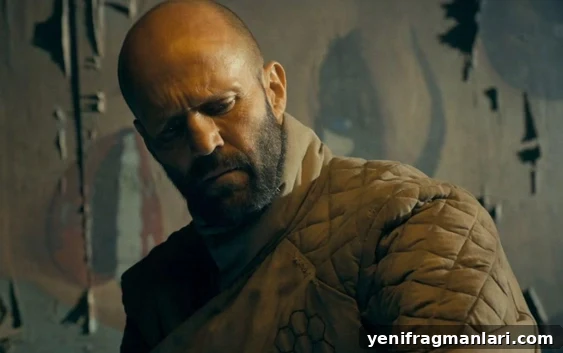
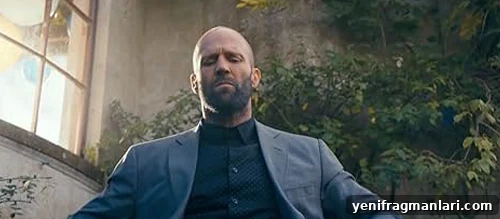
Statham plays Adam Clay, a quiet man living a modest life as a beekeeper. He tends bees, makes honey, and shares his harvest with friends, including an elderly woman who leases him a barn for his hives. She is generous and civic-minded, devoted to philanthropy and the community. When she loses millions to an elaborate financial scam, Clay’s reserved world shatters. What begins as an act of compassion becomes an uncompromising pursuit of justice: find the scammers, recover the stolen funds, and protect the hive.
The film repeatedly leans on the hive metaphor—linking the structure of society and governmental systems to a beehive—but this repeated motif quickly feels overused. Clay’s recurring speech about protecting the hive is delivered several times with only minor variations, leaving the dialogue to ring more like a slogan than a revealing character trait. Where John Wick managed to make a minimalist protagonist feel mysterious and emotionally resonant, The Beekeeper’s lead often reads as a blunt instrument of retribution rather than a fully layered figure. The film expects us to root for him without ever creating believable stakes or convincing vulnerability.
There is a small merit in giving the protagonist a reason to act that isn’t strictly familial. Motivations tied to empathy or moral duty can be compelling, and Clay’s drive to avenge a friend’s financial ruin is a valid starting point. Yet the screenplay rarely develops supporting characters in ways that make his mission feel urgent or personal beyond the stated premise. Compared with other recent action leads who are humanized through small failures or moments of physical limitation, Clay rarely shows weakness or faces credible peril. His victories feel inevitable, and the narrative rarely allows the audience to doubt his success, which dilutes the tension.
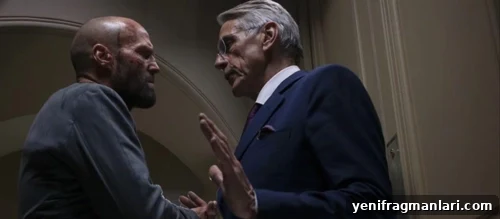
The concept of a secret-service cadre called “Beekeepers” is intriguing on paper, but the film uses it more as a naming device than a world-building opportunity. Rather than layering complexity into the organization, the script resorts to repeated analogies that compare civic order and statecraft to hive behavior. Those parallels could have been illuminating if woven subtly into character and action; instead, their constant repetition becomes fatiguing and prevents the film from achieving a memorable thematic point.
More troubling are the final action sequences, which suffer from thinly conceived staging and rushed editing. The climactic half hour lacks the clarity and stylistic precision that define the best contemporary action films. Shots feel scattershot, momentum wanes, and the sense of danger that should escalate toward the finish never coheres. When a movie like this relies primarily on kinetic set pieces, those sequences must deliver both visual coherence and emotional payoff—here they too often fall short.
There are some redeeming elements. Jeremy Irons brings a practiced gravitas to his part, and Jemma Redgrave offers a dependable presence that improves several scenes. These performances provide brief moments of texture in an otherwise flat ensemble. Josh Hutcherson’s contribution, however, feels uninspired and occasionally disengaged, which further weakens the film’s dramatic balance.
Technically, the picture struggles to find a consistent visual language. The direction initially hints at economy and grit, but later choices reveal a lack of focus: action beats that should be tight and visceral instead come off as slapdash. Pacing is uneven, the emotional core is undercut by repetitive motifs, and dialogue frequently replaces subtlety with blunt exposition.
Despite its ambitions to refresh a familiar revenge template and to offer a new spy mythology, The Beekeeper rarely rises above derivative conventions. The premise—an ex-agent turned humble beekeeper who returns to violence to right wrongs—has potential, but the film’s repetitive metaphors, underdeveloped stakes, and uneven action choreography keep it from joining the ranks of modern action standouts. It’s watchable for Statham’s physical presence and the occasional strong supporting turn, but ultimately it feels like an opportunity missed.
If you’re drawn to straightforward, adrenaline-driven performances and don’t mind a heavy-handed central metaphor, The Beekeeper may deliver moments of fun. For viewers seeking a more imaginative or polished action thriller, this one falls short of the genre’s recent high standards.
Score: 4/24
Rating: 1 out of 5.