
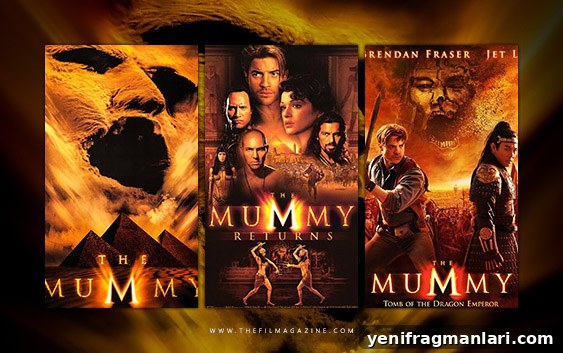
The Mummy franchise began with the 1932 horror classic and grew into a six-film series that ran through 1955. In 1999, the property was rebooted with Brendan Fraser in the lead, launching a trilogy that spanned the next decade and cemented a distinctive blend of action, adventure and horror. While later attempts to revive the franchise produced mixed results, the Brendan Fraser–led trilogy remains the high-water mark for many fans.
In this edition of Ranked, The Film Magazine presents a ranking of the three Brendan Fraser Mummy films directed by Stephen Sommers and Rob Cohen, ordered from least to most successful within the context of the trilogy: Brendan Fraser Mummy Movies Ranked.
Follow The Film Magazine on Twitter.
3. The Mummy: Tomb of the Dragon Emperor (2008)
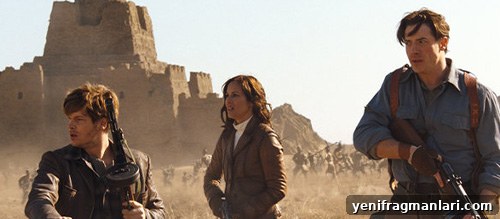
The third entry, The Mummy: Tomb of the Dragon Emperor, is widely regarded as the weakest film in the trilogy. Directed by Rob Cohen and released in 2008, it reunites Brendan Fraser and John Hannah as Rick O’Connell and Jonathan Carnahan. Rachel Weisz, who played Evelyn in the earlier films, does not return; Maria Bello takes the role, and the cast change alters the dynamic that made the first two films effective.
Set largely in China in 1946, the film explores a fantasy origin for the Terracotta Army and introduces the Dragon Emperor, played by Jet Li, who has been entombed in clay. Visually the movie travels through Shanghai, the Himalayas and along the Great Wall, offering action set pieces and solid fight choreography. Those sequences work better than much of the plot, but the film struggles to reconcile its action-adventure tone with the franchise’s established mythos. Too often it forces reminders that it is supposed to be a “Mummy” story, which undermines the new direction.
The chemistry between Fraser and Bello never quite reaches the warmth or comic timing that Fraser shared with Weisz, and the film reduces horror in favor of spectacle. There are still violent and unsettling images, but the characters also shift to fit the demands of the plot—Rick and Evelyn are framed as parents to a now-grown son, Alex, introducing family conflict that feels tacked on rather than earned.
Viewed on its own, Tomb of the Dragon Emperor has entertaining moments and competent action, but as the final instalment of a beloved trilogy it lacks the emotional weight and cohesiveness audiences expected.
2. The Mummy Returns (2001)
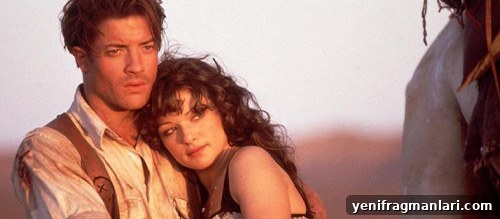
The Mummy Returns, released in 2001, is a confident and fast-paced sequel. Set in 1933, it picks up years after the first film and shows Rick and Evelyn as a family; their son Alex unintentionally triggers a new curse that reawakens the Egyptian priest Imhotep, the terrifying antagonist from the original movie.
While the sequel revisits familiar territory, it adds fresh elements: Evelyn is haunted by dreams of her past life as the Egyptian princess Nefertiri, and the film frequently leans into action and spectacle without losing its darker edge. The pacing and tone make it both thrilling and occasionally genuinely scary. The movie also introduces a memorable spin-off character—the Scorpion King—played by Dwayne “The Rock” Johnson in his first major film role, a casting choice that later expanded into its own franchise.
The Mummy Returns succeeds as a continuation because it balances character relationships with elaborate set pieces. Rick, Evelyn and Alex function as a believable family unit, and the script never undermines their bond for cheap drama; instead, their unity propels the movie forward. The film may repeat certain plot beats from the first installment, but it manages to refresh the franchise by raising the stakes and expanding the mythology.
1. The Mummy (1999)
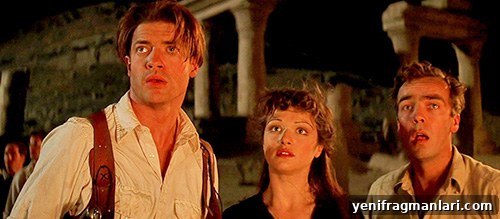
The Mummy (1999) is the triumphant reboot that launched Brendan Fraser into action-adventure stardom. The film follows Rick O’Connell, an American adventurer fighting with the French Foreign Legion, who discovers the lost Egyptian city of Hamunaptra in 1923. Three years later he joins librarian and Egyptologist Evelyn Carnahan and her clumsy brother Jonathan in Cairo to return to Hamunaptra—where Evy unwittingly reads from the Book of the Dead and awakens Imhotep.
The movie opens with a harrowing sequence: Imhotep’s priests are mummified alive, his tongue is cut out, and he is entombed with flesh-eating scarabs. These early scenes establish a genuinely grisly tone that persists through moments of visceral horror and body horror—Imhotep’s gradual restoration by draining life from others remains unsettling even with modern CGI advances.
What elevates the film beyond its scares is its winning combination of narrative drive, casting, and humor. Fraser’s charismatic heroism, Rachel Weisz’s intelligence and charm, and a strong supporting cast deliver both comedy and tension. The balance of adventure, horror and heart makes The Mummy an enduring crowd-pleaser that still holds up as an entertaining and well-crafted blockbuster.
Recommended for you: Once More with Feeling – 10 More of the Best Remakes
The Mummy franchise has a long, varied history, and while Universal may revisit the property again, the Brendan Fraser trilogy remains an influential era for the series. Even with a flawed third entry, the trilogy as a whole mixes horror, humor and family dynamics in a way that continues to entertain audiences. For viewers who appreciate a blend of gruesome imagery and lighthearted adventure, The Mummy films starring Brendan Fraser offer a rewarding and nostalgic experience.