
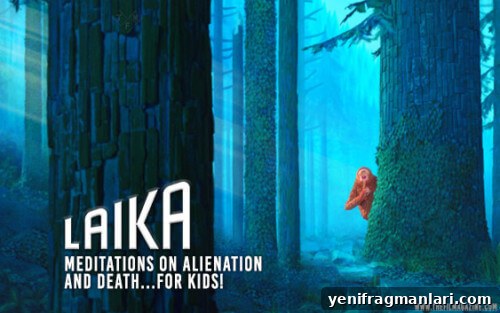
Laika’s Films: How Stop-Motion Explores Death, Alienation and Belonging
Missing Link, the fifth feature from stop-motion studio Laika, has just been released. Viewers familiar with Laika know what to expect: meticulous, expressive stop-motion animation populated by oddly charming, visually unconventional characters, bright color palettes, and energetic storytelling. Beneath that craftsmanship, however, the studio consistently weaves mature themes into its family-oriented narratives—often confronting death, loss and the experience of not belonging. Laika’s films treat these subjects with intelligence and respect, never talking down to children while still offering depth for adult audiences.
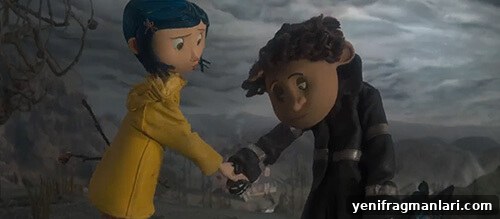
Laika’s first feature, Coraline, introduces a young protagonist whose boredom and loneliness become the catalyst for a dangerous escape. Coraline (voiced by Dakota Fanning) has moved to a new house, lost her friends and has parents who are too absorbed in work to give her the attention she craves. Her resulting sense of alienation leads her toward an alluring alternate world where “other” parents seem attentive and perfect. That other world, however, hides a manipulative and sinister truth: the Other Mother (Teri Hatcher) attempts to keep Coraline there forever, going so far as to imprison the girl’s real parents. The revelation forces Coraline to confront grief and regret—her parents, whom she took for granted, are effectively gone to her—and she must accept help from unexpected sources, including the spirits of three dead children, to reclaim her life. Coraline’s journey is a powerful example of how Laika channels childhood fear and longing into a story about appreciation, courage and reconciling with what you have.
Laika’s recurring theme of isolation and loss appears again in ParaNorman (2012). That film’s premise is straightforward but emotionally resonant: Norman (Kodi Smit-McPhee) can see and converse with the dead, a gift that alienates him from classmates and family members who cannot understand him. His relationship with his deceased grandmother, who remains a comforting presence in his life, stands in stark contrast to the indifference he feels from those still alive. In this way, Norman’s ability functions like a metaphor for grief—he carries a connection to loss that others have suppressed or moved past. When the town becomes threatened by a supernatural outbreak, the movie reframes death as something complex but not solely to be feared, validating Norman’s long-held perspective while also letting him grow.
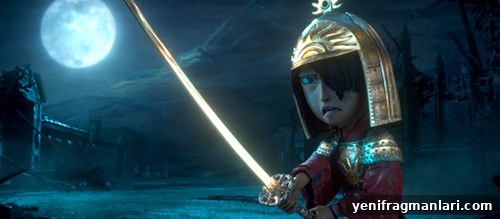
Kubo and the Two Strings is perhaps Laika’s most explicit meditation on mortality and memory. The film opens with a traumatic injury to Kubo’s mother (Charlize Theron) during a desperate escape, leaving her with diminished awareness and a fragmented relationship with her son. Kubo (Art Parkinson) supports them both through storytelling, using magically animated origami to entertain and earn a living, but his performances are frequently interrupted by his responsibilities at home and by village superstitions. After his mother’s final passing, Kubo’s grief propels him into a quest that becomes a process of self-discovery. The film’s motifs—Three Strings, ancestral guardians, a lantern festival—underscore themes of remembrance, ritual and the ways cultures cope with death. The antagonist, a celestial figure who has not experienced loss, highlights the emotional advantages of those who live with mortality: they are more resilient and more fully human.
Across these films, Laika repeatedly demonstrates a willingness to place difficult emotions at the center of stories aimed at young viewers without removing their complexity. Death is rarely treated as a tidy plot device; it is a lived experience that shapes identity, relationships and moral choices. Alienation is shown as both an internal feeling and an effect of social misunderstanding, and the studios’ characters often learn that belonging requires vulnerability, empathy and the courage to face painful truths.
For families and solo viewers alike, Laika’s work offers a rare blend of visual craft and emotional honesty. The stop-motion medium itself—tactile, detailed and labor-intensive—reinforces the films’ human themes: every movement feels intentionally earned, and every character carries a weight that mirrors the stories’ emotional stakes. These films invite conversations about grief, empathy and acceptance, making them useful resources for parents and educators as well as satisfying cinema for grown-ups.
Recommended for you: Laika Animated Movies Ranked
You can support Sam at the following places:
Website – SSP Thinks Film
Twitter – @SSPThinksFilm