
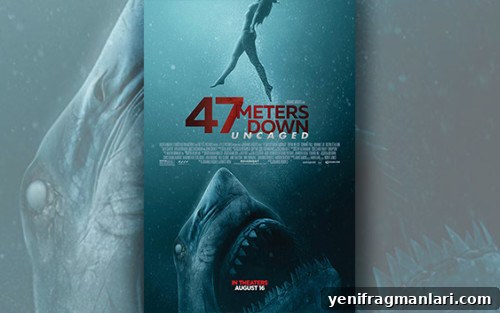
47 Meters Down: Uncaged (2019) — Review
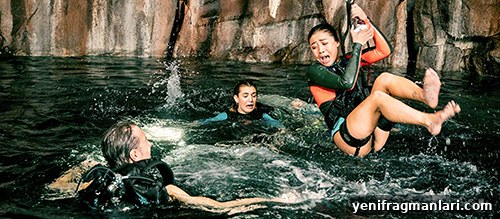
47 Meters Down: Uncaged (2019)
Director: Johannes Roberts
Screenwriters: Johannes Roberts, Ernest Riera
Starring: Sophie Nélisse, Corinne Foxx, Brianne Tju, Sistine Stallone
47 Meters Down: Uncaged largely abandons the tight, claustrophobic approach of its 2017 predecessor and instead drops a group of young divers into a submerged Mayan city infested with sharks. The premise leans into high-concept absurdity by design: the filmmakers clearly intended a more adventurous, self-aware tone rather than a straight survival thriller.
Director Johannes Roberts has described the film as deliberately aware of its own wild premise and willing to embrace moments that step outside realism. That self-awareness can work when it enhances tension or leavens dread with dark humor, but here it’s inconsistently applied. Rather than sharpening the film’s impact, many of the tongue-in-cheek beats draw attention to implausibility and interrupt immersion.
The biggest problems are structural and craft-related. The screenplay spends too much time telling us how characters feel instead of showing it, leaving most of the cast defined by surface traits: job, age, and a generic archetype. Conversations primarily exist to convey plot or emotion in the bluntest way, so characters rarely feel real or layered. Subtext appears only briefly — a line about rising sea levels — and even that does not develop into any meaningful commentary about environmental consequence. Here nature functions purely as antagonist, not as an idea to interrogate.
Attempts at self-referential humor and obvious movie homages frequently backfire. Rather than clever commentary, some callbacks read as lazy or clumsy. A straight lift of a scene concept from another shark film, for example, pulls informed viewers out of the moment because it plays like an unearned wink rather than a fresh twist. Self-awareness is not a substitute for strong plotting or character logic; it only highlights those deficiencies when overused.
Specific moments intended to frighten or startle also betray the film’s uneven tone. A sequence built around a noisy, unnerving fish is emblematic: the choice forces viewers to question the reality of what they’re seeing instead of feeling the intended shock. Similarly, scenes where blind, cavern-dwelling sharks should react to sound or scent instead show them aimlessly circling create unnecessary plot gaps. A more disciplined approach would either commit to the film’s fantastic elements or ground them in consistent rules; this movie often does neither.
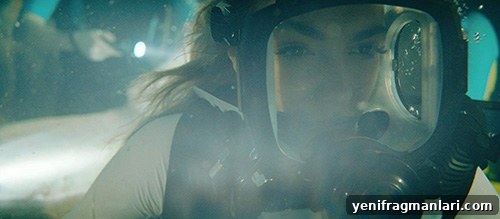
Visually the film has strengths and weaknesses. The submerged Mayan locations are intriguing and visually rich: carvings, alcoves, and flooded chambers provide striking production design that differentiates this sequel from the first film’s single-cage setup. The Dominican Republic locations offer beautiful, eerie spaces that allow for a variety of set pieces and some genuinely memorable images.
However, the cinematography and lighting often undermine those sets. The underwater sequences are frequently too dark or too chaotic to follow comfortably. Camera movement sometimes feels jittery rather than purposeful, and rapid cutting combined with booming sound design can disorient more than it elevates tension. When the film depends on digital sharks, the CGI swings between effective and visibly artificial; creatures that look convincing in silhouette lose credibility up close, especially in tunnel scenes where rendering struggles are most apparent. The sharks’ pale coloring also makes them stand out unnaturally against some backgrounds, breaking atmosphere.
Repetition weakens the film’s pacing. Characters repeatedly vocalize obvious dilemmas—“dead end,” “no way out”—and then cycle through panic and procedural problem-solving. This pattern saps momentum: the audience is told what to feel instead of being guided there by inventive staging or escalating peril. The film resorts too often to flashlight searches and last-minute discoveries to move forward, which becomes predictable.
Still, the production design and locations are the movie’s redeeming assets. The choice to place the action in a partially collapsed, artifact-filled ruin provides a fresh environment for underwater horror and creates opportunities for creative staging and visual interest that the filmmakers occasionally exploit effectively.
In the end, 47 Meters Down: Uncaged is a mixed bag. Its premise is entertaining on paper, and the setting offers compelling imagery, but inconsistent writing, uneven CGI, and occasionally disorienting cinematography prevent the film from delivering a satisfying genre experience. Fans of tongue-in-cheek creature features may find moments to enjoy, yet those seeking a tighter, scarier survival thriller are likely to be disappointed. Unless you’re content watching from the comfort of your own tub, I’d recommend waiting for home release rather than buying a full-price ticket.
Rating: 6/24