
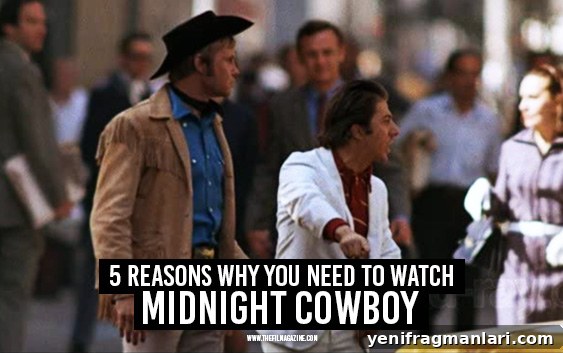
When John Schlesinger agreed to direct the film adaptation of James Leo Herlihy’s novel Midnight Cowboy, Dustin Hoffman later recalled that Schlesinger modestly hoped the film would at least attract the “college crowd.” Instead, Midnight Cowboy (1969) won three Academy Awards and remains notable as the only film with an X rating to receive the Oscar for Best Picture. Its success and cultural impact have made it one of the defining films of the late 1960s and early 1970s.
Midnight Cowboy has become deeply embedded in the general perception of 1960s and 70s popular culture. Many sequences and musical associations—such as Harry Nilsson’s “Everybody’s Talkin’”—have been so widely referenced that direct imitation often reads as parody. More than fifty years on, the film still moves viewers: its story offers a powerful window into the era’s attitudes and struggles while remaining emotionally and thematically resonant today.
From The Film Magazine’s Movie List, here are 5 Reasons Why You Need to Watch Midnight Cowboy.
Follow the publication on social media for updates and related articles.
1. The Acting
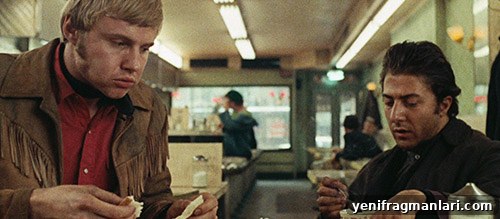
Hollywood in the late 1960s benefited from a generation of actors trained in techniques that emphasized psychological realism. By 1969, Method Acting—expanded in the U.S. by Lee Strasberg and others—had a profound influence on performance style. The Method asks actors to fully inhabit their characters and to use personal or imagined emotion memory to create nuanced, vulnerable, and emotionally truthful performances.
Contemporary misuses of Method publicity—extreme physical transformations or on-set eccentricities—have clouded the approach’s legacy. Yet in Midnight Cowboy, the Method’s strengths are on clear display. Jon Voight and Dustin Hoffman give two of the era’s most memorable performances, rooted in research, physical transformation, and emotional honesty.
Jon Voight’s breakout role as Joe Buck is a startling transformation: he becomes a naïve, swaggering would-be cowboy with an earnest, almost childlike confidence. Voight’s portrayal complicates our sympathies, revealing layers of vulnerability beneath the pose of masculinity. Dustin Hoffman’s Enrico “Ratso” Rizzo is an even more radical change from his earlier screen persona; Hoffman researched New York’s street life and committed to physical details like a pronounced limp. The result is a character that feels lived-in, humane, and indelible.
2. Disability Representation
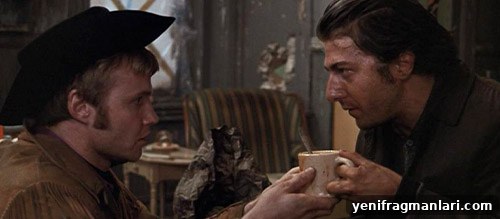
Representation matters, and Hollywood’s track record has often been uneven. In Midnight Cowboy, Dustin Hoffman’s portrayal of Rizzo offers a complex depiction of physical disability and chronic illness that avoids many reductive clichés. Rizzo’s limp and declining health are clearly part of his character, but they do not define him entirely. He is ambitious, cunning, tender, and bitter in equal measure.
Rizzo is neither a one-dimensional victim nor a cartoonish villain. His small acts of theft and desperation are framed by the realities of poverty and social neglect. Rather than a plot that revolves solely around a quest for cure or pity, the film shows Rizzo pursuing security and companionship—universal human needs that happen to exist alongside his disability. This layered approach lets the audience see his dignity and vulnerability without turning the disability into spectacle.
There are moments when Rizzo’s behavior aligns with problematic tropes, but those choices are contextualized as responses to systemic failures. The film’s broader critique is aimed at society: Rizzo becomes a trickster, a victim, and an antagonist because the social structures around him leave him little choice. Hoffman and Schlesinger present a portrait that humanizes a marginal figure rather than reducing him to a moral lesson.
3. Its Discussion Around Gender
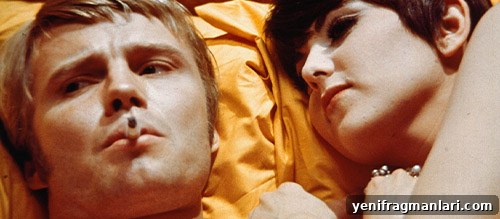
Although the film is clearly of its time, Midnight Cowboy engages with themes of gender, masculinity, and role expectation in ways that still speak to contemporary debates. Joe Buck’s self-fashioning as a cowboy—an icon of hypermasculinity—reveals the fragility behind such posturing. His bravado masks deep loneliness, trauma, and a yearning for connection.
Joe’s arc subverts gendered expectations: his attempt to earn a living as a gigolo for older, affluent women mirrors narratives historically associated with female protagonists who travel to cities seeking independence or survival. This role-reversal invites viewers to consider how societal pressures and gender norms shape behavior and identity.
The film also examines how unresolved trauma, religious shame, and neglect contribute to expressions of toxic masculinity. Joe’s violent outbursts, emotional repression, and desperate search for intimacy are portrayed as consequences of his past abuse and abandonment. By the film’s end, Joe’s evolution toward tenderness and care—particularly in his relationship with Rizzo—serves as a critique of the performative toughness he initially embraces.
4. Historical LGBTQ+ Representation
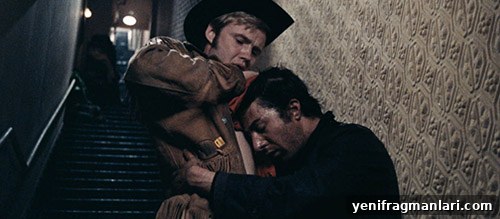
Midnight Cowboy has generated lively debate about whether the central relationship is platonic, queer, or deliberately ambiguous. That ongoing conversation underlines the film’s historical significance: it captures a moment when filmmakers were beginning to portray non-normative sexuality on screen, often under the constraints of censorship and social stigma.
The film includes moments of explicit homophobia as well as scenes of tenderness and intimacy between Joe and Rizzo. Those clashes reflect the reality of internalized homophobia, religious guilt, and societal exclusion that shaped many lives in the era. Director John Schlesinger, an openly gay man, and the actors approached the material in ways that suggest authenticity rather than exploitation. The result is a complex depiction in which queer readings can coexist with evidence of prejudice and violence.
Even when the film’s language or incidents feel uncomfortable to modern viewers, the subtler elements—shared domestic moments, caregiving, imagined futures together—provide meaningful representations of intimacy beyond labels. Midnight Cowboy helped open space for subsequent, more explicit LGBTQ+ storytelling in the 1970s and beyond.
5. The Story
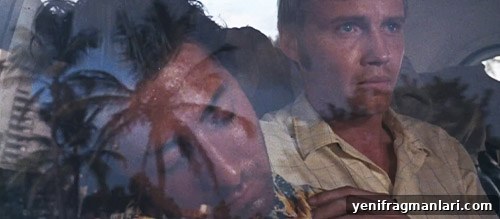
Based on James Leo Herlihy’s 1965 novel about New York’s marginalized characters, Midnight Cowboy combines gritty source material with Schlesinger’s empathetic direction and the unrivaled performances of its leads. The film presents an unflinching look at people living on society’s margins and insists on their full humanity.
This is not a sensationalized exposé of “seedy” life for voyeuristic thrill; instead, the film reveals how ordinary dreams of companionship, security, and dignity persist even amid hardship. Joe and Rizzo are separated from those in comfort not by character but by circumstance—money, opportunity, social support. Their hopes, however modest, are the film’s moral center.
Loneliness is the story’s driving force: Joe’s abandonment and trauma, Rizzo’s years of survival on the streets, and the brutal indifference of the city all contribute to an atmosphere of isolation. Yet the relationship that forms between them—often funny, always human—becomes a small, fierce defense against that desolation. The final arc refuses a simple moralizing conclusion and instead points to a larger indictment: the true failure lies not in these men but in a society that offers them no real refuge.
Midnight Cowboy remains essential viewing because it combines extraordinary performances, honest representations of marginal lives, incisive gender and sexuality commentary, and a story that refuses easy answers. It is a film that still challenges viewers and rewards those willing to engage with its emotional complexity and social critique.
Recommended reading: 5 Must-Watch Early British LGBTQ+ Films