
Maestro (2023)
Director: Bradley Cooper
Screenwriter: Bradley Cooper, Josh Singer
Starring: Bradley Cooper, Carey Mulligan, Matt Bomer, Maya Hawke, Sarah Silverman, Sam Nivola
When On the Waterfront opened in 1954, Leonard Bernstein’s score drew critical praise nearly equal to that given to the film’s performances and direction. It remains notable that Bernstein contributed so little originally intended for cinema, given the pervasive influence of his stage work—West Side Story being the most enduring example of his musical legacy, though written for the theater. That makes Bradley Cooper’s biopic, Maestro, the second substantial film representation of Bernstein’s music and life to appear on screen in a form meant to chronicle the man himself.
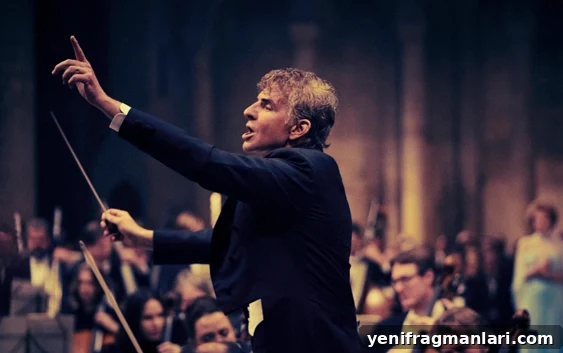
Bradley Cooper writes, directs and stars as Bernstein, a bold creative choice that reveals both Cooper’s confidence and his ambition. The film attempts to trace the arc of Bernstein’s life and work, moving from an older, reflective Leonard to the younger, restless musician of the 1940s. By structuring the film across decades, Maestro gives itself the chance to observe how a single personality responds to changing stages of fame, creativity, domestic life and personal turmoil.
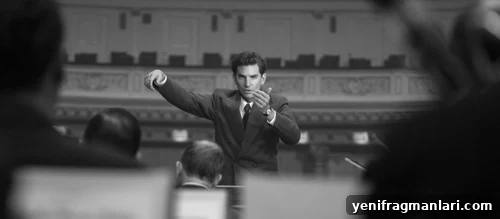
One of the film’s strengths is how style and substance intertwine. Cooper’s performance shifts with the era: the younger Bernstein is more theatrical, intense and driven; the older Bernstein is weathered, looser in manner and haunted by time. These shifts are supported by deliberate visual and production choices. Cinematography, set design and color grading evolve to match each period, not merely by using black-and-white for flashback sequences but by altering texture, composition and lighting to evoke the feel of the 1940s, the 1970s and later years. These stylistic decisions help ground the viewer in each era and provide a cinematic shorthand for the changes in Bernstein’s life.
Carey Mulligan’s portrayal of Felicia Bernstein is a counterpoint to Cooper’s volatility. Where Leonard is combustible and mercurial, Felicia remains steady, grounded and quietly resilient. Mulligan’s performance offers a stable emotional center: it explains, without excusing, why Bernstein’s life had a stabilizing presence even while he pursued personal and professional risks. Their relationship is depicted as warm and complex—less a fairy-tale romance than a long-term partnership tempered by loyalty, disappointment and mutual dependence.

Bernstein emerges on screen as a deeply flawed, charismatic figure whose impulses often carry him beyond conventional judgment. Maestro does not attempt to sanitize those flaws or build a myth around them; instead it presents the contradictions plainly. The film resists glamorizing his worst choices, but it also offers context that helps the audience understand how such a brilliant mind could make self-destructive decisions. In that sense, sympathetic nuance is achieved through honest, sometimes uncomfortable, depiction rather than through justification.
The movie’s focus is intentionally domestic and intimate at times, privileging personal moments and private tensions over a hagiographic account of achievements. This perspective aligns it with recent films that examine the human costs of genius rather than simply celebrating public triumphs. By paying attention to Bernstein’s relationships, the film explains how his artistry and his temperament were shaped by the people and the era around him.
Maestro also distinguishes itself by refusing to inflate its subject into a flawless icon. Where some biopics tend to gloss over moral or personal failings for the sake of a triumphant narrative, this film keeps the balance between admiration and critique. It celebrates Bernstein’s contributions to American music while keeping his imperfections visible, making the portrayal more honest and ultimately more affecting.
The production design and period detail are particularly effective. When the story returns to the 1940s, costumes, hair and interiors conjure a feeling that could sit comfortably within a classic black-and-white drama; the 1970s material feels grainier and more immediate, capturing a different cultural energy. Small design choices—lighting, camera movement, even the way scenes are edited—help the viewer feel shifts in time without heavy-handed exposition.
Taken together, Bradley Cooper’s direction, his performance and the contributions of his cast and crew make Maestro a thoughtful and overdue cinematic study of Leonard Bernstein. It’s a film that honors the scale and importance of its subject’s work while refusing to flatten him into either saint or sinner. The result is a layered, human portrait of a complicated and influential artist.
Score: 17/24
Rating: 3 out of 5.
Written by Rob Jones
You can support Rob Jones on his website: rbrtjones.com
Twitter: @rbrtjones