
Score: A
Director: Tom Ford
Cast: Amy Adams, Jake Gyllenhaal, Michael Shannon
Running Time: 116 min
Rated: R
Seven years after his striking debut with A Single Man, director Tom Ford returns with Nocturnal Animals, a layered psychological drama that doubles as a tense thriller. The film explores masculinity, regret, and the cost of choices through an elegant visual language and disciplined performances. It is a provocative piece that will interest film fans, critics, and anyone searching for a thoughtful, well-crafted modern psychological thriller.
The story centers on Susan, played by Amy Adams, a successful Los Angeles gallery owner trapped in a life of luxury and polite emptiness. When she receives a manuscript from her ex-husband, she reads a violent, suspenseful tale about a family threatened on a Texas highway. The screenplay folds the manuscript narrative into Susan’s present reality, alternating between her privileged Los Angeles world and the stark West Texas landscape of the novel. That structure—stories within stories—allows the film to examine character, motive, and consequence on several levels.
Amy Adams gives a restrained, precise performance as Susan, conveying a constrained sadness beneath a composed exterior. Her portrayal traces Susan from college into middle age, revealing the small changes that accumulate into a profound dissatisfaction. Adams’ expressive stillness and careful modulation of tone create a portrait of someone who has traded authenticity for comfort, and who is slowly forced to confront the aftermath of past decisions.
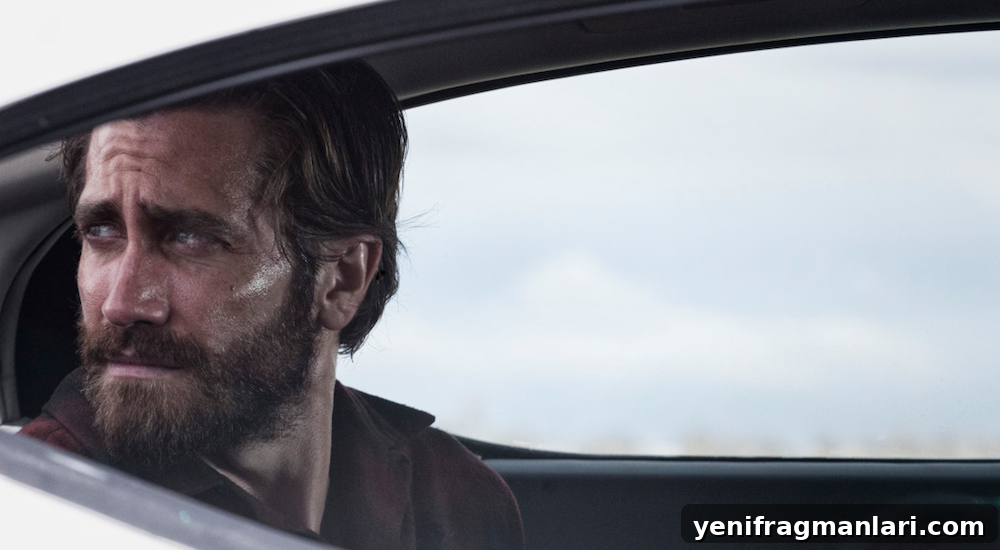
Jake Gyllenhaal delivers a compelling counterpoint as the man at the center of the manuscript’s violence. He inhabits the role(s) with physical and emotional specificity, switching register to signal different timelines and personas without resorting to broad gestures. Gyllenhaal balances vulnerability and menace in a way that underscores the film’s central questions about strength, cowardice, and retribution. His performance anchors the thriller elements while deepening the film’s psychological core.
Michael Shannon appears in a memorable supporting part that adds grit and dark humor, his presence grounding several crucial scenes. The cast also includes brief but effective turns from Isla Fisher and Laura Linney, both adding texture to the film’s social worlds. Together the ensemble contributes to a narrative that feels lived-in and morally ambiguous rather than schematic or purely sensational.
Visually, Nocturnal Animals is meticulously designed. Ford’s background in fashion and design shows in the composition of sets, color palettes, and costume choices. Cinematography contrasts the sterile opulence of Los Angeles with the raw, sunbaked expanses of West Texas, and sequences are often composed as striking tableaus. These careful visual decisions reinforce the film’s themes, linking memory and fiction, art and life.
The movie’s pacing shifts between contemplative character study and taut thriller. The manuscript sequences provide genuine suspense and keep momentum high, while the Los Angeles segments allow for quieter, more reflective moments. This balance generally works, delivering a film that is both intellectually engaging and viscerally suspenseful. Multiple viewings reveal further layers: visual motifs, parallelisms between the two narrative planes, and small performance choices that accumulate meaning.
Not everything lands perfectly. The opening-credit sequence is provocative and will likely divide audiences; some may find it a pointed critique of contemporary “edgy” art, while others will see it as gratuitous. The manuscript’s descent into a rape-and-revenge scenario also raises ethical questions. As a storytelling device it heightens stakes and explores trauma and retaliation, but it risks feeling familiar in a way that undercuts its emotional complexity—especially when the victims themselves are not present to participate in their own narrative resolution.
Despite these reservations, Nocturnal Animals is a rich, multi-layered film that rewards close attention. It is a thoughtful exploration of regret, masculinity, and the ways fiction can wound or heal. Tom Ford proves himself a confident filmmaker who can marry style with substance; his visual ambitions and narrative control make the film compelling, even when its choices are unsettling. For viewers interested in cinematic craft, psychological depth, and morally ambiguous storytelling, this is a film that merits discussion and repeated viewing.
Ultimately, Nocturnal Animals stands as a powerful entry in Ford’s filmography—visually arresting, narratively complex, and emotionally resonant. It will likely remain a film people return to for its performances, its striking imagery, and the questions it raises about responsibility, revenge, and the stories we tell ourselves to justify our lives.