
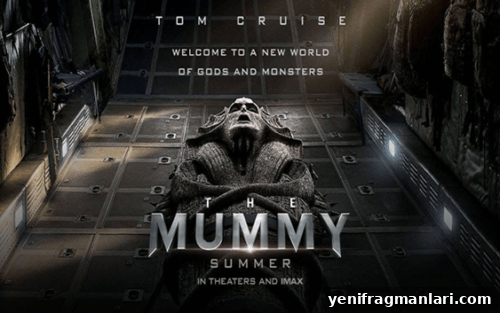
The Mummy (2017)
Director: Alex Kurtzman
Screenwriter: David Koepp, Dylan Kussman, Christopher McQuarrie
Starring: Tom Cruise, Sofia Boutella, Russell Crowe, Jake Johnson, Annabelle Wallis
As the opening entry in Universal’s proposed monster-filled “Dark Universe” — a cinematic attempt to assemble classic figures like Dracula, Frankenstein’s monster and the Invisible Man into a shared franchise — Alex Kurtzman’s The Mummy (2017) arrives as a Tom Cruise vehicle that often feels more like a flabby, undead take on Mission: Impossible than a faithful or satisfying reinvention of the classic monster film.
Positioned as a reimagining of the lighter, action-comedy 1999 version starring Brendan Fraser, this incarnation trades the previous film’s playful energy for a darker, more action-focused tone. Yet it fails to replace that lost charm with anything equally compelling. Despite warnings of “prolonged terror” in its UK 15/US PG-13 advisory, the movie frequently undercuts suspense: plot beats are resolved or explained so quickly that tension never has time to build. Rather than deepening the mythology, the film flits between set pieces and exposition, leaving much of ancient Egyptian belief and atmosphere reduced to shorthand.
One of the film’s most significant missteps is its treatment of the title creature. A mummy, by definition, evokes specific cultural and historical associations — embalming, tomb rites, sacred animals like cats, and a very particular kind of ancient horror. Here, however, the antagonist is written with the attributes of a generic zombie queen: reanimated throngs, mindless hordes and regenerative rituals more akin to modern undead tropes than to the unique dread a true mummy story can summon. The movie briefly links this reanimation to an alliance with an ancient god of death, but that explanation is hurried and vague, leaving many thematic opportunities unexplored.
Structurally the film struggles as well. It devotes a long opening stretch to multiple introductory sequences that collectively delay the forward momentum. It takes roughly 40 minutes for the central narrative to take hold — a notable issue for a film that runs just under two hours. Until that point, viewers face uneven dialogue and thin characterization. Comic-relief moments, primarily delivered by Jake Johnson’s Chris Vail, fall flat because they often amount to stating the obvious rather than offering fresh humor or insight. The screenplay leans on familiar, tired stereotypes: the tough, candid Black army officer, the loyal North African assassin archetype, and so on — stock parts that add little depth to the supporting cast.
Tom Cruise’s star persona is a persistent presence here, to the film’s detriment. The nearly 55-year-old actor is presented in the kind of ageless, hyper-attractive light that many contemporary blockbusters afford their leads — a portrayal that strains believability and distracts from the story. The chemistry with Annabelle Wallis’s character also follows a predictable pattern: Wallis, who is significantly younger, embodies the archetypal capable-but-out-of-his-league female lead who inevitably becomes the romantic interest. That dynamic is handled with little subtlety and adds another layer of one-note characterization.
Where the film does succeed is in its visual craft. The visual effects team delivers consistently capable CGI: action sequences and supernatural set pieces are slick and often impressive. Ben Seresin’s cinematography contributes a moody palette that occasionally evokes the atmosphere of earlier monster pictures, lending some visual cohesion to the disparate elements. Production design and makeup work are also strong — the latter especially effective at selling the physical presence of the undead despite the script’s tendency to veer toward generic zombie aesthetics. Those production values help the movie feel polished even when the storytelling falters.
Ultimately, The Mummy (2017) fails to serve as the galvanizing opener Universal hoped for. The project too often reads as a Tom Cruise action film that happens to include an ancient Egyptian antagonist, rather than a thoughtful revival of a horror icon. It mimics the surface thrills of blockbuster franchise filmmaking — glossy stunts, sleek visuals, star power — but lacks the narrative clarity, compelling characterization, and distinct mythic identity that would make a shared monster universe intriguing.
There is some hope that the technical strengths displayed here — visual effects, production design, and cinematography — will benefit future entries in the Dark Universe. Whether subsequent films can build a stronger tonal center and respect the unique qualities of each classic monster remains to be seen. For now, though, this first offering lands poorly: visually competent but narratively hollow.
Score: 7/24