
The Beguiled (2017)
Director: Sofia Coppola
Screenwriter: Sofia Coppola
Starring: Nicole Kidman, Kirsten Dunst, Colin Farrell, Elle Fanning, Oona Laurence, Angourie Rice
Sofia Coppola, known for intimate, atmospheric films such as The Virgin Suicides, Lost in Translation, and Marie Antoinette, revisits and reimagines the 1971 story of The Beguiled. Rather than simply remaking the earlier film, Coppola flips the narrative perspective to center the women at a Confederate girls’ school, transforming the tale into a tense, character-driven study of power, desire, and rivalry.
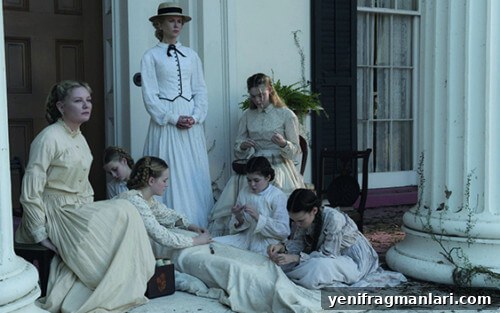
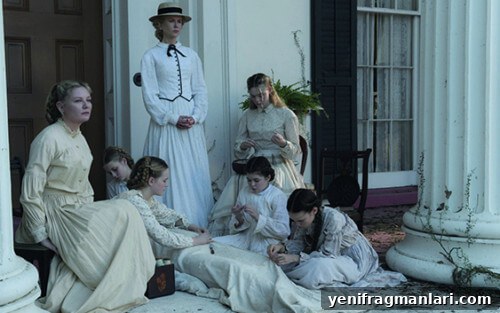
Coppola’s version reframes the original plot—a wounded Union soldier taken in by the school—by placing the emotional and moral weight squarely on the women who shelter and contest him. This shift allows the director to sidestep the exploitative elements of the earlier film and to build a slow-burning thriller that feels both deliberate and modern. The visual collaboration with cinematographer Philippe Le Sourd reinforces this approach: many frames are composed like Civil War-era paintings, and recurring static shots create a sense of memory and shifting perspective throughout the film.
The film’s measured pacing is a stylistic choice that gives space for small details to mount into tension. Coppola frequently lingers on minimal movement, refusing quick cuts and instead letting scenes breathe. That restraint amplifies moments of revelation and forces the audience to re-evaluate what seemed familiar. It also invites viewers to reconsider the original film’s assumptions by presenting the same basic scenario through a distinctly female gaze.
Sound design plays a crucial supporting role, subtly heightening suspense without resorting to loud cues or obvious manipulation. Distant gunfire becomes a recurring motif, a quiet reminder of the war’s presence beyond the school’s walls. This underplayed soundscape complements the film’s visual restraint and helps focus attention on the performances at the story’s center.
Nicole Kidman delivers the film’s most striking performance as the school’s austere headmistress. Her portrayal balances authority and vulnerability with remarkable nuance; a controlled exterior frequently hints at deeper, unspoken emotions. Kidman’s understated choices ground the film and give its emotional stakes a credible, human core.
Colin Farrell, cast against type as the injured corporal, brings a roguish charm that unsettles the women who care for him. His performance relies partly on the actor’s innate screen persona and partly on subtle shifts that reveal how his presence disturbs the fragile equilibrium of the household. Together, Kidman and Farrell create a charged dynamic that drives much of the film’s tension.
Kirsten Dunst stands out as the film’s emotional anchor. Her character, often the lens through which group dynamics are revealed, embodies longing and disillusionment. Dunst’s performance gives the story its most sympathetic center: a woman who seeks escape and affection and whose internal struggles illuminate the social pressures and interpersonal fractures within the group.
The film intentionally narrows its world to eight characters and three main locations—the school, the gardens, and the nearby woods. This tight focus reduces the Civil War to a background presence and concentrates the drama on interpersonal conflict. Soldiers and outside forces appear only in brief, distanced glimpses, making the central confrontation feel intimate and contained.
Not everything in Coppola’s approach is seamless. A handful of interstitial shots used to mark time sometimes feel out of place next to the film’s otherwise restrained editing, disrupting momentum rather than enhancing it. Those occasional editorial choices read as modern insertions that contrast with the film’s otherwise classical framing, and they can momentarily pull the viewer out of the carefully built atmosphere.
Another potential disconnect lies between the film’s promotional materials and its actual tone. Marketing emphasized lurid elements—blood and murder—that are sparse in the finished film. Coppola’s version trades explicit violence for psychological tension, which may disappoint viewers expecting a more visceral thriller but rewards those open to a subtler, character-first experience.
Ultimately, The Beguiled is an artistic reworking that merits attention for both its craft and its perspective. It foregrounds women as individuals and as a collective force, turning a familiar narrative into a nuanced meditation on desire, control, and consequence. Performances—particularly from Kidman and Dunst—anchor the film, while Le Sourd’s cinematography and the understated sound design create one of Coppola’s most atmospherically rich works.
While the film is not the violent, raucous affair some viewers might expect from its promotional tone, it succeeds as a tense, elegant thriller told from a female point of view. Coppola’s work on this picture earned significant recognition, and she became only the second woman to win the Best Director award at the Cannes Film Festival for this film. Whether The Beguiled will grow in stature on repeated viewings remains to be seen, but as a focused, visually striking piece of independent cinema it is well worth watching—especially for fans of Coppola’s distinctive, European-influenced style.
Score: 19/24
Recommended for you: Sofia Coppola Movies Ranked