

HARD TRUTHS Film Review: Marianne Jean-Baptiste Shines

Hard Truths is the latest feature from veteran director Mike Leigh, a filmmaker whose work has long been valued for its naturalism and keen observation of ordinary lives. Leigh’s career includes distinctive films such as Naked, Life Is Sweet, and Secrets and Lies, the last of which earned multiple Academy Award nominations in 1997 and brought Marianne Jean-Baptiste a supporting actress nomination. Nearly three decades after that recognition, Jean-Baptiste reunites with Leigh and delivers a commanding lead performance that anchors a film committed to understated realism.
Performance and Characters
Marianne Jean-Baptiste plays Pansy, a woman whose exterior is mostly anger and irritation, yet whose interior is shot through with grief and fragile vulnerability. The role is built on small behavioral details: the way she grips the steering wheel, the abruptness of her voice, a momentary stiffness that suggests long-standing emotional pain. Leigh’s approach here is deliberate; Jean-Baptiste is given room to reveal layers slowly, and the payoff arrives when the veneer begins to crack and more tender, private emotions surface.
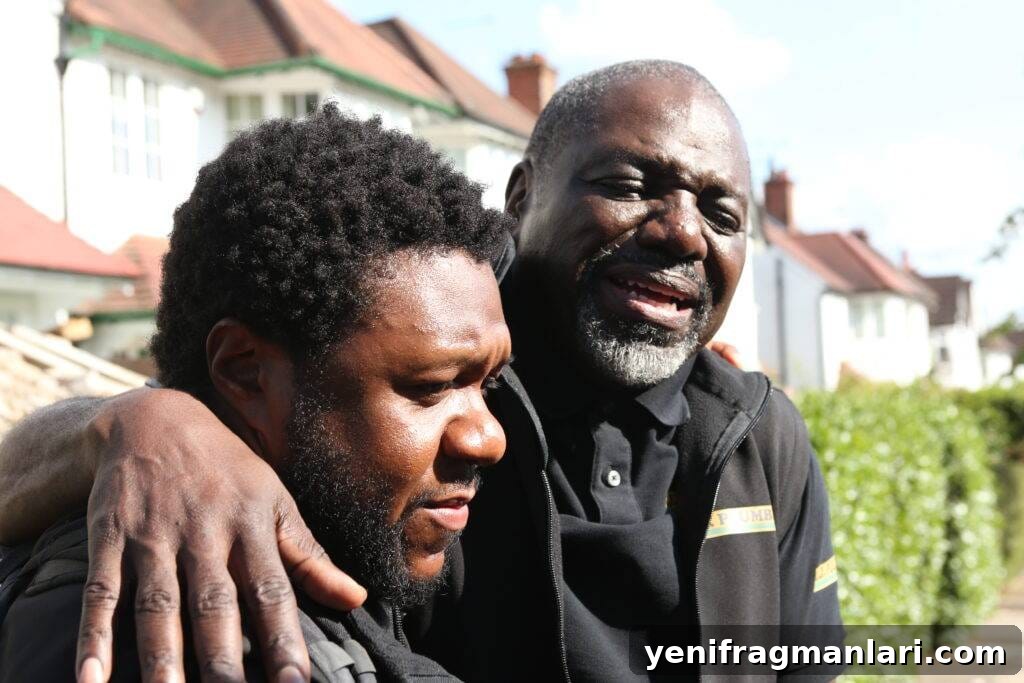
The supporting cast offers commendable, subtle work. The relationship between Pansy and her sister provides some of the film’s most affecting scenes, where dialogue and silences work in tandem to suggest histories not spelled out on screen. Tuwaine Barrett, who plays Pansy’s son, is notable for the economy of his performance. He speaks little, but his expressions and inhibited manner convey adolescent distance and the weight of family friction in ways that complement Jean-Baptiste’s more volatile energy.
Direction and Visual Style
This is quintessential Mike Leigh filmmaking: naturalistic, spare, and attentive to the small rituals of everyday life. Visually, Hard Truths avoids flashy flourishes. Color and camera movement are restrained; scenes are lit and framed to resemble ordinary reality rather than stylized cinema. That aesthetic choice reinforces the film’s themes — it invites viewers to meet characters where they are, in the humdrum moments between dramatic beats.
Leigh uses composition and pacing to emphasize character states rather than plot mechanics. Early on, a long pan across a neighborhood that centers on Pansy’s house subtly signals the film’s interest in place and routine. Lighting choices, like the recurring image of Pansy’s face split between shadow and light as she lies in bed, act as visual shorthand for inner conflict without ever tipping into melodrama.
Pacing, Structure, and Emotional Reach
The film opens slowly; dialogue is sparse at first, allowing mood and behavior to set the tone. For some viewers this measured pace will feel immersive and truthful, while others may find it frustratingly elliptical. For a significant portion of the first half, Pansy remains a mostly closed, angry figure. It’s only as the narrative progresses that her defenses begin to crack and the emotional stakes rise.
The movie resists tidy resolutions. Leigh is less interested in providing a clean narrative arc than in depicting people as ongoing, messy presences whose lives rarely solve themselves. The film’s ambiguous ending is consistent with that perspective, though it may leave audiences wanting more closure or more overt transformation.
Thematic Notes
Hard Truths explores isolation, family rupture, and the difficulty of connection. Its primary strength lies in how it portrays emotional distance as an accumulation of small fails and miscommunications rather than a single catastrophic event. The film asks the audience to sit with discomfort and to recognize how ordinary routines can both mask and reveal pain.
Final Thoughts
Marianne Jean-Baptiste’s performance is the film’s central achievement: restrained, precise, and able to convey a complex interior life without resorting to spectacle. While Hard Truths may not reach the emotional peaks of some of Leigh’s earlier masterpieces, it offers a thoughtful, character-driven study that will resonate with viewers who appreciate intimate, realist drama. If you value acting that unfolds through behavior and silences, and direction that favors human truth over dramatic fireworks, this film is worth your attention.
Hard Truths will likely divide viewers: some will admire its patience and fidelity to lived experience, while others will wish for clearer narrative momentum or more overt catharsis. Taken on its own terms, though, it confirms Leigh’s ongoing commitment to character-driven storytelling and reminds us why performances grounded in small, truthful details can have long-lasting resonance.
Check out More:
- Sundance Coverage
- Interviews
- Film Reviews