
M. Night Shyamalan’s Signs: Alien Invasion or a Spiritual Purge?
M. Night Shyamalan made his name on twist endings, and for many viewers his early films—most notably The Sixth Sense and Unbreakable—cemented him as the director of the unexpected reveal. Signs (2002) is often discussed in the same breath, but its twist—creatures apparently defeated by contact with water—left critics divided. Why would an invading species target a planet that is mostly water if exposure is so lethal? The surface answer raises practical objections, but a closer reading of the film suggests the “aliens” might not be extraterrestrials at all.
Reading Signs as a supernatural or theological story rather than a straightforward alien-invasion thriller offers a coherent alternative. Shyamalan deliberately filters almost all information about the intruders through secondary sources—television reports, radio chatter, books and townsfolk—rather than granting the camera an authoritative, omniscient perspective on the creatures themselves. This narrative choice encourages doubt about the conventional alien interpretation and opens the door to symbolic readings.
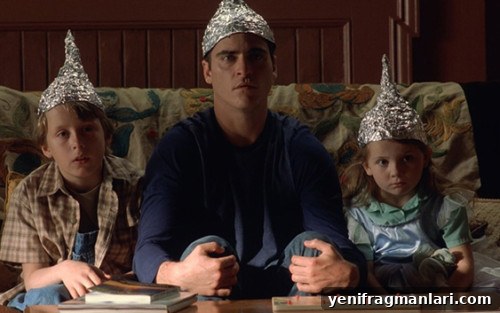
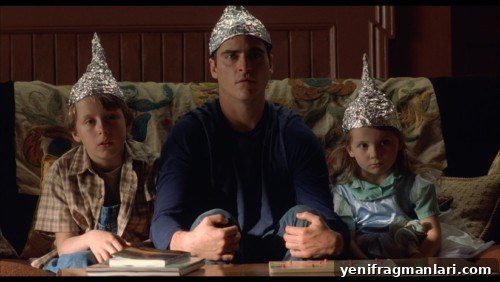
The film centers on the Hess family: a former reverend played by Mel Gibson, his brother Merrill (Joaquin Phoenix), and the reverend’s two children, Morgan and Bo (Rory Culkin and Abigail Breslin). The family encounters unexplained phenomena: crop circles, nocturnal intrusions, odd sounds on a baby monitor, and a sense that they are not alone. Yet the cinematic vantage point rarely shows the intruders directly; when it does, we still lack definitive proof they are aliens. Instead, much of the “evidence” is hearsay—television speculation, a borrowed book on extraterrestrials, and the townspeople’s anxious theories.
Shyamalan pairs that indirect storytelling with a strong theological thread. The reverend’s traumatic memory—his wife’s death, accompanied by the words “swing away”—frames his struggle with faith and grief. That moment becomes crucial later, functioning as a divine hint rather than a random coincidence. Similarly, each family member demonstrates a peculiar trait that proves lifesaving: Bo’s germ aversion and reluctance to drink water she believes is contaminated; Merrill’s baseball skill and physical courage; Morgan’s asthma, which has an unexpected role in the story’s outcome. These traits read like gifts tailored to ensure survival, and Shyamalan frames them in a way that resonates with providence or destiny.
Another important storytelling device is Shyamalan’s use of “signs” in both the literal and symbolic sense. Crop patterns and eerie noises function as plot mechanics, but they also echo religious language: signs, tests, and divine messages. The film’s climax, in which water plays the decisive role, can be interpreted as an act of holy protection rather than a conveniently absurd biological weakness of an extraterrestrial invader. If the intruders are demons or malevolent spiritual beings, the presence of water—holy water in cups placed around the room by Bo—becomes meaningful within a religious logic: a purifying force that repels unholy entities.
This demonic or angelic purge reading resolves the film’s central logical problem. A technologically advanced alien species would not plausibly invade a mostly aquatic world with a fatal aversion to water. But if the antagonists are spiritual beings—demons or fallen angels sent to test or punish humanity—the inconsistency vanishes. The “invaders” are not constrained by physical biology in the same way, and their defeat by water aligns with longstanding religious imagery of water as cleansing and protective.
Shyamalan’s refusal to show definitive, scientific evidence that the invaders are extraterrestrial further supports this interpretation. He deliberately structures the film so that human testimony, faith, and personal experience determine the truth. The camera’s perspective privileges the reverend’s flashbacks and the family’s subjective reality, making Signs less an exercise in genre-motivated spectacle and more a study of belief, doubt, and providence under pressure.
Seen this way, the film’s moral architecture becomes clearer: the seemingly tragic and the apparently random can be recast as part of a larger, divine plan. The reverend’s loss, Morgan’s asthma, Bo’s fastidious habits, and Merrill’s physical gifts are not arbitrary—each contributes to survival and suggests that grace operates through imperfect, human means. Whether you read the intruders as demons being purged or as another form of supernatural judgment, the film places God—or fate, providence, or moral test—at its narrative center.
Ultimately, Signs benefits from the ambiguity Shyamalan cultivates. By never fully confirming the creatures’ extraterrestrial origin, the film invites viewers to interpret the events through personal lenses: scientific skepticism, religious faith, or a mix of both. This openness makes Signs richer than a single-meaning blockbuster and explains why debate over its true nature endures.
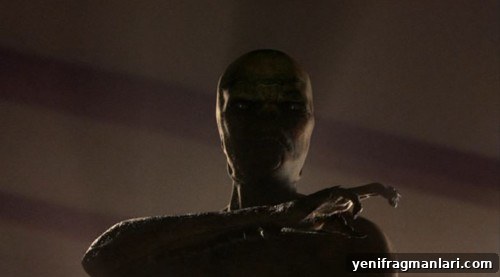
Do the creatures in Signs look more like aliens or like demonic figures to you? The film’s ambiguous clues and its emphasis on faith suggest that Shyamalan intentionally left room for both readings. That interpretive openness is part of what keeps the movie fascinating more than two decades after its release.
Recommended for you: M. Night Shyamalan Directed Movies Ranked