

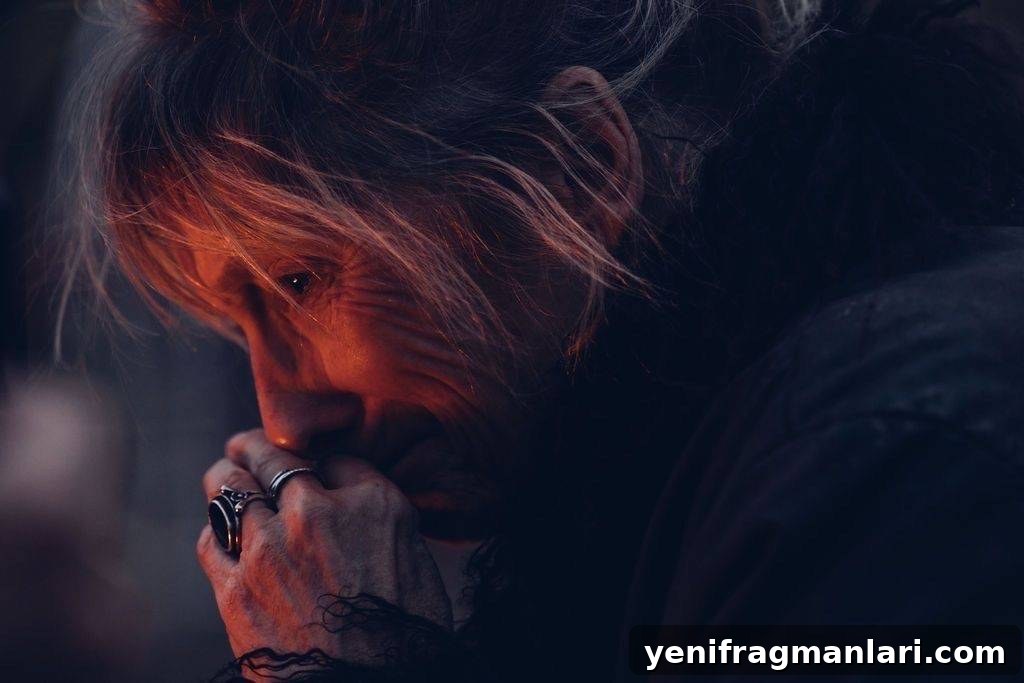
The Well is a restrained, character-driven post-apocalyptic thriller that trades spectacle for quiet observation. Directed by Hubert Davis, who is best known for documentary work including the Oscar-recognized short Hardwood, the film applies a documentary eye to fictional material. The result is a focused drama that prioritizes human detail and emotional truth over action set pieces, allowing mood, behavior, and setting to carry much of the film’s weight.
The film had its premiere on July 21, 2025, at the Fantasia International Film Festival.
What The Well Is About
Set in a near future where potable water is scarce and most supplies are contaminated, The Well centers on a small family fiercely guarding a clean reservoir tucked away on an isolated property. Sarah Devine (played by Shailyn Pierre-Dixon) lives with her parents, Elisha (Joanne Boland) and Paul (Arnold Pinnock), in a household built on mutual vigilance and fragile trust. When a young man named Jamie (Idrissa Sanogo) is captured in one of their traps claiming to be a long-lost relative, the household’s cohesion begins to fray.
A mechanical failure—a crack in the filtration system—forces Sarah and Jamie to leave the safety of the estate in search of a replacement part. Their journey leads them to a fortified compound run by Gabriel (Sheila McCarthy), a community where order and security come at a price. From this set-up, the film examines how fear, suspicion, and hope shape ordinary relationships under extreme pressure.
Hubert Davis’s Direction and the Film’s Pace
As Davis’s first feature-length narrative, The Well clearly reflects his documentary instincts. He resists needless plot contrivances, preferring to linger on the aftermath of choices and on small human gestures that reveal character. The pacing is intentional and measured; scenes are allowed to breathe so that tension arises naturally from what people do and do not say. Audiences expecting constant escalation might find the tempo subdued, but the film’s rhythms are designed to deepen our sense of who these characters are and what they carry with them.
Davis distributes attention across several perspectives instead of concentrating on a single survival protagonist. This broadened focus underscores the varied ways people respond to scarcity and moral dilemmas, even if it limits the time we spend inside any one character’s head. Sarah functions as the emotional anchor, her quieter optimism juxtaposed against her parents’ hardened pragmatism. Through her point of view, the film explores the persistence of trust and compassion in a world that rewards suspicion.
Cinematography and Visual Design

Shot in the fall of 2023 around Hamilton, Ontario, the film’s visuals favor low-key lighting and a palette in which deep blues and muted tones dominate. Cinematographer Stuart James Cameron and Davis often compose scenes with a documentary-like economy, letting the camera follow, drift, and reframe as characters move through interior and exterior spaces. When the camera does lock off, those moments are deliberate—held to emphasize small acts of survival, the mechanics of water, or the fragile beauty found in natural detail.
Memory sequences are treated distinctly: softer, more diffuse, and almost dreamlike, they contrast with the clearer, harder look of the present. The film also makes subtle use of anamorphic glass, producing slight edge distortion that draws attention to the margins and creates an uneasy sense that safety is always precarious. These visual choices reinforce the film’s central idea: security is local, conditional, and easily unsettled.
Is The Well Worth Watching?
The Well is a patient, thoughtful addition to the post-apocalyptic genre. It revisits familiar themes—environmental collapse, ethical dilemmas around scarcity, and the tension between protection and openness—but treats them with consistent visual restraint and intimate storytelling. Because the narrative widens its focus beyond a single hero, the film reads as a mosaic of responses to hardship rather than a standard survival thriller. Some viewers may wish for more sustained access to Sarah’s interior life, while others will appreciate the film’s broader reflection on human behavior under pressure.
In the end, The Well will not satisfy every appetite for high-stakes spectacle, but it offers a humane, observant take on survival that benefits from Davis’s documentary background. The film gives its characters space to register as complex people, and its steady craftsmanship keeps the viewer engaged. The movie premiered at Fantasia and has Canadian distribution with Vortex Media; XYZ Films holds international rights.