
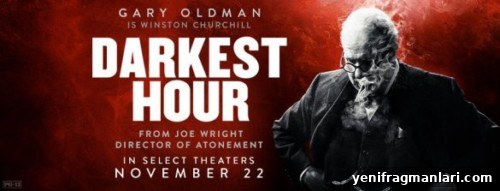
Darkest Hour (2018)
Director: Joe Wright
Screenwriter: Anthony McCarten
Starring: Gary Oldman, Stephen Dillane, Lily James, Ben Mendelsohn, Ronald Pickup, Kristin Scott Thomas
Joe Wright’s Darkest Hour recounts the critical fortnight after Winston Churchill became British prime minister, centered on the crisis that culminated in the Dunkirk evacuation. The film struggles at times with heavy-handed screenwriting choices and visually showy decisions, and it carries a nostalgic perspective that can feel ideologically dated. Nevertheless, Gary Oldman’s astonishing central performance elevates the movie, shaping a humane and surprisingly sympathetic portrait of a controversial historical figure. For viewers drawn to actor-led biopics, Darkest Hour delivers powerful acting even when its politics and scripting feel uneven.
Darkest Hour follows a familiar biopic pattern: an influential, upper-class figure who encounters people of lesser social standing and appears to learn from those interactions. The film frequently aims to humanize Churchill by showing moments in which he connects with ordinary citizens, suggesting that these encounters help shape his decisions. Some of these scenes — notably a sequence on the London Underground where Churchill listens to the public — are intended to show the prime minister becoming a “man of the people.” While such moments are meant to build empathy, they can come across as simplistic, as if proximity to suffering is a quick path to moral insight.
These attempts at humanization are often reductive. The script sometimes substitutes blunt exposition for subtle characterization, spelling out historical facts in dialogue rather than allowing events to reveal complexity. For example, the screenplay explicitly names controversial events and illnesses rather than weaving them into the narrative more naturally. That tendency undermines the film’s emotional impact and flattens nuance, reducing complicated political decisions to easily digestible lines. As a result, the movie occasionally reads less like an honest examination of Churchill’s strengths and flaws and more like a cinematic statement that prioritizes certain political viewpoints.
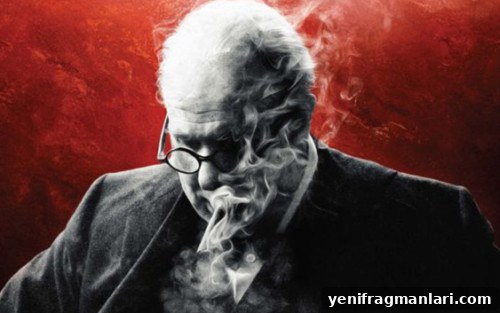
Despite the script’s shortcomings, the performances anchor the film. Gary Oldman delivers a transformative portrayal of Winston Churchill, combining physical metamorphosis with tender, nuanced acting. Oldman renders the prime minister as both vulnerable and formidable: someone capable of deep feeling and stubborn resolve. His performance brings a necessary humanity to a character whose historical record is mixed, allowing the audience to experience Churchill’s emotional and moral conflicts up close. This is the defining strength of the film and the reason many viewers will find it compelling.
Supporting performances are strong as well. Lily James provides a quieter but effective counterbalance to Oldman’s intensity, and the ensemble cast contributes credibility to the film’s dramatic stakes. Director Joe Wright keeps the camera focused on Churchill’s arc, which helps the film maintain a consistent emotional throughline even when other elements become cluttered. At times Wright’s visual instincts feel overly ornate — extended tracking shots and large, modern title cards can distract rather than enhance — yet the decision to tether the audience to Churchill’s perspective is a smart one that clarifies the story’s priorities.
Editing plays a key role in shaping the film’s momentum. The pacing steadily builds toward the story’s climactic moments, especially speeches that form the film’s emotional high points. These sequences succeed because they rely on performance and rhythm rather than on exposition-heavy dialogue. Still, the film rarely confronts Churchill’s political missteps with the depth they deserve, choosing instead to frame his doubts and errors in ways that ultimately reinforce his heroic stature.
In summary, Darkest Hour is not a flawless historical drama. Its screenplay is often on-the-nose, and its visual flourishes sometimes distract from the subject’s gravity. Politically, the film leans toward a celebratory view of wartime leadership that will not satisfy every viewer seeking a balanced appraisal. Yet the movie transcends many of these flaws through stellar performances — above all Gary Oldman’s — and disciplined direction that keeps the narrative centered on its protagonist. For audiences who appreciate actor-driven biographies and powerful portrayals of leadership under pressure, Darkest Hour is a watchable and occasionally moving film, even if it stops short of becoming a definitive or deeply probing portrait of Churchill.
Score: 14/24