
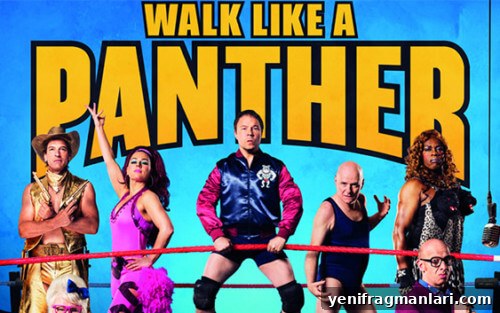

Walk Like A Panther (2018)
Director: Dan Cadan
Screenwriter: Dan Cadan
Starring: Stephen Graham, Dave Johns, Michael Socha, Jason Flemyng, Julian Sands, Jill Halfpenny, Robbie Gee, Stephen Tompkinson, Sue Johnston, Christopher Fairbank, Adam Fogerty, Steve Furst
Dan Cadan’s Walk Like A Panther is a heartfelt tribute to British pro wrestling that arrives with good intentions and a warm cast but falls short in several key filmmaking areas. The movie benefits from an enthusiastic ensemble led by Stephen Graham, and it clearly wants to celebrate the camaraderie and spectacle of wrestling’s past. Unfortunately, the screenplay’s uneven tone, some awkwardly staged emotional beats, and heavy-handed musical choices limit the film’s impact and prevent it from fully delivering on its promise.
At its best, the production conveys an uplifting spirit: a Yorkshire community banding together against the encroachment of corporate interests and a small-town wrestling scene trying to reclaim its dignity. Scenes that focus on the characters’ relationships—both inside and outside the ring—are warm and engaging, while moments of genuine humor and nostalgia remind viewers why British wrestling has a devoted following. Jason Flemyng adds texture in a smaller role, and Stephen Graham anchors the story with a committed central performance that keeps the audience invested even when the script falters.
Yet the script suffers from inconsistency. The film sometimes struggles to decide whether it portrays wrestling as a legitimate competitive sport or as staged entertainment. This ambiguity undercuts some of the narrative stakes: the protagonist’s need to prove himself loses tension when the boundaries between real contest and choreographed performance are unclear. Matches and backstage scenes occasionally show choreography and planning, while other moments demand the emotional weight of a real sporting victory—leaving the viewer unsure how to interpret crucial plot developments.
Another persistent problem is the editing, which often disrupts the film’s rhythm. Cuts feel abrupt at times, and scene transitions can be jarring, robbing sequences of momentum and diminishing the emotional payoff. The pacing struggles to find a consistent groove; when the film slows down for sentimental beats, it can linger too long, and when it tries to build excitement for major matches, it sometimes lacks the visual coherence to make those sequences feel climactic.
Musical choices also work against the film in key moments. Rather than subtly supporting emotion and atmosphere, the soundtrack frequently telegraphs how the audience should feel, which reduces the power of quieter scenes. When music pushes too hard, the sincerity of the performances is diluted and jokes land with less frequency than they should. That said, the film’s affection for the era of British wrestling is evident and often contagious, especially during scenes that highlight the camaraderie and showmanship of the performers.
Structurally, several storylines feel underdeveloped or inconsistently resolved. Characters are introduced with the promise of larger arcs—rivalries, personal showdowns, and potential defining matches—but not all receive satisfying conclusions. Wrestling fans might expect certain matchups to come to fruition based on early setup, and when these expected confrontations are downplayed or diverted, it can feel like a missed opportunity. Despite this, the filmmakers give supporting characters some room to breathe, and many performers bring individuality to their roles, both in the ring and in the community scenes.
For viewers who come to the film primarily for its warm-hearted depiction of a small town fighting back and its affectionate nods to classic British wrestling, Walk Like A Panther will likely be an enjoyable, if imperfect, experience. It’s not a flawless sports drama—its screenplay, editing, and soundtrack could all use refinement—but it offers moments of genuine charm and an appealing ensemble that keeps the film afloat. Fans of Stephen Graham and admirers of British wrestling nostalgia will find enough here to enjoy, while viewers expecting a tighter comedy or a sharper dramatic arc may be left wanting more.
Ultimately, Walk Like A Panther is a modestly entertaining watch: heartfelt and occasionally funny, but uneven in execution. It’s the kind of film best suited for a relaxed evening when you’re in the mood for a nostalgic, low-stakes British comedy with a wrestling heart. Go in with tempered expectations and you’ll likely leave feeling mildly uplifted, even if the film never quite reaches its full potential.
Score: 10/24
Recommended for you: 10 Best Wrestling Movies