
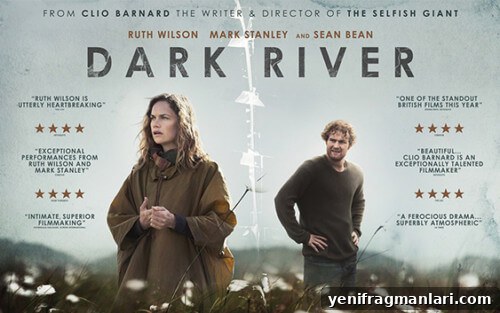
Dark River (2018)
Director: Clio Barnard
Screenwriter: Clio Barnard
Starring: Ruth Wilson, Mark Stanley, Sean Bean
Clio Barnard’s Dark River draws its title and mood from a line in the Ted Hughes poem—“any minute now a last kick, and the dark river will fold it away”—and builds a quietly devastating study of grief, memory and resilience. Following her acclaimed 2013 film The Selfish Giant, Barnard returns to northern England with a lean, atmospheric drama that situates intimate emotional struggle within the sweeping, mutable landscape of a Yorkshire farm. The film moves beyond the conventions of a typical regional drama, approaching its themes with the lyricism and visual restraint of European art cinema while remaining grounded in human experience.
Story and themes
Dark River centers on Alice, an abuse survivor who returns to her family farm after fifteen years to reclaim and repair the land and buildings after her father’s death. Her arrival rekindles a fraught dynamic with her brother Joe, who remained on the farm through the parents’ decline. Joe’s protective instincts and buried guilt complicate Alice’s attempt to heal; his resistance to her plans forces a confrontation with long-suppressed trauma. Barnard frames this sibling conflict as a broader meditation on gender, power and stewardship: Alice is closely aligned with the living land—its animals, its rhythms, its capacity for renewal—while Joe, weighed down by shame and anger, embodies a destructiveness that has historical and personal roots.
The film functions like a modern folk tale, as Barnard has described it, about the exploitation of a woman’s body and the exploitation of land. That alignment creates a potent symbolic vocabulary: the farm stands in for Alice’s inner life, and the crumbling family house reflects Joe’s inner turmoil. Crossing thresholds between these spaces is both literal and psychological, and Barnard uses the terrain to show how hard it can be to move from one state of being to another.
Visual style and atmosphere
Barnard’s direction is attentive to the Yorkshire landscape without romanticizing it. Wide, open fields and dense patches of wildlife populate many of the film’s most luminous moments, suggesting grace and continuity. Against this, scenes of fog, mud and claustrophobic interiors intensify Alice’s isolation and fear. One particularly effective sequence places Alice in an enveloping fog: the natural element simultaneously signals the farm’s changing weather and the clouding of her own past. These visual contrasts—expansive vistas versus tight, obscured spaces—give the film a rhythmic and emotional logic that enhances its metaphors rather than overwhelming them.
Small, humane details also lend texture to the film’s atmosphere. In an early tableau, Joe persuades Alice not to harvest certain crops so as to protect insect life, creating a brief moment that complicates his character. That choice hints at a more tender, protective side beneath his brusque exterior and opens a path for Alice to imagine trust and cooperation, however tentative.
Performances
Ruth Wilson and Mark Stanley deliver performances of great subtlety and depth. Wilson’s Alice is outwardly anxious and inwardly resolute; she inhabits a woman forged by survival but defined by the desire to reclaim agency. Stanley’s Joe is alternately violent, remorseful and stubbornly human—an embodiment of the contradictions that often accompany guilt. Their chemistry reads as convincingly sibling-like, anchoring the film’s central tension in lived, believable behavior. Sean Bean and the supporting cast contribute lean, credible work that complements the protagonists without distracting from the core relationship.
Gender, power and resolution
Dark River speaks to contemporary conversations about gender and power without resorting to didacticism. It literalizes questions of bodily autonomy, care and repair while also exploring how responsibility and shame shape behavior. The film strikes a cautiously hopeful note: it does not erase harm, but it suggests the possibility of repair and a more equitable relationship to land and one another. In the closing act, Barnard stages a confrontation that functions both as a practical defense of their shared land and as a symbolic exorcism of older wounds. The final image—Alice lying in the mud as “the dark river folds it away”—feels earned and quietly redemptive.
Conclusion
Dark River is a compact, powerful film that rewards patient viewing. Its strengths are cumulative: careful performances, a tactile sense of place, and a clear, consistent symbolic language that elevates the familial drama into something almost mythic. Barnard’s film is both tough and tender, lyrical and blunt, and it stands out as a humane, artful exploration of how people and places survive trauma. For viewers interested in intense character work and films that use landscape as a moral and emotional mirror, Dark River is essential viewing.
Score: 20/24
Recommended for you: Clio Barnard Films Ranked