
This article was written exclusively for The Film Magazine by Craig Sheldon.
When we think of science fiction films, certain images instantly come to mind: Luke Skywalker learning his connection to a colossal grey planet-sized weapon, astronaut David Bowman experiencing a mind-bending voyage through space and time, or Spock sacrificing himself while placing his hand against Kirk’s. These moments define the genre for many of us, but they also raise a simple question: what exactly is science fiction?
On the surface, science fiction might seem to be “science that isn’t real.” Yet beneath the aliens, laser battles and dramatic set pieces, sci-fi frequently explores bold, forward-thinking ideas—concepts that have often influenced real-world technology and shaped how we imagine the future.
Not every gadget from the movies will become a supermarket staple, nor will every piece of cinematic tech reach mass-market adoption. Still, science fiction has an impressive track record of anticipating real innovations. Long before the internet became a household utility, films imagined expansive, information-rich systems that resemble our modern networked world.
Take Star Trek: The Motion Picture and the sentient entity V’Ger. The film presents a vast, evolving intelligence that absorbs and stores vast amounts of knowledge, and even transfers memories. While V’Ger is a fictional, conscious probe and the internet is not sentient, both share the idea of an ever-growing repository of information with the ability to transfer or copy data. In 1979, when home computers were still emerging and the notion of downloading was unfamiliar, that vision was strikingly prescient.
The Matrix trilogy did for virtual reality what a certain action star did for a famously bald aesthetic: it made VR cool. In the films, characters plug into immersive simulated worlds. Today, accessible headsets and smartphone-based viewers let people enter virtual environments with minimal hardware. Advanced systems from companies like Oculus and HTC provide even deeper immersion, enabling interactive experiences that echo what sci-fi once depicted.
Films such as Ready Player One imagine futures where virtual worlds become primary spaces for entertainment, work and social life. That scenario — people preferring virtual existence for its possibilities and comforts — still belongs to fiction, but advances in VR and virtual economies suggest elements of that vision could be realistic over time. The concept of earning a living through digital identities is increasingly familiar in games and online platforms; registering an original avatar name might not be a bad idea.
Some cinematic inventions are playful visual flourishes, but others push toward practical innovation. In Total Recall, automated taxis called “Johnny cabs” ferry passengers with robotic drivers. In iRobot, cars offer an automatic drive mode that allows hands-free travel. While movies often depict autonomous systems going awry for dramatic effect, the real aim of self-driving vehicles is to reduce human error and improve safety. Google’s autonomous-vehicle project, now operating under the name Waymo, uses advanced sensors and mapping to navigate roads and has moved from concept to on-road testing. Several automakers and tech companies are developing similar systems, and while a complete transition to driverless transport remains uncertain, progress continues steadily.
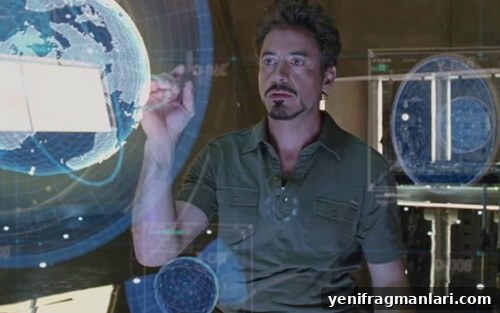
Gesture-based and mid-air interfaces seen in films like Minority Report are also moving toward reality. Companies have developed head-mounted displays and wearable systems that overlay digital information on the real world and respond to finger or hand movements. Some prototypes project virtual screens that appear to float in space and detect finger position so users can interact without a physical keyboard. For more modest needs, laser-projection keyboards and compact virtual displays already let people type or manipulate content on any flat surface via Bluetooth.
Sci-fi’s influence extends beyond gadgets and interfaces to fashion and wearable tech. Costumes ranging from sleek jumpsuits to form-fitting ensembles have inspired designers, while on-body technology has followed film prompts as well. The self-lacing shoes imagined in Back to the Future Part II were later realized by Nike as limited-release self-tightening sneakers. Whether practical or novelty, these products show how cinematic ideas can migrate into consumer products.
Ultimately, as real technology catches up with the inventions we once thought were purely speculative, some classic sci-fi will be recalled not as prophecy but as cultural milestones—stories that inspired engineers, designers and entrepreneurs. The genre’s role is not only to entertain but also to offer visions of what might be possible, sparking imagination that leads to genuine innovation.
We should expect science fiction to continue shaping future technologies and ideas. Some imagined advances may remain fictional, some will arrive gradually, and others will transform daily life in unexpected ways. For now, I’m happy to wait for better mobile reception in tunnels—though I admit that might belong more to the realm of fantasy than to science fiction.
Written by Craig Sheldon